Skip to Content

Clinical studies

Updated guideline on managing lipids and cholesterol

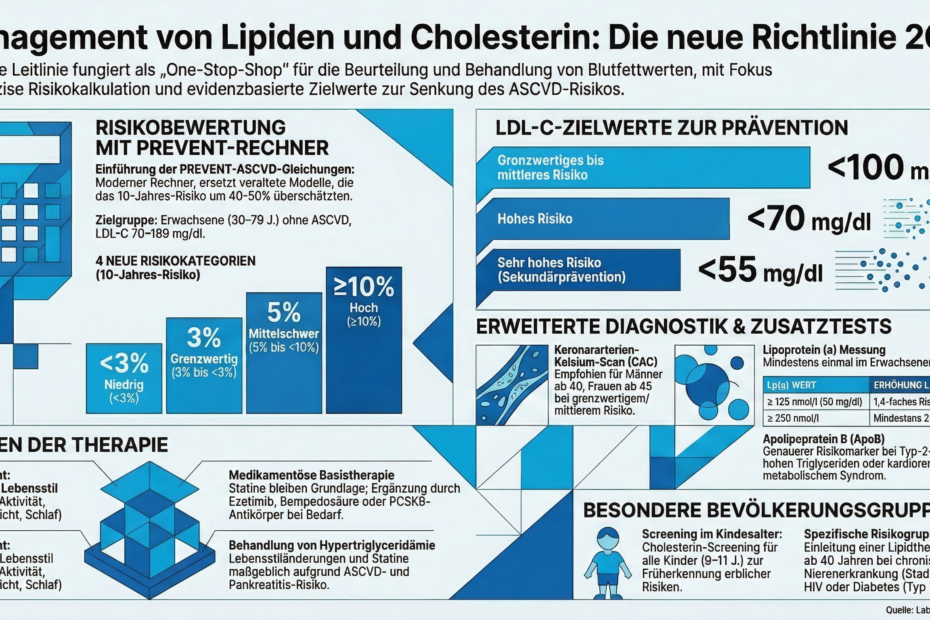
The American College of Cardiology (ACC), the American Heart Association, and nine other leading medical organizations today released updated guidance for the management of dyslipidemia and abnormal levels of one or more types of lipids or lipoproteins in the blood, including cholesterol and triglycerides. It is estimated that one in four adults in the U.S. has high levels of low-density lipoprotein cholesterol (LDL-C), which increases the risk of heart attack and stroke. The guidance summarizes evidence-based recommendations for the management of dyslipidemia in a single document, providing a comprehensive, one-stop shop for the best assessment and treatment of various blood lipids to effectively reduce an individual's risk of developing atherosclerotic cardiovascular disease (ASCVD). ASCVD is caused by the buildup of fatty deposits in the arteries and is the leading cause of death worldwide. The document was jointly released today in JACC, the flagship journal of the American College of Cardiology… 

RMC prevents pancreatic cancer

A new preclinical study in mice shows that precancerous cells in the pancreas can be eliminated before they develop into tumors. The use of an experimental therapy to target microscopic precancerous lesions in the pancreas nearly doubled survival in mouse models of pancreatic ductal adenocarcinoma (PDAC) compared to the same treatment after cancer development. The study, published today in Science, was led by physician researchers at the Perelman School of Medicine at the University of Pennsylvania and the Abramson Cancer Center of Penn Medicine. It is the first time scientists have shown that a medical intervention can stop the growth of precancerous lesions in the pancreas before they develop into pancreatic cancer. This provides strong evidence for the emerging field of cancer prevention. “I am convinced that early cancer detection represents the next major challenge in cancer therapy,” said Robert Vonderheide, MD, DPhil, Director of the Abramson Cancer Center and a… 

Grünenthal launches Phase I trial with new NaV1.8 inhibitor for pain

The pharmaceutical company Grünenthal has initiated the first Phase I trial of its proprietary, orally available inhibitor of the voltage-gated sodium channel NaV1.8. The first healthy volunteers have already been enrolled. The company is investigating the investigational drug as a potential non-opioid therapeutic for acute and chronic pain conditions. Results from the study are expected in the second half of 2026. The trial includes 70 healthy volunteers and is divided into a single ascending dose (SAD) and a multiple ascending dose (MAD) component. Primary objectives are safety, tolerability, and pharmacokinetic properties. A cold pressor test will also be conducted to obtain initial pharmacodynamic indications of analgesic activity. Uli Brödl, Chief Scientific Officer of Grünenthal, emphasized that the selective blockade of NaV1.8 offers a promising approach to developing urgently needed non-opioid pain therapies. While a first NaV1.8 inhibitor received FDA approval in 2025, Grünenthal aims to achieve a more comprehensive blockade and thus potentially better efficacy with its candidate. NaV1.8… 

Zebrafish model clarifies false alarms in SMA newborn screening and prevents unnecessary therapies

A positive newborn screening result for spinal muscular atrophy (SMA) is considered a medical emergency requiring immediate, expensive, and irreversible treatment. Researchers from the University of Cologne and Griffith University in Australia have now shown that, in rare cases, such a result can be a genetic false alarm. Functional tests using a zebrafish model allow for rapid clarification and protect affected families from overtreatment. The team, led by Prof. Brunhilde Wirth (Cologne) and Dr. Jean Giacomotto (Brisbane), examined two newborns—a girl from Germany and a boy from Australia—in whom the screening did not detect a functional SMN1 gene. SMA is caused by the absence or severe loss of function of the SMN1 gene; without early treatment, severe paralysis or death in infancy can result. Further analyses revealed rare SMN1 variants in both children, the disease-causing effect of which was previously unknown. In the zebrafish model, which is highly genetic and physiological… 

Psychedelics enhance access to memory content – ​​a new explanation for hallucinations

Researchers from Ruhr University Bochum, Hong Kong Baptist University, and other partners have, for the first time, created high-resolution images of brain activity in an animal model after the administration of psychedelic substances. The results show how these substances alter perception and consciousness and could explain why visual hallucinations occur. Psychedelics bind primarily to the serotonin 2A receptor, which has an inhibitory effect in the visual cortex and influences learning processes. This makes it more difficult to process current visual information from the outside world. The brain compensates for this gap by increasingly relying on stored memories and associations—a mechanism that promotes hallucinations. The study shows that psychedelics intensify low-frequency oscillations in the 5 Hz range in visual brain regions. These synchronized activity waves promote communication with the retrosplenial cortex, an area that serves as a bridge for retrieving stored information. As a result, the brain switches to a mode that reacts less to current stimuli and instead processes perceptions from internal… 

CAR-T cell therapy for cancer causes “brain fog”

After treatment with CAR-T cells—immune cells specifically engineered to attack cancer—patients sometimes report feeling "brain foggy" or experiencing forgetfulness and difficulty concentrating. A new study led by Stanford Medicine shows that CAR-T cell therapy causes mild cognitive impairment, independent of other cancer treatments. This occurs through the same cellular mechanism as cognitive impairment from two other causes: chemotherapy and respiratory infections such as influenza and COVID-19. The study, conducted primarily in mice and published online in Cell on May 12, also identifies strategies to reverse the problem. Drugs that alleviate brain fog could lead to better recovery from cancer immunotherapies, the researchers said. "CAR-T cell therapy is incredibly promising: We are seeing long-term survivors after CAR-T cell therapy for aggressive cancers, saving patients who would otherwise have died," said the… 

Health risks of FFP2 masks during the COVID-19 pandemic: Peer-reviewed studies and current evidence

During the COVID-19 pandemic, FFP2 masks were introduced as a key infection control measure. Alongside the debate surrounding the effectiveness of these masks, potential health risks also became a focus of research. The following section exclusively presents the risks associated with wearing FFP2 masks, based on current, peer-reviewed studies and scientific reports. Particular attention is paid to the issue of titanium dioxide in masks. Breathing resistance and respiratory strain: Wearing FFP2 masks demonstrably increases breathing resistance. Several studies show that this can lead to impaired oxygen uptake and increased rebreathing of carbon dioxide. An observational study documented continuous respiratory and hemodynamic changes, encompassing both short-term and potentially long-term side effects. These include shortness of breath, headaches, dizziness, and impaired concentration. Older adults are particularly susceptible to mask-induced hypercarbia (elevated blood CO₂ levels), decreased arterial oxygen levels, and blood pressure fluctuations. The physiometabolic effects are more pronounced with FFP2 masks than with… 

Risks of mRNAi genetically modified products in food proven by peer-reviewed studies

The development and use of RNA interference (RNAi) in genetically modified plants has increased significantly in recent years. This technology enables the targeted silencing of genes, which is used both to improve plant traits and to protect against pests and diseases. Despite its potential benefits, however, this technology carries numerous risks that must be critically considered, particularly with regard to food safety and the impact on the environment and human health. The following analysis focuses exclusively on the risks of mRNAi-based genetically modified products, based on peer-reviewed studies. 1. Unintended Effects from Off-Target Effects A significant risk of RNAi technology lies in so-called off-target effects. These are unintended interactions of the synthesized dsRNA with genes other than the target genes. Such effects can produce unexpected and potentially harmful phenotypes, both in the plant itself and in organisms that interact with these plants… 

Visugromab and Nivolumab: A new approach to cancer treatment

The first clinical study published in Nature with the anti-GDF-15 antibody visugromab in combination with the immune checkpoint inhibitor nivolumab in advanced cancer confirms the success of research "from bench to bedside." Important preliminary work was carried out by Jörg Wischhusen's research group at the University Hospital of Würzburg (UKW) with the discovery that growth and differentiation factor 15 (GDF-15) inhibits the effects of immunotherapies such as anti-PD-1, with the concept of improving immune infiltration into tumors through GDF-15 blockade, and with the development and patenting of anti-GDF-15 antibodies. The fact that and how the growth and differentiation factor 15 (GDF-15), which is strongly overexpressed in many solid tumors, prevents effective immune responses against tumors was demonstrated for the first time last year in the scientific journal Nature Communications by the University Hospital of Würzburg and its spin-off CatalYm. The tumor immunology research group of Prof. Dr. Jörg Wischhusen at the Women's Clinic of the University Hospital of Würzburg (UKW) was able to demonstrate in preclinical models that blocking GDF-15 eliminates the established… 

Corona review: Peer-reviewed studies on vaccine damage

Several large peer-reviewed studies have revealed rare but significant adverse events associated with COVID-19 vaccines. The largest vaccine safety study, involving 99 million vaccinated individuals from eight countries, identified two new, very rare adverse events: transverse myelitis and acute disseminated encephalomyelitis (ADEM)[1]. The study also confirmed previously reported signals of myocarditis and pericarditis following mRNA vaccines (Pfizer and Moderna), as well as Guillain-Barré syndrome and cerebral venous sinus thrombosis following vector vaccines (AstraZeneca)[1]. A significantly increased risk of Guillain-Barré syndrome (2,49-fold increase) and cerebral venous sinus thrombosis (3,23-fold increase) was observed after the first AstraZeneca dose[1]. The mRNA vaccines showed an increased risk of myocarditis after the first, second, and third doses of Pfizer and Moderna, and of pericarditis after the first and fourth Moderna doses [1]. Further review of vaccine adverse events revealed that the most common adverse reactions were injection site pain (47%), fatigue (28,2%), and joint pain (23,1%) [2]. Systemic…