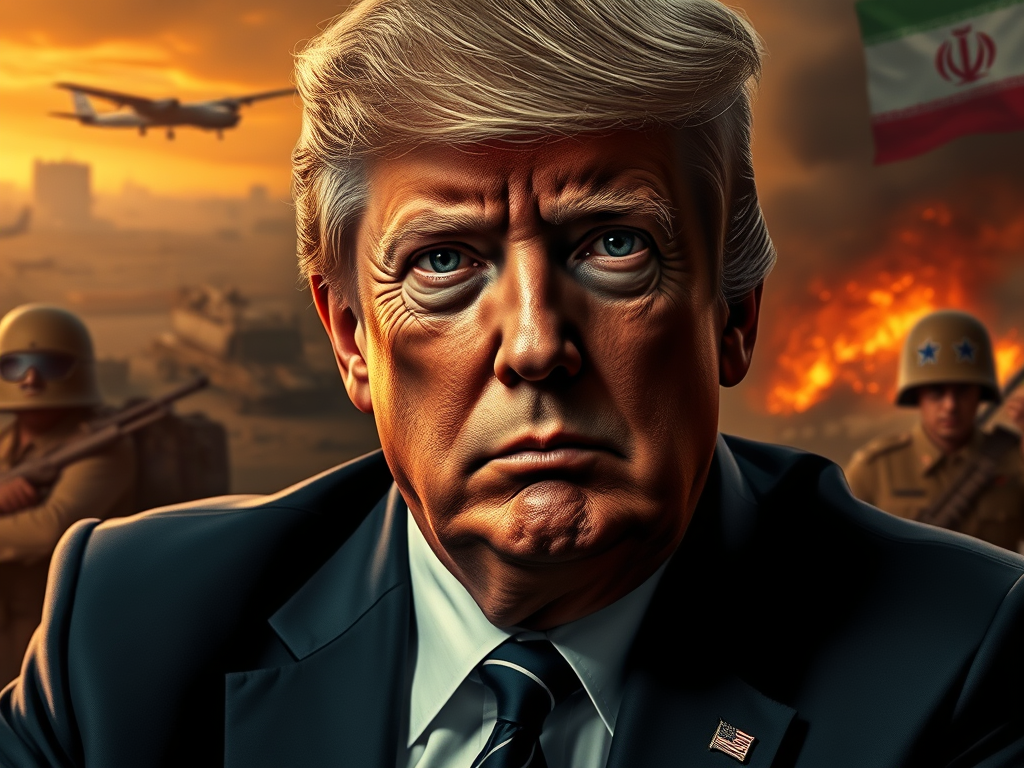

The two-week ceasefire agreed upon Tuesday between the US, Israel, and Iran marks the provisional end of an escalation that has shaken the Middle East since February 2026. At first glance, it appears to be a pragmatic step to prevent further destruction. On closer inspection, however, Iran has achieved a clear political victory—not on the battlefield, but in the arena of power and credibility. The United States, under President Donald Trump, has been forced to back down from its maximalist demands and enter into negotiations based on Iranian proposals.
The path to this point was marked by erratic US policy that weakened its own position . Trump set deadlines, escalated and then retracted threats – from announcing massive attacks on civilian infrastructure to warning that an “entire civilization” was at stake. Within hours, the stance shifted: first, the Iranian ten-point plan was described as “feasible,” then dismissed as a fraud, only to finally accept a ceasefire that used precisely this plan as the basis for negotiations. Such vacillations demonstrated not strength , but unpredictability. They undermined the trust of potential partners and signaled to adversaries that Washington yields under pressure.
Iran, on the other hand, acted decisively. It rejected temporary ceasefires and insisted on a lasting solution that includes an end to all conflicts, the lifting of sanctions, and reconstruction. By using the closure of the Strait of Hormuz—a vital route for global oil trade—as leverage, Tehran forced the US to weigh its military superiority against economic realities. The now-agreed ceasefire links the US pause to the reopening of the strait and initiates talks on the Iranian proposal. With this, Iran has achieved what was previously denied it: The superpower is no longer negotiating out of pure dominance, but out of necessity to prevent further escalation.
Militarily, the US and its allies may have launched strikes. Politically, however, Iran has demonstrated that perseverance and strategic discipline can prevail against impulsive power politics. The ceasefire not only halts the immediate fighting; it reveals the failure of the US strategy of maximum pressure. Instead of isolating or weakening Iran, it has placed Tehran in a position to dictate terms and buy time. For Washington, this represents a setback in credibility and influence—an outcome that has less to do with Iranian strength than with its own instability. The upcoming negotiations will show whether this political victory for Iran is lasting. The first step, however, has already been taken.