Skip to content

Nobel laureate John Jumper leaves Google DeepMind and moves to Anthropic

  • News

London (LabNews Media LLC) – John Jumper, one of the lead developers of the AI system AlphaFold and co-recipient of the 2024 Nobel Prize in Chemistry, is leaving Google DeepMind to join the AI company Anthropic. This means Google DeepMind is once again losing one of its most prominent researchers. Jumper led the AlphaFold team, which revolutionized biological research with its technology for predicting protein structures. He worked at DeepMind for almost nine years and took over leadership of the AlphaFold project shortly after completing his doctorate. The move is part of a series of departures from Google DeepMind. In recent months, Noam Shazeer (co-developer of Gemini) to OpenAI and David Silver (key figure behind AlphaGo and AlphaZero), among others, have left the company. Anthropic and OpenAI have thus poached several leading minds from Google in a short period. Neither Jumper himself nor the company has commented on the reasons for Jumper's move… 
Photonic AI system enables ultra-fast medical diagnoses with minimal energy consumption

  • News

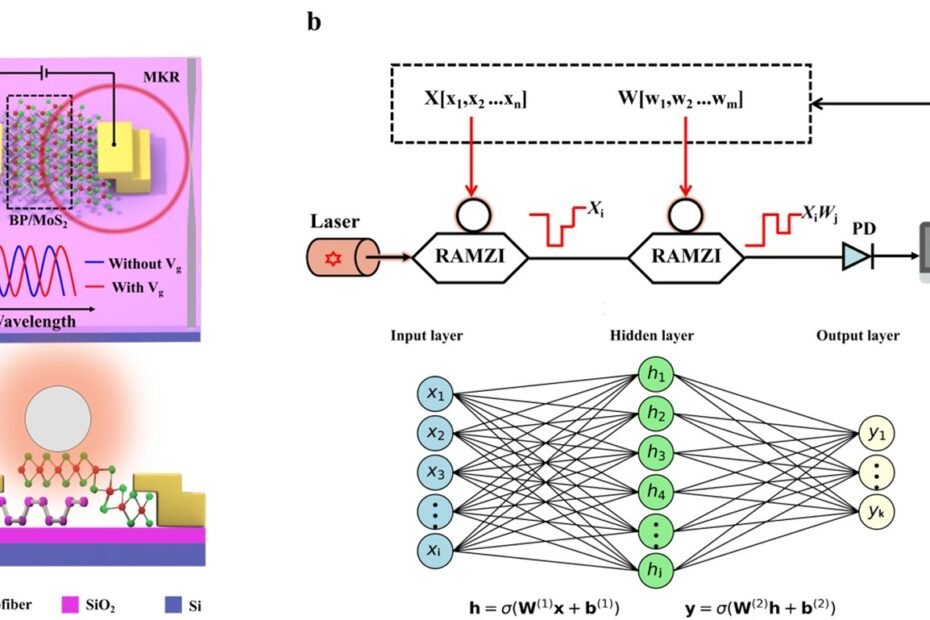
Shenzhen (LabNews Media LLC) – An international research team has developed a photonic AI system that can analyze medical imaging data extremely quickly and energy-efficiently. The system achieved 95 percent accuracy in detecting retinal detachments and liver cell carcinomas in clinical trials. Led by Professor Han Zhang of Shenzhen University, the researchers combined a black phosphorus (BP)-based van der Waals heterostructure with a microfiber ring resonator. This created a fully fiber-based photonic neural network (PNN) platform that uses light instead of electrons for data processing. Diagnosing a liver CT scan took an average of only 0.8 milliseconds – more than 100 times faster than on a high-performance NVIDIA A100 graphics processor. At the same time, the system required only 0.608 femtojoules per computation – 246 times less energy than conventional electronic systems. In tests with real patient data from Shenzhen hospitals, the system achieved a specificity of 97.6 percent. Especially in early stages of liver cancer (tumors under… 

Epigenetic drugs could protect blood vessels in obesity and diabetes

  • News

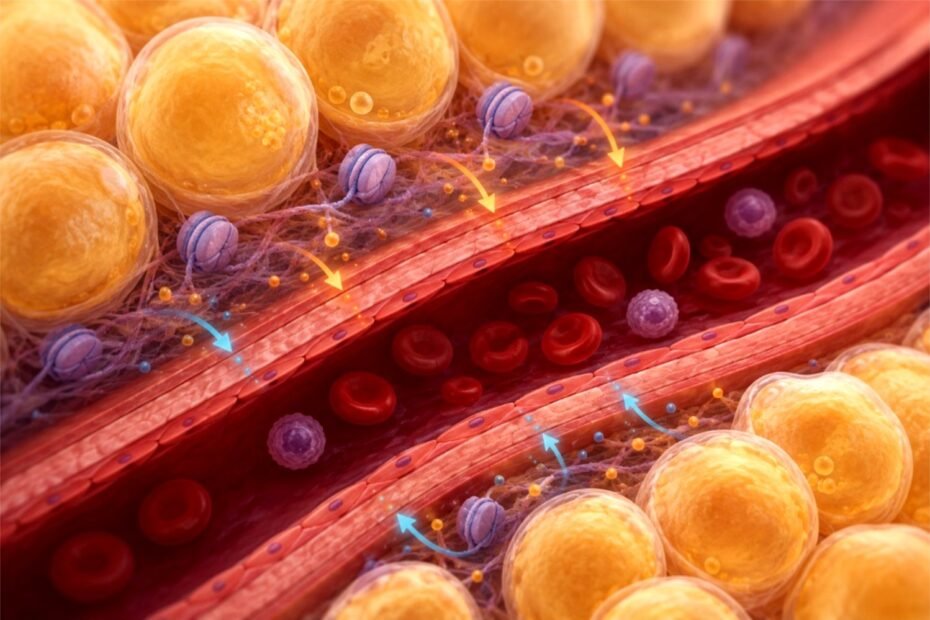
Zürich (LabNews Media LLC) – Epigenetic active agents could help prevent vascular damage in people with obesity and type 2 diabetes in the future. This is shown by a study by researchers at the University of Zurich (UZH) and University Hospital Zurich, led by cardiologist Francesco Paneni. The focus is on perivascular adipose tissue, which surrounds blood vessels and regulates their relaxation and the inflammatory response of the vascular inner wall through chemical signals. In obesity and metabolic diseases, this adipose tissue becomes inflamed, accumulates more lipids, and releases substances that stiffen the vessels and make them less responsive. This contributes to the development of early vascular diseases and increases the risk of heart attacks and strokes. The researchers used so-called BET protein inhibitors, which influence epigenetic regulators and thereby reprogram gene activity in perivascular adipose tissue. In experiments on mice and human tissue, the treatment led to a significant reduction in inflammatory processes. The vessels relaxed better, and… 

AI chatbots are intelligent, but not conscious – researchers warn against anthropomorphism

  • News

Montréal (LabNews Media LLC) – Artificial intelligence in the form of chatbots like ChatGPT or Claude can respond with high intelligence, empathy, and personalization, without, however, possessing consciousness or subjective experience. This is pointed out by researchers from the Université de Montréal, McGill University, and Johns Hopkins University. In an article in The Transmitter, the scientists emphasize that intelligence should not be equated with consciousness. Even highly developed information processing does not automatically mean subjective experience. Vanessa Hadid from the Université de Montréal refers to the neurological phenomenon of blindsight: affected individuals can process visual information correctly without consciously perceiving it. Karim Jerbi warns of the danger of anthropomorphism – that is, attributing emotions, intentions, or consciousness to AI systems. The more convincing and fluent the chatbots' responses become, the easier the illusion arises that they are understood. This can lead to misguided trust and… 

Socioeconomic and lifestyle factors increase cardiovascular risk in cancer patients in the USA

  • News

Washington (LabNews Media LLC) – In the USA, socioeconomic disadvantages, unhealthy lifestyles, and certain pre-existing conditions are associated with a significantly increased risk of cardiovascular disease in cancer patients. This is shown by a current study based on data from the National Health and Nutrition Examination Survey (NHANES). The study included almost 100,000 adults, including over 5,500 cancer patients. Cardiovascular diseases are among the most common causes of death for cancer survivors. Factors such as unemployment, low income, lack of private health insurance, food insecurity, and low educational attainment particularly increased the risk. Smoking, obesity, diabetes, high blood pressure, and elevated cholesterol levels were also associated with a higher likelihood of cardiovascular events. The researchers compared the results with a matched group of individuals without a cancer diagnosis. While age and gender represented similar risk factors in both groups, cancer patients showed additional burdens from socioeconomic and lifestyle-related factors. The authors emphasize that the results are based on cross-sectional data and self-reports… 

Artificial Synapse Controlled by Light Colors – New Approach for Energy-Efficient AI Learning

  • News

Seoul (LabNews Media LLC) – Researchers at Sungkyunkwan University (SKKU) in South Korea have developed an artificial synapse controlled by the color of incident light, mimicking the balanced learning ability found in the human brain. The team led by Professor Sae Byeok Jo and Professor Wooseok Yang used the semiconductor material silver bismuth sulfide (AgBiS?). By selectively controlling the light color, the connection can be either strengthened ("Remembering") or weakened ("Forgetting"). Near-infrared light triggers an accelerated strengthening of the synaptic connection, while blue light causes rapid weakening. In a simulation for recognizing handwritten digits, the new system showed significantly higher stability. While conventional neural networks lost performance after about 200 training rounds, the recognition accuracy remained stable with the light-controlled system for over 1,000 rounds. The development aims to enable energy-efficient neuromorphic computing systems that function similarly to the brain… 

New System Improves Hand Function in Neurological Injuries

  • News

Vienna (LabNews Media LLC) – An international research team has developed a system that combines a wearable hand orthosis with individual nerve stimulation, significantly improving hand function in patients with neurological injuries. The system, named SensoExo, enables better finger mobility, sense of touch, and grip control. Led by Stanisa Raspopovic from the Medical University of Vienna, the researchers tested the system on 14 patients with impairments following spinal cord or brain injuries. The combination of mechanical support from the exoskeleton and electrical nerve stimulation provided additional benefits compared to using the exoskeleton alone. Patients with severe motor impairments, in particular, benefited from the additional muscle stimulation, which facilitated opening and closing the hand. Patients with significant loss of sensation were able to grasp fragile objects more precisely using artificial tactile feedback, without crushing them. In functional tests, participants showed the highest success rates in grasping and… 

Multidrug-resistant germs are increasingly spreading in the USA among the general population

  • News

Multidrug-resistant bacteria of the Klebsiella pneumoniae type are increasingly spreading in the USA outside of hospitals among the general population. This is shown by an extensive national study by the Hackensack Meridian Center for Discovery and Innovation (CDI) in collaboration with Quest Diagnostics. In over 2,000 samples from 42 states, 267 different multidrug-resistant sequence types were detected. Nearly 70 percent of the isolates were resistant to the three most commonly prescribed oral antibiotics. Older women were particularly affected. The spread is significantly driven by the resistance gene CTX-M-15, which is transferred on plasmids and gives the bacteria additional advantages in adapting to stress and metals. The study shows that highly resistant germs are no longer just a problem in clinics but are increasingly causing community-acquired infections that can no longer be treated with standard antibiotics. Barry Kreiswirth of CDI spoke of a rapidly evolving, plasmid-driven epidemic of multidrug-resistant Klebsiella… 

Oropouche virus has already infected over five million people in Brazil

  • News

The Oropouche virus has infected significantly more people in Brazil than previously officially recorded. A new study estimates that since 1960, around 5.5 million people in Brazil and a total of about 9.4 million in Latin America and the Caribbean have been infected. Manaus in the state of Amazonas was particularly affected. An estimated 300,000 people were infected there between 2023 and 2024 – almost 260 times more than the reported cases. The seroprevalence in this region increased from 11.4 to 25.7 percent within a year. The virus is not transmitted by the yellow fever mosquito (Aedes aegypti), but by the so-called biting midge (Culicoides paraensis). This is significantly smaller and occurs mainly in rural, humid areas. As a result, conventional mosquito control measures are largely ineffective. The infection usually presents with flu-like symptoms, but in rare cases can cause serious complications such as meningitis, meningoencephalitis, miscarriages, or microcephaly in the unborn child. About one in a thousand… 

Risk of worldwide spread of Ebola remains low

  • News

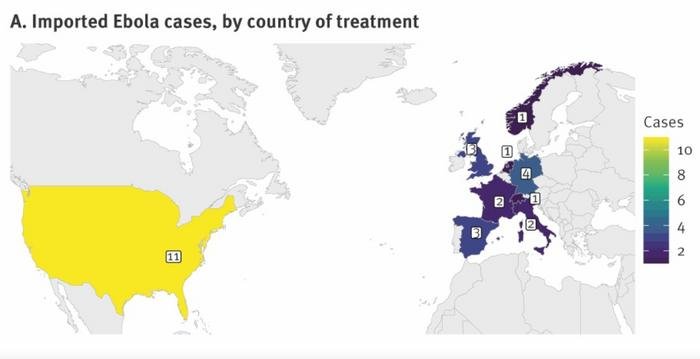
Since 1976, only 28 laboratory-confirmed cases of Ebola have occurred outside of Africa. This is shown by a current analysis by the European Centre for Disease Prevention and Control (ECDC). Most cases (27) occurred during the major Ebola epidemic from 2014 to 2016 in West Africa. The study includes all known exported cases since the first outbreak in 1976. Of these, 25 were primary cases imported from Africa, and three were secondary cases that arose in the USA or Europe through contact with infected individuals. In the current outbreak in 2026 with the Bundibugyo virus, one case has been registered outside of Africa so far. The researchers conclude that the risk of further international spread is generally low. Measures at the outbreak site itself are particularly effective in containment, especially good infection prevention and control in the treatment of patients and emergency personnel. According to the study, the risk of infected individuals unknowingly…