Skip to content

Health Minister expects no GVK contribution increase in 2026

  • News

Despite the sharp increase in statutory health insurance contributions at the turn of the year, Health Minister Karl Lauterbach (SPD) assesses his government's actions as cost-reducing. "I am implementing structural reforms and will ensure that contributions no longer increase as a matter of course in the long term," Lauterbach told "Bild am Sonntag". Thus, he is "the most cost-effective health minister for the health insurance funds." The Health Minister also anticipates a halt [...] Health Minister expects no GVK contribution increase in 2026

Doctors called to actively participate in health system reforms

The new president of the World Medical Association, Dr. Ashok Philip, has called on doctors worldwide to participate more actively in the development of health policy and health system reforms. The goal is to ensure the best possible patient care and protect the professional autonomy of doctors[1]. In his inaugural address at the World Medical Association's General Assembly in Helsinki, Dr. Philip emphasized the need for the medical profession to actively contribute to the further development of healthcare. Even though participation in health policy is time-consuming, it protects patients in the long run[1]. Threat to medical autonomy Dr. Philip, a specialist in internal medicine from Malaysia, warned of increasing threats to the professional autonomy of doctors. These have been exacerbated by rising healthcare costs and increased life expectancy. He defined medical autonomy as "the freedom to make clinical decisions about the care of individual patients" and described it as the most endangered… 

IVDR shakes up laboratory medicine

The introduction of the EU regulation on in vitro diagnostics (IVDR) presents laboratory medicine with significant challenges. Here is a background article on the most important aspects: The IVDR (Regulation (EU) 2017/746) came into force on May 26, 2022, replacing the previous IVD Directive 98/79/EC. The aim is to improve patient safety through stricter requirements for in vitro diagnostics (IVD)[1]. New classification and conformity assessment A key change is the introduction of a risk-based classification system with four risk classes (A-D). This means that significantly more products fall into higher risk classes, requiring conformity assessment by a notified body. It is estimated that the proportion of IVDs requiring the involvement of a notified body will increase from the current 10-20% to 80-90%[1]. Shortage of notified bodies A core problem is the acute shortage of notified bodies for the IVDR. Currently, there are only 8 notified bodies notified under the IVDR, compared to 18 under the old directive[1]. This is leading to bottlenecks and delays… 

Accord Healthcare receives positive CHMP opinion for IMULDOSA®, a ustekinumab biosimilar to Stelara®

Accord announces that the CHMP has issued a positive opinion for Imuldosa® (development code: DMB-3115), a biosimilar to Stelara®, used for a range of immunological diseases. The approval of Imuldosa® expands Accord Healthcare's biosimilar portfolio and strengthens Accord's autoimmune franchise, building on existing leading brands. Imuldosa® will be the 5th [...] Accord Healthcare receives positive CHMP opinion for IMULDOSA®, a ustekinumab biosimilar to Stelara®

Premiere: What’s Next Forum Zurich – AI and XR in practice

Artificial intelligence (AI) is here to stay. What concrete AI and Extended Reality (XR) applications already exist in practice? How can these technologies be successfully integrated into companies and what added value can they actually create?   The What’s Next Forum @ Google Europaallee Zurich on November 7, 2024, will bring clarity. Here, [...] Premiere: What’s Next Forum Zurich – AI and XR in practice

Intraosseous vs. intravenous access in out-of-hospital cardiac arrest

A guest contribution by S. Maier, Ulm                    In the case of pre-hospital cardiac arrest (out-of-hospital cardiac arrest, OHCA), establishing vascular access as part of resuscitation and administering, among other things, adrenaline are standard procedures. Guidelines primarily recommend establishing intravenous (IV) vascular access and considering switching to an intraosseous (IO) access route if the attempt is unsuccessful. [...] Intraosseous vs. intravenous access in out-of-hospital cardiac arrest

New book on preclinical emergency medicine

  • News

Joachim Koppenberg, Christian Both, and Urs Pietsch have published a new book with cases in preclinical emergency medicine at Elsevier Verlag: Diagnoses and guidelines based on case examples for preclinical operations Exciting case examples from preclinical emergency medicine show the 61 most common and important operational diagnoses and the guideline-compliant procedure. The book supports structured and competent preparation for [...] New book on preclinical emergency medicine

Schwerin: High rate of illness paralyzes city hall

The citizen service of the city of Schwerin is currently only available to a limited extent due to an increased number of sick employees. The city administration reports that fewer appointments are available for online booking, and next Monday, October 21st, which is usually appointment-free, will also offer a limited number of waiting tokens. On Saturday, October 19th, only [...] High number of sick employees in the city hall leads to severe restrictions – online services recommended.

FOULBROOD HAS BROKEN OUT IN HATTINGEN

Hattingen/Ennepe-Ruhr-Kreis - The outbreak of American foulbrood in a farm in Hattingen necessitates the establishment of a restricted zone. This zone is located in the Welper district and has a radius of approximately one kilometer around the affected farm. A map showing the restricted zone can be found in the general decree published by the Ennepe-Ruhr-Kreis veterinary office. The decree [...] FOULBROOD OUTBREAK IN HATTINGEN

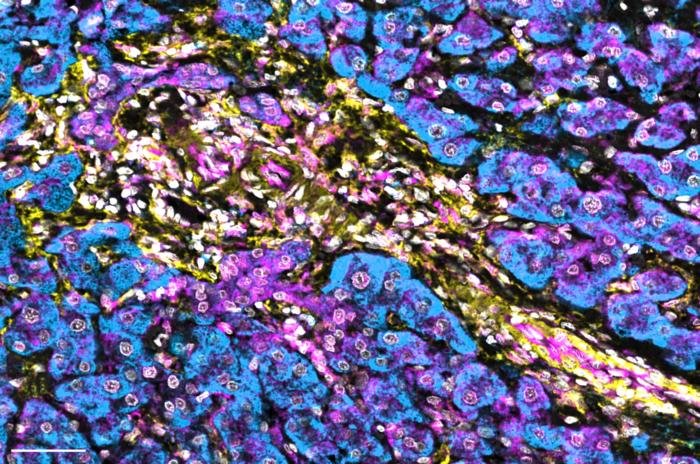
Biomarker can predict response to immunotherapy in liver cancer

According to a preclinical study by researchers at Weill Cornell Medicine, it may soon be possible to determine which patients with a type of liver cancer called hepatocellular carcinoma would benefit from immunotherapy. The study, published on October 17 in Molecular Cell, provides new insights into a protein pair called p62 and NBR1 and their opposing functions in regulating the interferon response in hepatic stellate cells, a critical immune component in the liver's fight against tumors. The study shows that high concentrations of the immunosuppressive NBR1 in these specialized cells can identify patients who are unlikely to respond to immunotherapies. It also shows that strategies to lower NBR1 help shrink tumors in animal models, suggesting a potential new therapeutic approach for the subgroup of patients who do not respond to immunotherapies. "P62 and NBR1 are yin and yang," said the study's co-lead, Dr. Jorge...