Skip to content
Dr. Larysa Baraban - Leiterin der HZDR-Abteilung Nano-Mikrosysteme für Biowissenschaften | Quelle: Anja Schneider | Copyright: HZDR / Anja Schneider

HZDR develops novel nano-biosensor device

A research team led by Dr. Larysa Baraban at the Helmholtz-Zentrum Dresden-Rossendorf (HZDR) is developing intelligent, miniaturized biosensor devices and systems using nanomaterials to determine biomolecules and cells, as well as biochemical reactions or processes as markers of diseases. In a recent publication in Biosensors and Bioelectronics, the team describes the development of a portable, palm-sized test system that can perform up to 32 analyses of a sample simultaneously.

The Professional Association of German Laboratory Physicians (BDL) has published the preliminary program for the German Laboratory Day 2024, which will take place on March 21 and 22, 2024, in Berlin. The registration deadline for participation is March 8. Registration can be done via the BDL at this link.

German Laboratory Day 2024: BDL publishes preliminary program

The Professional Association of German Laboratory Physicians (BDL) has published the preliminary program for the German Laboratory Day 2024, which will take place on March 21 and 22, 2024, in Berlin. The registration deadline for participation is March 8. Registration can be done via the BDL at this link.

KI-Bewusstsein: Forscher fordern strengere wissenschaftliche Standards. Symbolbild. Photo by Tara Winstead on Pexels.com

No digitalization without generative AI possible

  • AI

As artificial intelligence continues to reshape the digital landscape, CIOs and IT leaders are at a critical juncture: they must navigate the profound opportunities and challenges of this groundbreaking technology. This is the conclusion of the report "CIO Priorities 2024" from Info-Tech Research Group. The report examines the critical capabilities and initiatives that CIOs must prioritize to effectively leverage generative AI.

scrabble letters spelling out tech on a wooden table

REPORT: Gene Editing Technologies 2024

The report "Europe Gene Editing Technologies Market: Analysis and Forecast, 2023-2032" has been added to ResearchAndMarkets.com's offering and is now available. Subsequently, the European gene editing technologies market was valued at US$0.37 billion in 2023 and is expected to reach US$3.26 billion by 2032, with a CAGR of 27.24% during the forecast period 2023-2032.

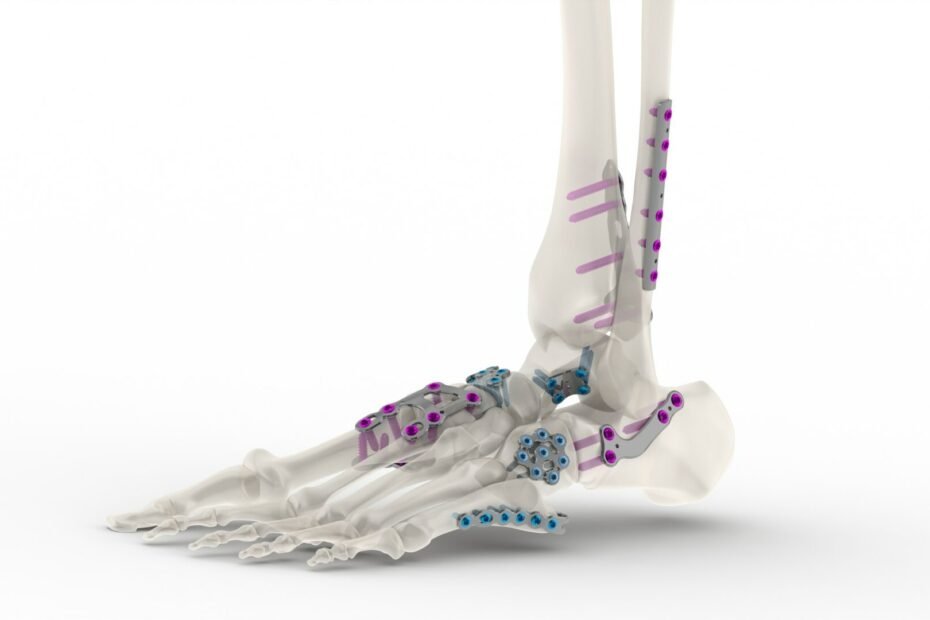
Tyber Medical hat die Zulassung für sein anatomische Plattensystem in Kanada erhalten. Das US-Unternehmen hatte zuvor die FDA 510(k) in den USA erhalten und wurde nun auch durch Health Canada zugelassen. Tyber Medical ist ein führender Hersteller von orthopädischen Produkten, der orthopädische Implantate für den Trauma-, Extremitäten- und Wirbelsäulenmarkt als Eigenmarke anbietet.

Tyber Medical's Anatomical Plate System Cleared for Canada

Tyber Medical LLC, a leading manufacturer of orthopedic products offering private label orthopedic implants for the trauma, extremities, and spine market, has received clearance for its anatomical plate system in Canada. The comprehensive portfolio had previously received FDA 510(k) in the United States and has now been cleared by Health Canada.

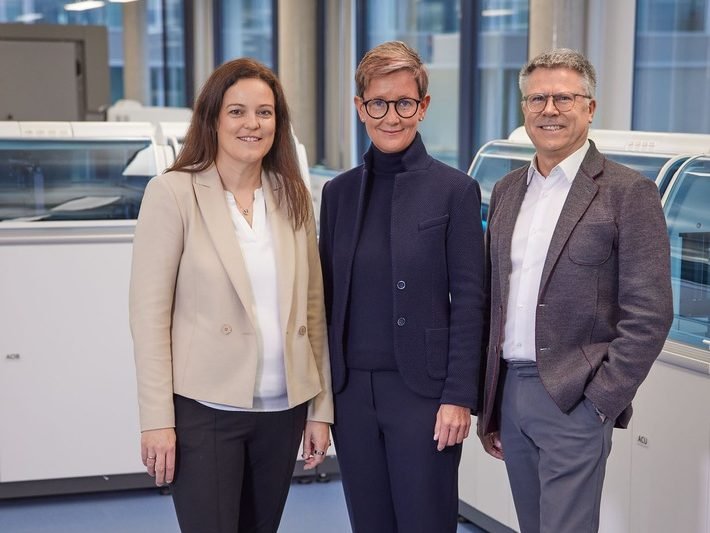
V.l.n.r.: Daniela Kahlert, Geschäftsführerin der Roche Diagnostics Deutschland GmbH, Dr. Claudia Fleischer, Geschäftsführerin der Roche Diagnostics GmbH und Prof. Dr. Hagen Pfundner, Vorstand der Roche Pharma AG, präsentieren gemeinsam die Jahresergebnisse 2023 für Roche in Deutschland. Foto: Roch

Roche in Germany Defies All Crises

With total sales of 8.3 billion euros (+2.4 percent), Roche in Germany looks back on a successful fiscal year 2023 – a year heavily marked by global crises and uncertain healthcare policy frameworks. Based on high demand for new innovative medicines in the German healthcare landscape, the pharmaceuticals division recorded growth of 4 percent.

Re-engineering Immune Cells Boosts Lupus Research

The research presented in Nature Communications outlines a novel approach where the body's own immune cells are re-engineered to suppress the overactive immune system. This overactive system occurs in lupus nephritis.

Epigenetic-Based PCR Test Could Detect Difficult-to-Diagnose Breast Tumor

Scientists at the Garvan Institute of Medical Research (NSW, Australia) have identified new DNA markers based on epigenetics that could provide additional diagnostic information for phyllodes tumors.

Epigenetic changes are alterations in gene activity without changing the DNA sequence itself, and they can be influenced by environmental factors. A common epigenetic process is DNA methylation, where methyl groups attach to segments of DNA, altering gene expression.

American ADLM Criticizes FDA

Während die Food and Drug Administration (FDA) ihren Versuch, laborentwickelte Tests (LDTs) zu regulieren, vorantreibt, stellen die US-amerikanische Association for Diagnostics & Laboratory Medicine (ADLM, früher AACC) und viele andere in der Laborgemeinschaft in Frage, ob die Behörde die Befugnis hat, eine solche Aufsicht auszuüben. Die ADLM warnt außerdem davor, dass der Versuch den Zugang der Patienten zu wichtigen Labortests drastisch einschränken und einige Labore sogar lahmlegen könnte.

Die FDA hat am 3. Oktober 2023 einen Regelungsvorschlag veröffentlicht, der es der Behörde ermöglichen würde, LDTs als Medizinprodukte zu regulieren, ähnlich wie die von IVD-Unternehmen hergestellten In-vitro-Diagnostik (IVD)-Testsätze.

3.000 Jahre alte DNA zeigt gewaltige Mobilität im Römischen Reich

Die Daten zeigen etwa, wie vielfältig die Bevölkerung vieler Gebiete des Römischen Reichs waren: Mindestens 8 % der in die Studie einbezogenen Personen stammten ursprünglich nicht aus dem Gebiet Europas, Afrikas oder Asiens, in dem sie begraben wurden. Ron Pinhasi von der Universität Wien war als Co-Leiter an der Studie beteiligt, die kürzlich im renommierten Fachmagazin elife publiziert wurde. In der Studie wurden vorhandene DNA-Daten von Tausenden von Skelettfunden aus dem Römischen Reich sowie aus Mitteleuropa, Osteuropa und Zentralasien, Großbritannien und Nordeuropa sowie Nordafrika analysiert. Zusätzlich sequenzierten die Wissenschafter*innen 204 neue Genome aus 53 archäologischen Stätten in 18 Ländern. Die meisten stammten von Personen, die in der Zeit des kaiserlichen Roms und der Spätantike, vom ersten bis zum siebten Jahrhundert v. u. Z., gestorben sind. Originalpublikation:Stable population structure in Europe since the Iron Age, despite high mobility. Elife. 2024 Jan…