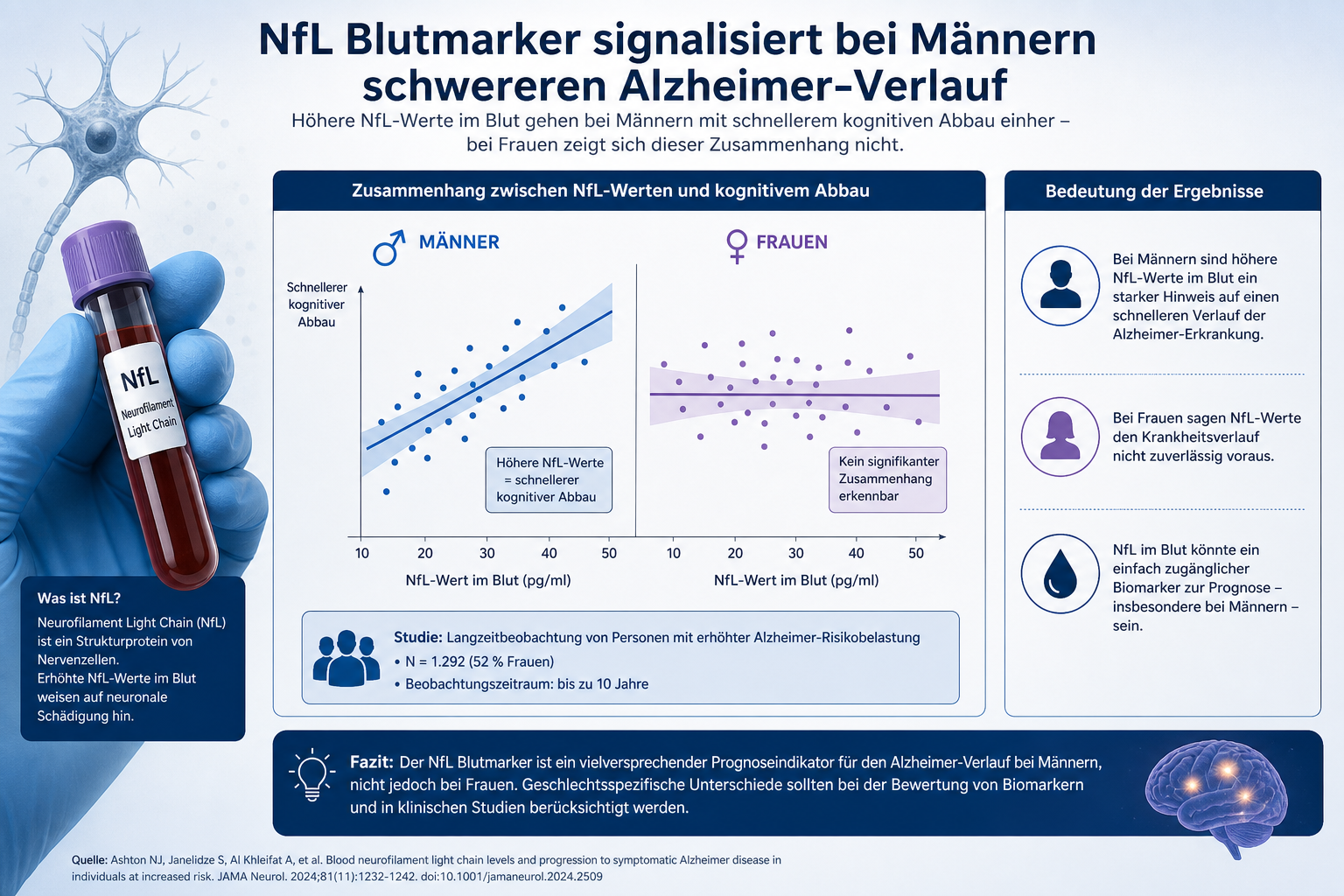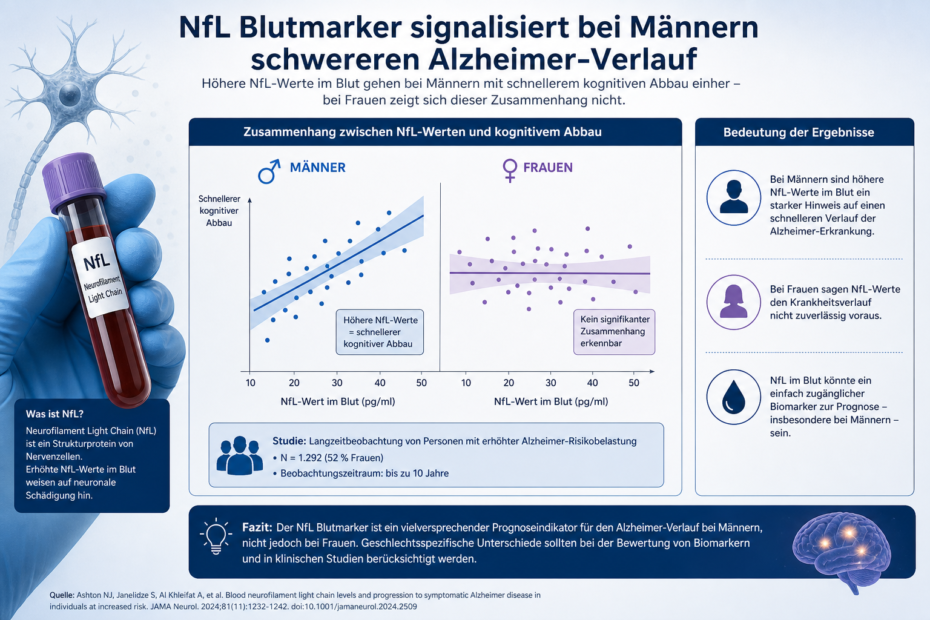
A new review article shows that the blood marker Neurofilament Light Chain (NfL) may indicate more severe neuronal damage in men with Alzheimer's disease than in women. At comparable NfL levels, men often show greater cognitive decline, more severe brain atrophy, and faster disease progression. The study was published in the journal Brain Medicine.
Background
NfL is an established biomarker for neuronal damage. It rises in the blood years before the onset of clinical symptoms and correlates with the extent of nerve cell loss. The marker is increasingly used in Alzheimer's diagnostics and progression monitoring because it can be measured non-invasively from blood.
Key Findings
The authors analyzed existing studies and found consistent evidence that the same NfL level is associated with a more advanced disease stage and greater functional impairment in men than in women. This sex-specific effect was specific to NfL and was not observed to the same extent with other markers such as p-tau181 or GFAP.
Possible Causes
Explanations for the differences discussed include sex-specific differences in neuroinflammation (e.g., microglia activity), hormonal factors (estrogen vs. testosterone), and different "brain reserve." Larger male brains might require more damage before the same NfL increase becomes measurable.
Clinical Relevance
The findings suggest that NfL reference values and thresholds for interpretation should be adjusted for sex in the future. Otherwise, there is a risk that the extent of the disease may be underestimated in men.
Outlook
The authors call for large, sex-stratified reference data across the entire lifespan, as well as further studies on the underlying mechanisms. In the long term, sex-specific interpretation of biomarkers could contribute to more precise diagnostics and better treatment planning for Alzheimer's.
FAQ
What is NfL?
Neurofilament Light Chain, a blood marker for nerve cell death.
What does the study show?
That the same NfL level indicates more severe neuronal damage and faster disease progression in men than in women.
Why is this clinically relevant?
It could lead to the extent of the disease being underestimated in men if uniform thresholds are used.
What causes are discussed?
Differences in neuroinflammation, hormonal influences, and different brain reserve between men and women.
What do the authors demand?
Sex-specific reference values for NfL and further research into the underlying mechanisms.