Skip to content

Exclusive: List of Irrecoverable Losses at the Weizmann Institute – Destroyed Research Projects Following Iranian Missile Attack

  • News

The Iranian missile attack on June 15, 2025, severely impacted the renowned Weizmann Institute of Science in Rehovot. Two ballistic missiles destroyed two central buildings – a life sciences building and a chemical laboratory still under construction – and damaged dozens more. Approximately 45 laboratories were completely or partially destroyed, representing one of the most severe setbacks for Israeli science. In addition to the financial damage, estimated at $500 to $570 million, the losses of scientific knowledge and decades of research are immeasurable. This report highlights the irretrievably destroyed research projects and their significance for global science. Background of the attack The attack is interpreted as retaliation for Israeli operations against Iranian nuclear scientists and facilities, particularly in the context of "Operation Rising Lion" on June 13, 2025. The Weizmann Institute, founded in 1934 by Chaim Weizmann, is considered one of the world's leading research institutions for natural and exact sciences.… 
Benzaldehyde can stop pancreatic cancer

  • News

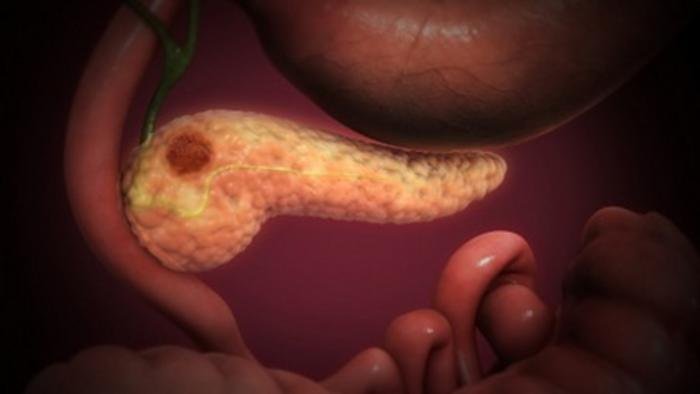
Cancer cells can multiply rapidly. Aggressive cancer cells undergo a transition from their tightly connected epithelial state to a mesenchymal state, which lacks contact inhibition and can easily spread to other parts of the body. This epithelial-mesenchymal plasticity also makes cancer cells resistant to elimination by cancer therapies. The search for new cancer drugs that can overcome this acquired therapy resistance and destroy the "rogue" cancer cells continues. A research group led by Dr. Hideyuki Saya, Director of the Oncology Innovation Center at Fujita Health University in Japan, has deciphered the mechanism of the anti-cancer effect of benzaldehyde, a compound responsible for the aroma of almonds, apricots, and figs. Dr. Saya provides insights into the motivation for this study and explains: " In the 1980s, researchers demonstrated the anti-cancer effects of benzaldehyde and its derivatives. The lead author of our study, Dr. Jun Saito, is... 

Double detonation: Image shows the remnants of a star destroyed by two explosions

  • News

For the first time, astronomers have obtained visible evidence that a star met its end through two explosions. By studying the centuries-old remnants of supernova SNR 0509-67.5 with the European Southern Observatory's (ESO) Very Large Telescope (VLT), they discovered patterns confirming that the star underwent two explosive bursts. This discovery, published today, sheds new light on some of the most significant explosions in the universe. Most supernovae are the explosive death of massive stars, but one important type of supernova has an unassuming cause: White dwarfs, the small, inactive cores left behind when stars like our Sun burn out their core fuel, can produce a Type Ia supernova, as astronomers call it. "The explosions of white dwarfs play a crucial role in astronomy," says Priyam Das, a doctoral student at the University of New South Wales in Canberra (Australia), who led the study published today... 

Successful First Deployment of the German Analytical Task Force in Austria

Bonn/Nußdorf-Debant, July 5, 2025 – For the first time, the German Analytical Task Force (ATF), a special unit for chemical, biological, and radiological/nuclear (CBRN) hazards, has deployed as a complete team for an international mission. At Austria's request, the ATF supported efforts at a major fire in a waste management center in Nußdorf-Debant, East Tyrol. The mission, coordinated by the Federal Office for Civil Protection and Disaster Assistance (BBK), was successful. Since Saturday afternoon, over 500 firefighters battled the blaze at a recycling facility. To rule out dangers from toxic smoke gases, Austria requested bilateral support on Sunday, June 29, 2025. The BBK then alerted the ATF. That same evening, seven operational vehicles and 18 specialists departed from the Munich location. An advance team was flown in by federal police helicopter – a first for an ATF international mission. At the BBK, a support staff composed of specialists from Cologne and Dortmund assisted the on-site operational leadership. The ATF experts analyzed air, water, and soil samples, supported by ...

California: Trump Loses Popularity, Newsom Gains

According to the latest UCI-OC poll from the University of California, Irvine's School of Social Ecology, President Donald Trump's approval ratings among California residents are declining, while Governor Gavin Newsom's popularity has increased. At the end of May and beginning of June, Newsom's approval ratings were almost as bad as Trump's. 59 percent of Californians disapproved of the governor's job performance, with almost a third of those even strongly disapproving at the time. Trump's disapproval is over 2:1. The conflict between the federal government and California over recent immigration raids appears to have improved Californians' perception of Newsom. 56 percent of Californians now rate Newsom as "somewhat positive" or "very positive." "There is no doubt that Newsom's fight against Trump has benefited his image in the state, especially among Democrats and also Independents," says Jon Gould, Dean of the School of Social Ecology, who… 

Europe: Comeback of Old Plagues

In recent years, Europe has witnessed a worrying resurgence of infectious diseases that were long considered eradicated or under control. Diseases such as polio, syphilis, gonorrhea, measles, and even isolated cases of plague are making a comeback. This report highlights the reasons for this development, analyzes the underlying factors, and examines the challenges for public health in Europe. 1. Background: Old epidemics and their return Epidemics like the plague, cholera, polio, or syphilis have shaped European history for centuries. Advances in medicine, hygiene, and vaccination programs have largely eliminated many of these diseases in Europe. For example, polio has been considered eradicated in Europe since the 1980s, and syphilis was easily treatable with antibiotics like penicillin. Nevertheless, current reports show a resurgence: These developments raise questions: Why are these diseases returning, and what factors favor their spread? 2. Reasons for… 

Migration medicine and the return of polioviruses in Europe

  • News

Stockholm/Berlin, July 4, 2025 – The discovery of polioviruses in wastewater samples in five European countries – Germany, Spain, Poland, Great Britain, and Finland – has triggered a broad debate about the challenges of migration medicine and the importance of global vaccination campaigns. The findings, documented between September and December 2024 by the EU health agency ECDC, shed light on the complex interrelationships between migration, health policy, and the prevention of preventable diseases such as poliomyelitis. The Deutsche Ärztezeitung spoke of a “wake-up call” for Europe, while the Robert Koch Institute (RKI) emphasizes the need to close vaccination gaps and intensify surveillance. Polioviruses in Europe: An unexpected finding The detection of polioviruses, particularly type 2 (cVDPV2), in wastewater samples from European cities has alarmed experts. In Germany, the viruses were found in all seven regularly tested cities – Munich, Bonn, Cologne, Hamburg, Dresden, Düsseldorf, and Mainz – and recently also… 

Spahn on the brink? CDU/CSU plans vote on parliamentary group leader

  • News

Berlin, July 4, 2025 – The CDU/CSU parliamentary group faces a potential sensation: According to information from well-informed circles, exclusively obtained by LabNews Media, the group plans to hold a vote next week on the dismissal of its chairman, Jens Spahn. The reason: ongoing pressure from the mask affair and growing dissatisfaction within the Union. The decision could have far-reaching consequences for the governing coalition under Chancellor Friedrich Merz. The mask affair, which has burdened Spahn since his time as Health Minister, has gained new urgency. The Sudhof report, which documents multi-billion euro wrong decisions and possible violations of law in the procurement of masks during the Corona pandemic, casts a dark light on Spahn's tenure. According to tagesschau.de, Spahn is said to have purchased overpriced and partially unusable masks, contrary to warnings from his ministry, for example in a 750 million euro deal with the Swiss company Emix. In addition, there are accusations of nepotism, for example through benefits for the CDU politician Niels Korte. These revelations have...

Merz's Loyalty to Spahn: A Blow Against Democracy

  • News

The mask affair surrounding Jens Spahn, the former Federal Minister of Health and current chairman of the CDU/CSU parliamentary group, has plunged German politics into a crisis whose effects extend far beyond financial losses. The unredacted Sudhof report, recently cited by media outlets such as FOCUS online and tagesschau.de, reveals a network of wrong decisions, warning emails, and management proposals that reached Spahn, as well as questionable deals, such as with the Swiss company Emix for masks worth 750 million euros. Despite these damaging revelations, Chancellor Friedrich Merz steadfastly stands by Spahn – behavior that not only reveals political ruthlessness but also endangers the foundations of democracy. The accusations against Spahn are serious: He is said to have pushed through multi-billion euro mask procurements against the advice of his departments, which were partly overpriced or unusable. The report shows that Spahn was personally involved in decisions, even though he was repeatedly warned of the risks. Particularly explosive...

Jens Spahn: Abuse of Power and Violations of Anti-Corruption Laws

  • News

The mask affair surrounding former Federal Minister of Health Jens Spahn (CDU) is not only a political scandal but also raises serious questions about possible violations of German laws, particularly concerning corruption, abuse of power, and disregard for public procurement regulations. The Sudhof report, prepared by special investigator Margaretha Sudhof on behalf of Karl Lauterbach (SPD), provides incriminating details that place Spahn in the focus of legal and ethical criticism. Despite the absence of ongoing criminal investigations against Spahn personally, the revelations point to systematic misconduct that could potentially have violated several legal regulations. The following presents a detailed analysis of the relevant laws and allegations, with a critical perspective on Spahn's actions. 1. Possible violations of anti-corruption laws In Germany, several laws govern the handling of corruption, especially in public service and political offices. These include the Criminal Code (StGB), particularly §§ 331–335 (acceptance of advantages,…