Skip to content

Organoid revolutionizes research into liver diseases

  • News

Researchers at the Max Planck Institute of Molecular Cell Biology and Genetics (MPI-CBG) in Dresden have developed a groundbreaking organoid model of the liver. This so-called periportal assembloid consists of three liver cell types – hepatocytes, cholangiocytes, and mesenchymal cells – and accurately replicates the complex architecture of the liver's periportal region. The study, published in the journal Nature, marks a crucial advance in liver research. The new model allows for the precise replication of bile transport as it occurs in the real liver for the first time. The organoids transport bile from the bile canaliculi into the bile duct, underscoring their functionality. By integrating hepatocytes, which make up the majority of liver mass, along with cholangiocytes and mesenchymal cells, the researchers have succeeded in realistically representing cell interactions and liver tissue structure. The assembloid model opens up new possibilities for investigating liver diseases such as cholestatic liver injury and biliary fibrosis. By varying the cell composition, the researchers were able to study reactions… 

Physicians' Assembly in Leipzig: AI, GOÄ, and abortion in focus

  • News

The 129th German Medical Assembly in Leipzig discussed key health policy issues. Around 250 delegates from all state medical associations have been discussing the introduction of Artificial Intelligence (AI) in medicine, the amendment of the scale of fees for doctors (GOÄ), and current positions on abortion since May 27th in the Congress Center Leipzig. The Medical Assembly fundamentally advocated for the use of AI in healthcare but calls for binding standards for data protection, quality assurance, and medical responsibility. The delegates emphasized that AI applications must be evaluated and validated. Furthermore, the need for European independence in AI development was highlighted. Another focus is the reform of the GOÄ. The medical profession calls for a contemporary adjustment of the scale of fees to take into account current medical standards and economic framework conditions. Discussions on this are ongoing. On the topic of abortion, delegates are discussing the medical and ethical framework conditions as well as possible legislative adjustments. Also… 

Blood test for narcissism – the background

  • News

Narcissistic personality disorder (NPD) is a mental disorder characterized by a pervasive pattern of grandiosity, need for admiration, and lack of empathy. Diagnosis is made according to psychiatric criteria, particularly according to the DSM-5-TR, and is based on characteristic behavioral features such as exaggerated self-esteem, sense of entitlement, exploitation of others, and lack of empathy[1][2][5][7]. Blood values in narcissism: Are there any abnormalities? In a medical context, the question often arises whether personality traits or disorders such as narcissism are also reflected in objective laboratory parameters, especially in blood values. According to the current state of research, there are no specific or abnormal blood values that could be used for the diagnosis or monitoring of narcissistic personality disorder. Nor are biochemical markers or laboratory tests recommended in routine clinical practice for the clarification or differentiation of narcissism[3]. The diagnosis of NPD is based exclusively on clinical interviews, standardized questionnaires, and psychological tests. Modern instruments such as the PID5BF or the… 

Trump administration plans visa withdrawal for Chinese students

  • News

The administration of US President Donald Trump has announced plans to revoke visas for Chinese students in the United States and to tighten the criteria for future visa applications from China and Hong Kong. This measure specifically targets students who have ties to the Chinese Communist Party or are involved in fields of study considered critical to US national security. The announcement was made by Secretary of State Marco Rubio, who emphasized that the State Department would work closely with the Department of Homeland Security to implement this policy. The exact number of affected students, as well as possible exceptions, remain unclear for the time being. This decision exacerbates the already tense relations between the US and China and raises questions about the long-term impact on the academic landscape, particularly research in the United States. Background and Context Relations between the US and China have been characterized by political... 

Immunotherapy: New Insights into BCG for Treating Bladder Cancer

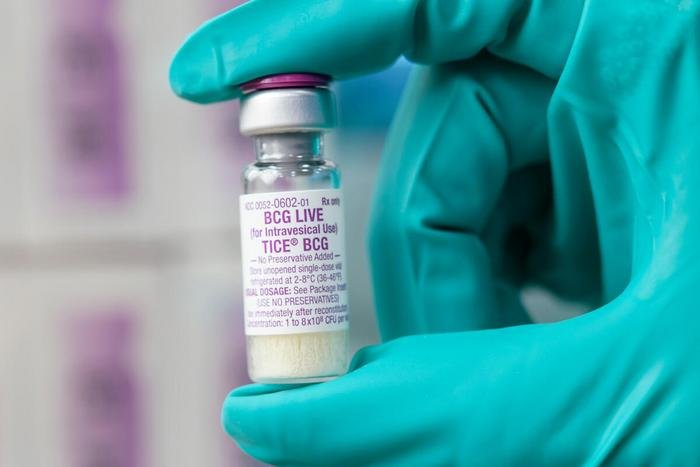
More than three decades ago, the US Food and Drug Administration (FDA)  approved  Bacillus Calmette-Guérin (BCG) as the first immunotherapy for cancer. And it is still used today to treat early-stage bladder cancer. Now, a team of researchers from Memorial Sloan Kettering Cancer Center (MSK) and Weill Cornell Medicine is expanding the understanding of how the treatment works – an understanding that could help improve the effectiveness of immunotherapies in general. BCG is a weakened strain of the bacterium  Mycobacterium bovis , which is used worldwide as a vaccine against tuberculosis in children. In the treatment of bladder cancer, BCG is used in higher concentrations. For a long time, it was assumed that it primarily works by infecting local cancer cells, thereby attracting the attention of the patient's immune cells, which attack the tumor. However, the exact mechanism of action was not fully understood. Scientists were unsure to what extent the…

Genetic Atlas of Cannabis Created

Salk Institute researchers have created the most comprehensive, high-quality, and detailed genetic atlas of cannabis to date. The team analyzed 193 different cannabis genomes (complete genetic information) and revealed unprecedented diversity, complexity, and untapped potential within this foundational crop. This groundbreaking achievement was the result of a multi-year collaboration with Oregon CBD, Oregon State University, and the HudsonAlpha Institute of Biotechnology. The findings, published on May 28, 2025, in Nature, pave the way for transformative advances in cannabis-based agriculture, medicine, and industry. For the study, the team collected genomes from 144 different cannabis plants from around the world, compiling a total of 193 genomes – 181 of which had never been cataloged before. Due to this haplotype resolution, the overall genome is larger than the plant genome, as each plant produced two genome assemblies with both sets of chromosomes examined. Together, these many genomes form the pangenome, which was analyzed,...

Poorly functioning blood vessels lead to muscle wasting in cancer

  • News

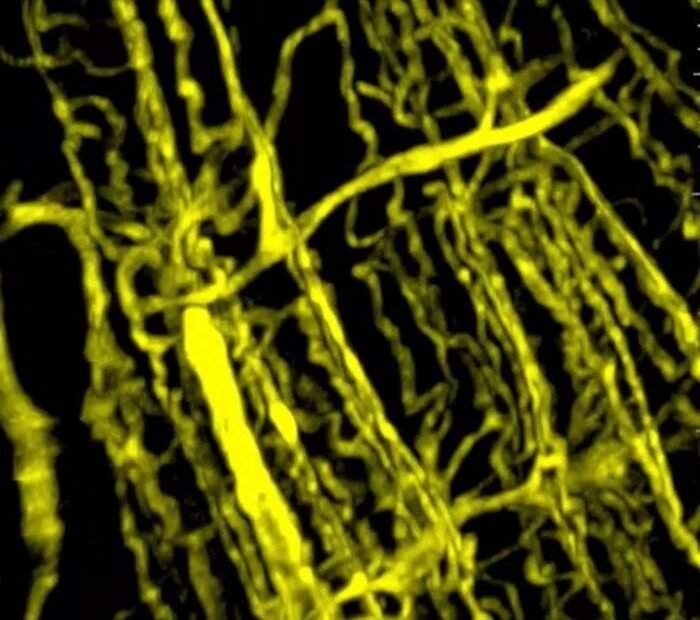
Dysfunctional blood vessels in muscles may be responsible for the muscle weakness and weight loss experienced by most cancer patients. This is according to a new study by researchers at the University of Illinois Chicago. The discovery could help cancer survivors regain muscle strength, contributing to better outcomes for these patients, said Dr. Jalees Rehman, senior author of the new paper and Benjamin J. Goldberg Professor and Head of the Department of Biochemistry and Molecular Genetics at the College of Medicine. Up to 80% of cancer patients suffer from muscle wasting, known as cachexia, a debilitating complication characterized by extreme fatigue, weight loss, and loss of appetite. "It is one of the main drivers of poor outcomes for cancer survivors when they are no longer able to perform their daily activities due to the loss of significant muscle strength," said Rehman, who is also co-leader of the Translational Oncology Research…

Darmbakterien: Schlüssel zu einer besseren Krebsbehandlung

  • News

Wissenschaftler haben eine Reihe von „Biomarkern“ entdeckt, die dazu beitragen könnten, die Erkennung und Behandlung von Magen-Darm-Erkrankungen (GIDs) wie Magenkrebs (GC), Dickdarmkrebs (CRC) und entzündlichen Darmerkrankungen (IBD) zu verbessern. Forscher fanden heraus, dass bestimmte Darmbakterien und Stoffwechselprodukte mit den einzelnen Krankheiten in Zusammenhang stehen. Dies lässt darauf schließen, dass diese Biomarker bei der frühzeitigen und weniger invasiven Diagnose von GIDs helfen könnten, wobei einige Marker auf ein Risiko bei mehreren Krankheiten hinweisen. Sie nutzten fortschrittliches maschinelles Lernen und KI-basierte Algorithmen, um Mikrobiom- und Metabolom-Datensätze von Patienten mit GC, CRC und IBD zu analysieren. Ihre krankheitsübergreifende Analyse ergab, dass mit GC-Daten trainierte Modelle IBD-Biomarker erfolgreich vorhersagen konnten, während CRC-Modelle GC-Biomarker mit hoher Genauigkeit vorhersagen konnten. Das Forschungsteam der University of Birmingham Dubai (Teil des MSc-Programms Health Data Science ), der University of Birmingham, Birmingham, Großbritannien, und des University Hospitals Birmingham NHS Foundation Trust veröffentlichte… 

Biomarker mit Potenzial zur Vorhersage und Behandlung von Hautkrebsmetastasen

  • News

Forscher haben C5aR1 als neuen Biomarker für Metastasierungsrisiko und schlechte Prognose bei Patienten mit kutanem Plattenepithelkarzinom (cSCC) identifiziert, der häufigsten Art von metastasiertem Hautkrebs. Die neuen Ergebnisse der Studie im American Journal of Pathology , veröffentlicht von Elsevier, zeigen, dass C5aR1 die Invasion von cSCC-Tumorzellen fördert. Seine erhöhte Präsenz deutet darauf hin, dass C5aR1 als nützlicher prognostischer Marker für metastasierte Erkrankungen und möglicherweise als Ansatzpunkt für zukünftige Therapien bei fortgeschrittenem cSCC dienen könnte. Die Inzidenz von cSCC nimmt zu. Die Exposition gegenüber solarer UV-Strahlung ist der wichtigste Risikofaktor für cSCC. Etwa 3 bis 5 % der primären cSCCs metastasieren, und die Prognose für Patienten mit metastasiertem cSCC ist schlecht. Obwohl die meisten Fälle durch Entfernung des Primärtumors heilbar sind, entwickelt ein Teil der Patienten eine aggressive und metastasierende Erkrankung mit wenigen Behandlungsmöglichkeiten. Schätzungsweise 25 % der jährlichen Todesfälle durch Hautkrebs sind auf cSCC zurückzuführen.… 

First patient imaged in Phase III AMPLIFY trial with 64Cu-SAR-bisPSMA PET/CT

Clarity Pharmaceuticals (ASX: CU6) („Clarity“ or „Company“), a clinical-stage radiopharmaceutical company with a mission to develop next-generation products that improve treatment outcomes for patients with cancer, is pleased to announce that it has imaged the first patient in its registrational Phase III 64Cu-SAR-bisPSMA diagnostic trial in participants with biochemical recurrence (BCR) of prostate cancer, AMPLIFY (NCT06970847)[1], at XCancer in Omaha, Nebraska (NE). About the AMPLIFY trial AMPLIFY’s official title is „64Cu-SAR-bisPSMA Positron Emission Tomography: A Phase 3 Study of Participants with Biochemical Recurrence of Prostate Cancer“ (NCT06970847)[1]. It is a non-randomised, single-arm, open-label, multi-centre, diagnostic clinical trial of 64Cu-SAR-bisPSMA PET in participants with rising or detectable prostate-specific antigen (PSA) after initial definitive treatment. The aim of this trial is to investigate the ability of 64Cu-SAR-bisPSMA PET/computed tomography (CT) to detect recurrence of prostate cancer, with evaluation across 2 imaging timepoints,…