
Skip to Content

Pet health

What to do if your dog eats cocaine? Research on preventing drug poisoning in pets

A Chihuahua rushed to a veterinary clinic with life-threatening cardiac arrhythmia after ingesting cocaine has highlighted the urgency of a new veterinary challenge: accidental drug use in pets. In a case study published August 18, 2025, in Frontiers in Veterinary Science (DOI: 10.3389/fvets.2025.1622850), Dr. Jake Johnson of North Carolina State University describes the symptoms, diagnosis, and prevention of cocaine poisoning in dogs. The research emphasizes the need to educate pet owners to prevent such accidents. An unusual case: Chihuahua with heart block. The two-year-old Chihuahua was brought to an emergency clinic in North Carolina after appearing lethargic and unresponsive, with its tongue hanging down and no reaction to sounds. Clinical examinations revealed a severely slowed heart rate and cardiac arrhythmias, including first-degree and high-grade second-degree atrioventricular block. A urine drug test confirmed cocaine as the cause, which was later verified by a laboratory test. Surprisingly, he recovered… 
Toxic well water hits pets first

Dogs drink water wherever they find it—from a puddle, a pond, or a toilet. But the water in their bowls almost always comes from the same tap their owners use. If this water is contaminated, both dogs and humans can suffer. The risk is especially high for the 15 million American households that rely on private wells, according to a new study from Virginia Tech published in the journal PLOS Water. Sixty-four percent of drinking water samples from dogs taken from wells across the country contained elevated levels of at least one potentially toxic heavy metal, such as lead, iron, sulfur, or arsenic. Whatever is in the water is likely in your dog, too. That was the conclusion reached by the transdisciplinary trio of faculty members who contributed to the study: “Dogs have always been harbingers of heavy metal contamination in previous drinking water crises,” said Edwards,… 

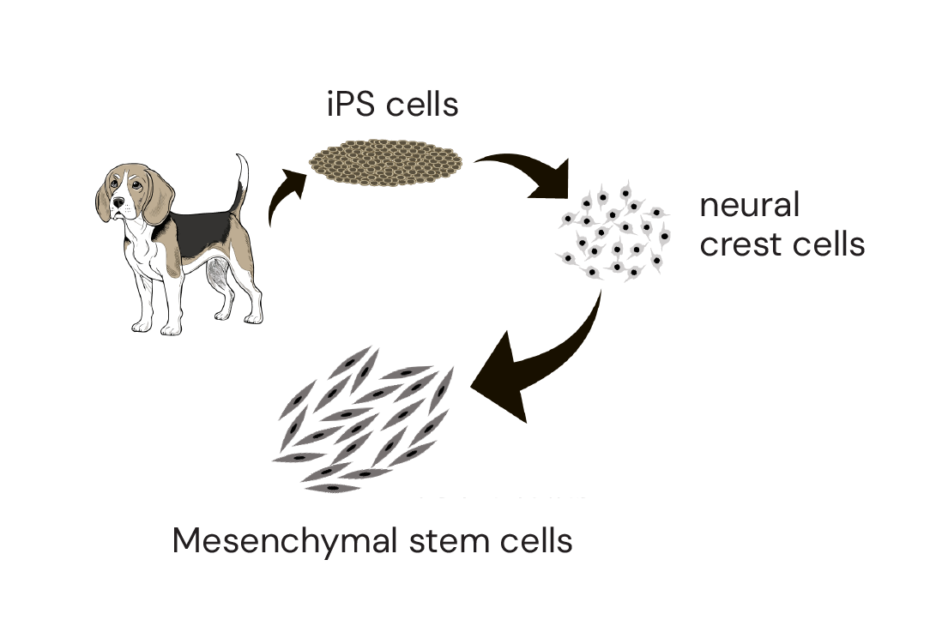
Production of mesenchymal stem cells from canine iPS cells: A method for producing MSCs opens up new possibilities in regenerative veterinary medicine.

New method for producing stem cells revolutionizes canine medicine

A research team at Osaka Metropolitan University, led by Professor Shingo Hatoya and Dr. Masaya Tsukamoto, has developed a groundbreaking method for generating mesenchymal stem cells (MSCs) for veterinary medicine in dogs. MSCs derived from fat or bone marrow possess immunomodulatory and anti-inflammatory properties, but their proliferation capacity is limited, and their quality varies depending on the donor's age and the source of the stem cells. The team generated induced pluripotent stem cells (iPSCs) from four different types of canine cells, which offer unlimited proliferation capacity and can be differentiated into various cell types. By applying a method established in human medicine, they succeeded in producing high-quality MSCs with high proliferation capacity and specific MSC markers. MSCs derived from urine cells proved particularly effective. Dr. Tsukamoto emphasized that this method will advance regenerative veterinary medicine. Professor Hatoya announced plans to further investigate the immunoregulatory and therapeutic effects of iPSC-based MSCs… 

Parvoviruses – Underestimated threat to humans and animals

Parvoviruses, small, single-celled DNA viruses from the family Parvoviridae, are a significant concern in human and veterinary medicine due to their high environmental resistance and infectivity. These viruses infect a wide variety of hosts, including humans, dogs, cats, and other mammals, causing a broad spectrum of illnesses—from mild, self-limiting infections to life-threatening diseases. Particularly problematic are the potentially serious complications in immunocompromised patients, pregnant women, and young animals, as well as the risk of misdiagnosis with other diseases, which can hinder timely diagnosis. This report examines the biology of parvoviruses, the associated risks, detection methods, and the challenges posed by life-threatening misdiagnosis. The aim is to provide a comprehensive understanding of these underestimated pathogens and to emphasize the importance of preventive measures. Biology and properties of parvoviruses: Parvoviruses are among the smallest known viruses, with a diameter of approximately 18–26 nm. Their genome consists of… 

Feline Infectious Peritonitis (FIP): A fatal disease of cats

Feline infectious peritonitis (FIP) is a serious, often fatal viral disease in cats caused by certain strains of the feline coronavirus (FCoV). FCoV is widespread and usually leads to mild gastrointestinal symptoms or is asymptomatic. However, in approximately 5–10% of cases, the virus mutates into a pathogenic strain that causes FIP. The disease primarily affects young cats or animals with weakened immune systems. FIP manifests in two main forms: the effusive ("wet") and the non-effusive ("dry") form. The effusive form is characterized by fluid accumulation in the chest or abdominal cavity, leading to respiratory distress or abdominal distension. The non-effusive form shows granulomatous changes in organs such as the liver, kidneys, or brain, with symptoms including fever, lethargy, weight loss, and neurological abnormalities. The diagnosis is complex and is based on medical history, clinical findings, laboratory values ​​(e.g., hyperglobulinemia, lymphopenia), and imaging procedures or biopsies. 

Gene on the X chromosome is the reason for the fiery fur of red tabby cats

From Tama, Japan's most famous stationmaster cat, to the red-haired Garfield who loves lasagna, orange-furred cats are both cultural icons and beloved pets. Their distinctive color, however, has a genetic distinction: most orange tabby cats are male, while calico and tortoiseshell cats are almost always female. This pattern points to an unknown "orange gene" on the X chromosome, the identification of which has eluded scientists for decades. Researchers at Kyushu University, Japan, have now discovered the X-linked mutation responsible for orange fur in domestic cats. This deletion mutation, in which a section of DNA is missing, not only explains the peculiarity of red genetics but also reveals an entirely new mechanism for promoting orange coloration in animals. The findings are corroborated by a second independent study by researchers at Stanford University, USA. Both papers will be published simultaneously in Current Biology on May 15, 2025. 

Dogs with meningiomas live longer with radiotherapy

Researchers at the Texas A&M College of Veterinary Medicine and Biomedical Sciences (VMBS) have found that dogs with meningiomas—the most common type of brain tumor in dogs—live longer when they receive radiation therapy instead of surgery. Working with colleagues from clinics in the US, UK, and Japan, the researchers compared the treatment history of 285 pet dogs with meningiomas and found that the average survival rate after radiation therapy was just under two years, while the average survival rate after surgery was about ten months. “Whether to perform surgery or radiation therapy for this type of cancer in dogs has been a big question for years,” said Dr. Nick Jeffery, professor of neurology in the VMBS Department of Clinical Small Animal Sciences. “For most dog owners, both treatments are too expensive. Therefore, for the patient’s survival and well-being, it is crucial to…” 

Park entrances: hotspots for infectious dog roundworm eggs

An analysis of soil samples from twelve parks in Dublin, Ireland, revealed that the park entrances were more heavily contaminated with infectious roundworm eggs than any other area of ​​the park tested. Jason Keegan of Trinity College Dublin, Ireland, and his colleagues present these findings in the open-access journal PLOS Neglected Tropical Diseases. Dogs and cats are commonly infected with parasitic roundworms of the genus Toxocara. Infected animals can shed the roundworm eggs into the environment, and humans can become infected by accidentally ingesting the eggs. Many infected individuals show no symptoms, but some may develop mild or severe symptoms, such as an eye infection. Toxocara infection is one of the most widespread parasitic infections worldwide. While previous studies have shown that soils in public parks are frequently contaminated with Toxocara roundworm eggs, it has rarely been investigated whether certain areas within parks are more heavily contaminated than others. To address this… 

Dogs prefer texture when identifying objects

In a new study on how dogs recognize and generalize objects, researchers at Eötvös Loránd University (Budapest) have found that dogs prioritize texture over shape when identifying objects. For the study, the researchers recruited 35 dogs trained to retrieve a target object from a range of distractors. During the test, the dogs were presented with two choices: one matching the target in shape and the other in texture. The test consisted of eight trials: four target trials, in which the dogs had to choose between the trained target object and an object with a similar shape or texture, and four generalization trials, in which the dogs had to choose between two objects: one with a similar shape to the target but a different texture, and one with the same texture but a different shape. Tactile cues were used for their… 

Heart rate of dog and owner is linked

A study conducted at the University of Jyväskylä, Faculty of Psychology, and the Jyväskylä Centre for Interdisciplinary Brain Research found that the heart rate variability of dogs and their owners was linked during interaction. Heart rate variability, the variation in heartbeat intervals, indicates the state of the autonomic nervous system. High heart rate variability is associated with a state of relaxation and recovery, while low heart rate variability indicates stimulation or exertion, such as stress during an exam or athletic performance. In this study, the owner's high heart rate variability was linked to the dog's high heart rate variability, and vice versa. Furthermore, the physical activity levels of the dog and owner adjusted to each other during the study. In other words, when the owner was relaxed, the dog was also relaxed. Additionally, the activity levels of owner and dog were similar during given tasks, such as…