Skip to content

3D imaging system could overcome the limitations of MRI, CT, and ultrasound

In a feasibility study funded by the National Institutes of Health (NIH), researchers from the Keck School of Medicine of USC and the California Institute of Technology (Caltech) have shown that an innovative, non-invasive technique can rapidly create three-dimensional images of the human body from head to toe. The technology combines ultrasound and photoacoustic imaging, which captures sound waves generated by light, to simultaneously obtain images of tissue and blood vessels. The findings, just published in the journal Nature Biomedical Engineering, have the potential to fill existing gaps in medical imaging. Imaging techniques are an indispensable part of modern medicine, playing a vital role in the treatment of injuries, infections, cancer, chronic diseases, and much more. However, today's gold standard methods – ultrasound, X-ray, computed tomography (CT), and magnetic resonance imaging (MRI) – each have their limitations. These include the cost and time involved in each examination, as well as...
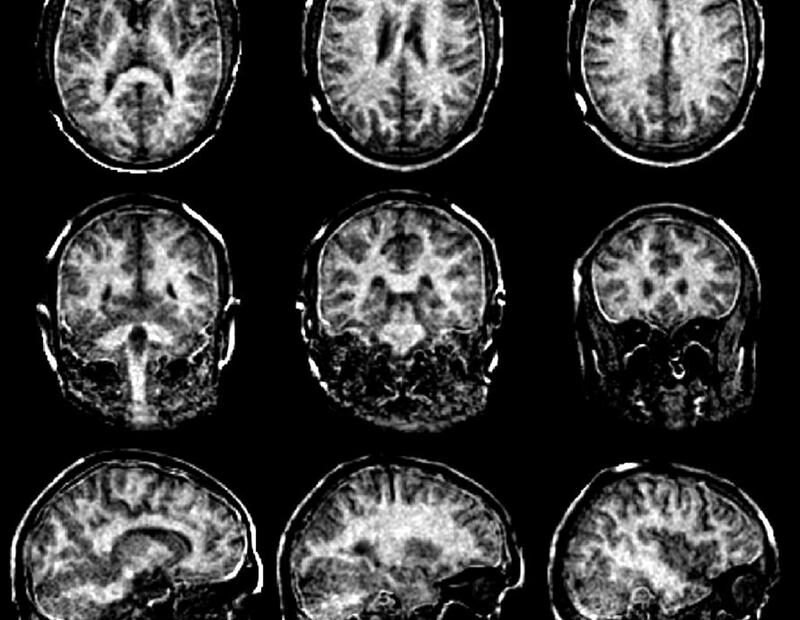

Multiple sclerosis is to be detected early with better MRI scans of the myelin sheaths in the brain. | Copyright: ETH Zurich

Preventive diagnostics: MRI can visualize multiple sclerosis

ETH researchers have developed a new magnetic resonance imaging (MRI) method that can detect and better monitor multiple sclerosis (MS) at an early stage. The method images the myelin sheaths in the brain more accurately than previously possible. The loss of myelin sheaths is an important characteristic of multiple sclerosis. The new MRI method with a special head scanner could also help researchers to better visualize other solid tissue types such as connective tissue, tendons, and ligaments. The new MRI method developed by ETH researchers measures myelin content directly. It assigns numerical values to the MRI images of the brain. These indicate how much myelin is present at a specific location compared to other areas of the image. For example, the number 8 means that the myelin content at this location is only 8 percent of a maximum value of 100, indicating a significant thinning of the myelin sheaths. In principle, the darker the area and the smaller the number...