Skip to content

The American People Must Decide: Will Moral Leadership Yield to Donald Trump’s Epstein Entanglement?

The United States stands at a profound moral crossroads. The question is no longer whether Donald Trump, the 47th President, was merely acquainted with Jeffrey Epstein. Newly unsealed court documents, flight logs, and sworn testimonies from the Epstein network—now fully in the public domain—establish beyond reasonable doubt that Trump was not a passive bystander. He was a knowing participant in a circle that enabled the systematic abuse of minors. The American electorate, in choosing him again, must now confront an ethical dilemma of historic gravity: Does the nation surrender its foundational principles of accountability, protection of the vulnerable, and the rule of law in exchange for political expediency? This is not a partisan accusation. It is a demand for moral clarity. The evidence is not rumor, not conspiracy, not “fake news.” It is documented in federal court filings, victim statements,… 
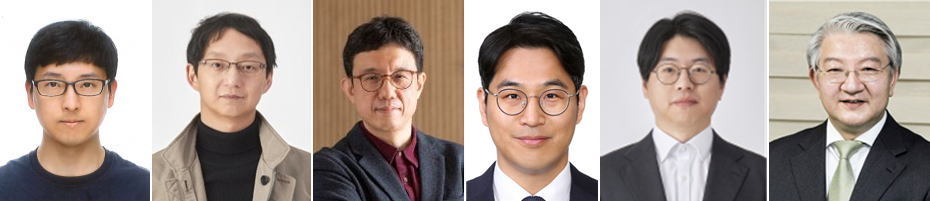
The KAIST AI team is making medical history: It is developing the world's first AI foundation model for medicine. Credits: KAIST

World First: AI Foundation Model for Global Medicine Launches

KAIST announced on November 14 that it has been selected as a key participating institution for the “Lunit Consortium” supervised by the Ministry of Science and ICT for the “Project to Develop a Specialized AI Foundation Model” and has officially begun developing an AI foundation model for the fields of medicine and life sciences. As part of this project, KAIST plans to develop a “specialized AI foundation model for medicine” that encompasses the entire lifecycle of bio and medical data, and aims to drive the creation of an AI-based innovation ecosystem for the life sciences. The “Lunit Consortium” includes seven companies—Lunit, Trillion Labs, Kakao Healthcare, Igenscience, SK Biopharm, and Rebellion—as well as nine medical and research institutions, including KAIST, Seoul National University, NYU, National Health Insurance Service Ilsan Hospital, and Yonsei Severance Hospital. This consortium will be supported by 256 state-of-the-art B200 GPUs to develop and demonstrate a “Chain of Evidence-Based Full-Cycle Medical Science AI Model,” a…

Paleogenomics: Humans and Dogs Spread Together Across Eurasia

A genome study shows that over the last 10,000 years, various Eurasian cultures have maintained and spread genetically distinct dog populations. Dogs have been an integral part of human societies in Eurasia for at least 20,000 years, accompanying us through many social and cultural upheavals. A new study by an international team, published in the journal “Science” and led by Laurent Frantz, a paleogeneticist at Ludwig Maximilian University of Munich (LMU) and Queen Mary University of London (QMUL), shows that the spread of new cultures with different lifestyles in Eurasia was often accompanied by the spread of specific dog populations. Scientists from Ludwig Maximilian University (LMU), Queen Mary University of London (QMUL), the Kunming Institute of Zoology and Lanzhou University in China, and the University of Oxford sequenced and analyzed the genomes of 17 ancient dogs from Siberia, East Asia, and the Central Asian steppe – including, for the first time, specimens from… 

Antibiotic concentrations in the environment could accelerate the global spread of resistance

Antibiotic resistance is widely considered one of the most pressing public health challenges of the 21st century. A new study now shows that even the smallest amounts of antibiotics, commonly found in soils, rivers, wastewater, and agricultural runoff, can significantly accelerate the spread of antibiotic resistance genes among bacteria. The study, published in the journal “Biocontaminant ”, investigates how four common environmental antibiotics affect vertical and horizontal gene transfer – the two main ways bacteria pass on resistance. The research team examined tetracycline, ampicillin, kanamycin, and streptomycin at concentrations ranging from extremely low environmental levels to sub-inhibitory concentrations. Such concentrations are often detected in rivers, agricultural soils, animal farming facilities, and hospital wastewater. The scientists developed three experimental models to investigate the spread of resistance. The first model focused on vertical gene transfer, i.e., the transfer of genes from parent cells to their offspring.… 

Labor pains: PIEZO channels translate stretching and pressure into coordinated uterine contractions

Wissenschaftler des Scripps Research Institute haben erstmals auf molekularer Ebene geklärt, wie die Gebärmutter während der Geburt physikalische Kräfte wie Dehnung und Druck wahrnimmt und in rhythmische Kontraktionen umsetzt. Die in Science veröffentlichte Studie identifiziert die Ionenkanäle PIEZO1 und PIEZO2 als zentrale Sensoren, die eine koordinierte Wehentätigkeit ermöglichen. PIEZO1 sitzt in der glatten Uterusmuskulatur und reagiert auf den zunehmenden Druck während der Wehen. PIEZO2 befindet sich in den sensorischen Nerven von Zervix und Vagina und wird durch die Dehnung beim Tiefertreten des Kindes aktiviert. Beide Kanäle erzeugen elektrische und chemische Signale, die über eine neuronale Reflexbahn die Uteruskontraktionen verstärken. Sie kompensieren sich teilweise gegenseitig, sodass die Geburt auch bei Ausfall eines Pfades fortgesetzt werden kann. In Mausmodellen wurde PIEZO1 oder PIEZO2 selektiv in Uterus oder umliegenden Nerven deaktiviert. Tiere ohne beide Proteine zeigten deutlich reduzierte Kontraktionskraft und verzögerte Geburten. Die… 

Herzinfarkt: Sofortige Stent-Implantation in weiteren Arterien nicht immer erforderlich – MRT-Scan als Alternative

Bei einem akuten Herzinfarkt muss die verschlossene Koronararterie unverzüglich durch eine Stent-Implantation geöffnet werden. Verengungen in anderen Gefäßen können jedoch sicher später behandelt werden. Dies zeigt eine großangelegte Studie von Kardiologen des Radboud University Medical Center, die im New England Journal of Medicine veröffentlicht wurde. In der randomisierten Studie mit 1.146 Patienten aus 41 Kliniken wurde untersucht, ob zusätzliche Engstellen unmittelbar während der Notfallbehandlung oder erst bis zu sechs Wochen später versorgt werden sollten. Die Teilnehmer hatten einen vollständigen Gefäßverschluss durch ein Blutgerinnsel. Eine Gruppe erhielt die komplette Intervention sofort, die andere eine verzögerte Behandlung der weiteren Verengungen. Nach dreijähriger Nachbeobachtung gab es keine Unterschiede hinsichtlich Sterblichkeit, erneuter Infarkte oder stationärer Aufnahmen wegen Herzinsuffizienz. Bemerkenswert: In der verzögerten Phase wurden nur halb so viele zusätzliche Engstellen mit Stents versorgt wie im akuten Setting. Hintergrund: Im Notfall wird die Notwendigkeit einer… 

FDA-Zulassung für icotec-CMORE®CT-System erweitert BlackArmor®-Technologie auf hinteren Hals-Brust-Wirbelbereich

Das Schweizer Medizintechnik-Unternehmen icotec hat von der US-amerikanischen Arzneimittelbehörde FDA die Zulassung für das CMORE®CT-System erhalten. Damit wird die BlackArmor® Engineered Carbon/PEEK-Technologie erstmals auf die posteriore Stabilisierung im zervikothorakalen Bereich der Wirbelsäule ausgeweitet. Das System umfasst ein vollständiges Instrumentarium und Implantatportfolio mit polyaxialen Schrauben, geraden sowie vorgeformten Stäben und axialen beziehungsweise parallelen Verbindungselementen. Es ermöglicht Chirurgen eine flexible Anpassung an unterschiedliche anatomische und pathologische Bedingungen. BlackArmor® besteht aus durchgehenden hochfesten Carbonfasern, die in einem speziellen icotec-Verfahren mit PEEK verbunden werden. Die resultierende 3D-Faserarchitektur macht die Implantate strahlendurchlässig in allen gängigen Bildgebungsverfahren – MRT, CT und Röntgen. Dies verbessert insbesondere die postoperative Diagnostik und die Planung adjuvanter Tumortherapien. Die Zulassung gilt für den US-Markt und erweitert das bestehende icotec-Portfolio an nichtmetallischen Wirbelsäulenimplantaten. Das Unternehmen plant die Markteinführung in den Vereinigten Staaten in Kürze. Hintergrund: icotec gilt als Pionier bei der Entwicklung… 

Streeck und die unheilvolle Rückkehr der Selektion – ein Kommentar

Die Deutsche Stiftung Patientenschutz hat empört auf Überlegungen des Suchtbeauftragten der Bundesregierung, Hendrik Streeck, zu einer eingeschränkten Arzneivergabe an Hochbetagte reagiert. Diese Empörung ist nicht nur berechtigt – sie ist ein Alarmsignal. Denn Streecks öffentliche Frage, ob eine 100-Jährige mit Krebs noch eine kostspielige Therapie erhalten solle, markiert den Moment, in dem die Selektion – jenes Prinzip, das zwischen 1933 und 1945 zur systematischen Vernichtung „unwerten Lebens“ führte – in neuer, vermeintlich rationaler Gestalt in die deutsche Medizin zurückkehrt. Streeck sprach am 12. November 2025 bei Welt TV von „Phasen im Leben“, in denen bestimmte Medikamente „nicht mehr einfach so eingesetzt“ werden sollten. Er forderte „klarere Richtlinien“ für die Vergabe teurer Arzneimittel – mit Blick auf die Gesundheitskosten. Was als ökonomische Überlegung daherkommt, ist in Wahrheit eine ethische Grenzüberschreitung: Die Bewertung von Leben nach Alter, Prognose und Preis. Genau hier… 

Skandal in der Helios Endo-Klinik Hamburg: Patienten nach Operationen bis zu 60 Stunden ohne ärztliche Visite

In one of Germany's most renowned specialized clinics, the Helios Endo-Klinik, an incident has occurred that shakes the foundations of patient safety. Last week, freshly operated patients on Ward 4 of the clinic were cared for for up to 60 hours without a single medical visit. Instead, nurses without medical training as doctors took over their sole care. Affected individuals reported severe pain that could not be adequately assessed by qualified professionals, and a particularly alarming case: a patient developed severe shortness of breath just three hours after surgery and collapsed. The nurses reacted promptly, but without a doctor's expertise, a potentially life-threatening complication like a pulmonary embolism could have gone undetected. This incident, documented by an insurance of the affected person to LabNews Media LLC, raises serious accusations against the Helios Group. It reveals not only a local outlier but a systemic...

Minus patients in private clinics: Early discharges endanger care – Helios clinics in focus

In Germany's private clinics, particularly among large corporations like Helios clinics, patients are increasingly discharged prematurely, even though medical reasons warrant longer inpatient treatment. This practice, known as the "minus patient" phenomenon, arises from the rigid DRG (Diagnosis Related Groups) system of flat-rate fees, which dictates fixed lump sums per diagnosis and penalizes longer stays as costly losses. Experts and doctors see this as a direct consequence of profit-oriented structures that prioritize shareholder interests over patient safety. While public clinics face similar challenges, accusations are mounting against private operators, where profit pressure from parent corporations exacerbates the situation. The DRG system, in use since 2004, pays clinics a flat rate per case, regardless of actual costs or length of stay. The average length of stay nationwide is 7.2 days, with private clinics having shorter stays at 6.8 days compared to public ones at 7.5 days. In total, around 17 million inpatient cases were billed in 2023, with 4.1 million of them in private hospitals –...