Zum Inhalt springen

Krebsmedikamente könnten Parkinson bekämpfen

Forscher der Johns Hopkins Medicine sagen, sie hätten in Studien mit genetisch veränderten Mäusen ein potenziell neues biologisches Ziel im Zusammenhang mit Aplp1 entdeckt, einem Zelloberflächenprotein, das die Ausbreitung des für die Parkinson-Krankheit verantwortlichen Alpha-Synucleins vorantreibt. Die am 31. Mai in Nature Communications veröffentlichten Ergebnisse zeigen, wie Aplp1 mit Lag3, einem anderen Zelloberflächenrezeptor, in einem wichtigen Teil eines Prozesses verknüpft ist, der dazu beiträgt, schädliche Alpha-Synuclein-Proteine in die Gehirnzellen zu transportieren. Diese Proteinansammlungen sind Kennzeichen der Parkinson-Krankheit. Besonders bemerkenswert sei, so die Forscher, dass Lag3 bereits das Ziel eines von der US-amerikanischen Food and Drug Administration (FDA) zugelassenen Kombinationskrebsmedikaments sei, das dem menschlichen Immunsystem mithilfe von Antikörpern „beibringt“, wonach es suchen und was es zerstören soll. Original Paper

Depression: At-home ketamine therapy  can be effective treatment

Mindbloom, the leading provider of psychedelic therapy, announced today the findings of the largest peer-reviewed study in the history of ketamine therapy and psychedelic medicine. The study was published in the Journal of Affective Disorders, and was authored by psychiatrists and researchers from Johns Hopkins University School of Medicine, NYU School of Medicine, the Institute for Psycholinguistics and Digital Health, and Mindbloom. Key Findings: Largest study: The study reviewed data from 11,441 Mindbloom clients, making it the most comprehensive examination of ketamine therapy to dateEffectiveness: 62% of clients reported clinically-significant improvements in depression or anxiety, with 28% achieving remissionRapid results: Significant symptom improvements were found after only four sessionsSafety: Fewer than 5% of clients reported adverse effectsBenefits of continued treatment: 84% of clients who experienced significant improvements in an initial round of treatment maintained improvements or recovered in a second… 

„Künstlicher Lymphknoten“ zur Krebsbehandlung

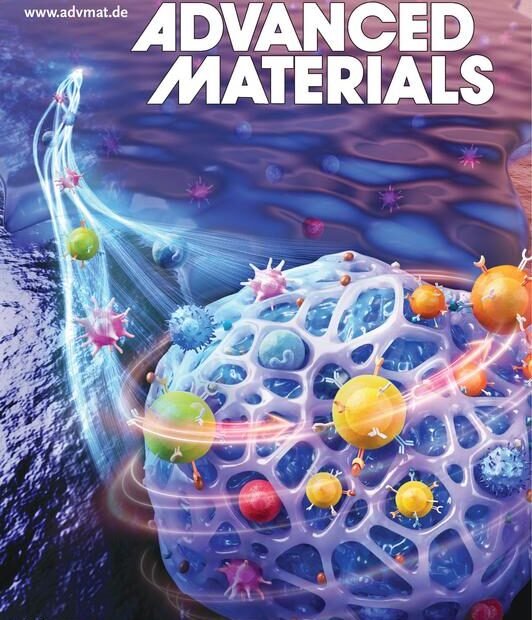
Wissenschaftler von Johns Hopkins Medicine haben einer neuen Studie an Mäusen und menschlichen Zellen zufolge einen künstlichen Lymphknoten entwickelt, der Krebs behandeln kann. Der neu entwickelte Lymphknoten – ein mit Komponenten des Immunsystems gefüllter Beutel – wird unter die Haut implantiert und soll als Lernzentrum und Stimulator fungieren, um T-Zellen des Immunsystems beizubringen, Krebszellen zu erkennen und abzutöten. Zur Schaffung des künstlichen Lymphknotens verwendeten die Wissenschaftler Hyaluronsäure, eine feuchtigkeitsspendende Substanz, die häufig in Kosmetika und Lotionen verwendet wird und auf natürliche Weise in der Haut und den Gelenken des Körpers vorkommt. Aufgrund ihrer Eigenschaften wird Hyaluronsäure häufig in biologisch abbaubaren Materialien wie Wundheilungspflastern verwendet, die implantiert oder auf den Körper aufgetragen werden. Zu diesen Eigenschaften gehört, dass Hyaluronsäure über einen Zelloberflächenrezeptor mit T-Zellen interagieren kann. Für die aktuelle Studie verwendete das Team der Johns Hopkins University Hyaluronsäure als Gerüst oder… 

Breaking News: Vogelgrippe H5N1. Credits: LabNews Media LLC

Mitsubishi Tanabe Pharma America to Highlight Expansive ALS Research

Mitsubishi Tanabe Pharma America, Inc. (MTPA) today announced eight presentations at the European Network to Cure Amyotrophic Lateral Sclerosis (ENCALS) 2024 Annual Meeting being held in Stockholm, Sweden from June 17-20, 2024. The presentations will cover a wide range of translational research in amyotrophic lateral sclerosis (ALS), including the extension study results from the pivotal Phase 3 trial (MT-1186-A01) that contributed to RADICAVA® (edaravone) U.S. approval. Final data from the global, multi-center, double-blind, Phase 3b study MT-1186-A02 will be presented, including the post-marketing study evaluated an investigational once-daily dosing regimen of RADICAVA ORS® (edaravone) compared to the FDA approved on/off regimen administered in 28-day cycles in people with ALS over 48 weeks. In addition, full results will be presented from the Phase 3 open-label safety extension (MT-1186-A03) of RADICAVA ORS over 96 weeks. Results will be presented from an interim… 

Pierre Fabre Laboratories Announce IND Filing for PFL-002/VERT-002

Pierre Fabre Laboratories today announced the filing of an investigational new drug („IND“) application to the U.S. Food and Drug Administration („FDA“) to initiate a first-in-human (FIH) Phase I/II clinical trial with PFL-002/VERT-002 for solid tumors including non-small cell lung cancer (NSCLC). The PFL-002/VERT-002 Phase I/II trial is a multi-center, international study aimed to assess the safety, tolerability, pharmacokinetics (PK), pharmacodynamics (PD) and preliminary efficacy of PFL-002/VERT-002 in NSCLC patients with MET alterations, including those acquired as resistance mechanism to other treatments. The FDA will review the application and determine its acceptability.

Breakthrough Clinical Data for Macrophage Cell Therapy in End Stage Liver Disease

Resolution Therapeutics Limited („Resolution“), a clinical-stage biopharmaceutical company developing macrophage cell therapies to treat end-stage liver disease today announces key data presentations with the University of Edinburgh at the EASL Congress 2024, held in Milan, Italy which demonstrate the significant potential of macrophage cell therapy as a treatment for advanced liver cirrhosis. https://www.clinicaltrialsregister.eu/ctr-search/search?query=2015-000963-15

Foto: Pexels.com

AI tool predicts how cancer patients will respond to immunotherapy

In a proof-of-concept study, researchers at the National Institutes of Health (NIH) have developed an artificial intelligence (AI) tool that uses routine clinical data, such as that from a simple blood test, to predict whether someone’s cancer will respond to immune checkpoint inhibitors, a type of immunotherapy drug that helps immune cells kill cancer cells. The machine-learning model may help doctors determine if immunotherapy drugs are effective for treating a patient’s cancer. The study, published June 3, 2024, in Nature Cancer, was led by researchers at the National Cancer Institute’s (NCI) Center for Cancer Research and Memorial Sloan Kettering Cancer Center in New York. NCI is part of the National Institutes of Health. Currently, two predictive biomarkers are approved by the Food and Drug Administration for use in identifying patients who may be candidates for treatment with immune checkpoint inhibitors.… 

Immunofoco Biotech to Unveil Solid Tumor CAR-T Programs Clinical Trial Data

On June 1st, 2024, Immunofoco Biotech, a company dedicated to developing cell therapy products for solid tumors, announced that the clinical research data for two of its products have been accepted for presentation at the 2024 American Society of Clinical Oncology (ASCO) Annual Meeting. The company will showcase the latest clinical trial findings for IMC001 in a poster presentation and for IMC002 in an online presentation during the ASCO event, scheduled from May 31 to June 4, 2024.

Prostate Cancer: Promising Therapy Candidate

TLX591 is an investigational anti-PSMA[1] radio-antibody-drug conjugate (rADC) therapy being developed for the treatment of mCRPC, differentiated by a short two-week dosing regimen.Reported median radiographic progression-free survival (rPFS) is 8.8 months.Builds on prior data from the ProstACT SELECT[2] trial, demonstrating favourable safety profile and biodistribution[3]. The study has reported a median rPFS of 8.8 months, representing an encouraging signal of the potential efficacy of TLX591 in this patient population. The evaluable sample size for rPFS comprised 23 patients with previously treated, progressive mCRPC and who received two 76 mCi intravenous (IV) infusions of TLX591, 14 days apart[5]. The SELECT trial included a heterogeneous population of low, medium and high disease burden patients to facilitate imaging cross-comparison, with the majority having undergone two prior lines of therapy. TLX591 is being further evaluated in the Phase III ProstACT GLOBAL trial in first… 

First Patient in the Second Phase 3 Trial Evaluating Rilvegostomig

Compugen Ltd. (Nasdaq: CGEN) (TASE: CGEN), a clinical-stage cancer immunotherapy company and a pioneer in computational target discovery, today announced it is entitled to receive a milestone payment from AstraZeneca (LSE/STO/Nasdaq: AZN) triggered by the dosing of the first patient in a Phase 3 trial evaluating rilvegostomig, AstraZeneca’s PD-1/TIGIT bispecific antibody. The TIGIT component of rilvegostomig is derived from Compugen’s clinical-stage anti-TIGIT antibody, COM902. Both rilvegostomig and COM902 are designed to have reduced Fc effector function. The trial, called TROPION-Lung10, is evaluating the efficacy and safety of rilvegostomig as monotherapy and in combination with datopotamab deruxtecan (Dato-DXd), AstraZeneca and Daiichi Sankyo’s (TSE: 4568) TROP2-directed antibody drug conjugate versus pembrolizumab as first-line treatment for patients with locally advanced or metastatic non-squamous non-small cell lung cancer with high PD-L1 expression (TC ? 50%) and without actionable genomic alterations. The trial is sponsored… 

Cancer Check Labs Detects Whole Tumor Cells In Cancer Patients As Early as Stage 0

In collaboration with Comprehensive Blood & Cancer Center, Cancer Check Labs is the first to demonstrate the ability to detect and produce images of whole circulating tumor cells (CTCs) in stage 0 and stage 1 breast cancer patients. Detailed in a new white paper, Cancer Check Labs has successfully produced whole images of CTCs from the blood of several breast cancer patients, which comprised tangible cellular tissue that can be placed on a glass slide for visual inspection by a board-certified pathologist. Upon examination, a board-certified pathology report that conforms with established standard of care protocols is issued to the customers. Further, because the research has shown CTCs to be detected as early as Stage 0, Cancer Check arguably provides the earliest cancer detection test available. Among the many implications of CTC detection is the potential for providing invaluable information… 

Probiotika als HIV-Vakzin

Nikolai Scherbak, Dozent für Biologie an der Universität Örebro, ist gerade von einer Konferenz in Südafrika nach Schweden zurückgekehrt. Dort stellte er eine Studie vor, die die Chancen auf die Entwicklung eines Impfstoffs gegen HIV erhöht. Gemeinsam mit anderen Forschern hat er probiotische E. coli-Bakterien mit einem Teil des HIV-Virus genetisch verändert. „Mithilfe modernster Technologie fügen wir DNA-Sequenzen an einer bestimmten Stelle in das Bakterium ein. Wir verwenden einen Teil des HIV-Virus, der nicht infektiös ist, aber dennoch die Produktion neutralisierender Antikörper im Körper auslöst“, sagt Scherbak. E. coli-Bakterien leben im Darm von Menschen und anderen Tieren, und einige Varianten verursachen verschiedene Arten von Infektionen. Es gibt jedoch auch nützliche Varianten der Bakterien, die zu einer besseren Darmflora beitragen können. Eine davon, ein probiotisches E. coli-Bakterium des Stammes Nissle, wurde von den Forschern aus Örebro in der Studie verwendet. „Die…