Skip to content

Cytokine Panels Informed Clinical Management in Nearly 30% of Pediatric Cases

Researchers from Children’s Hospital of Philadelphia (CHOP) demonstrated how rapid testing of cytokine levels can help distinguish different diseases with similar symptom profiles. Nearly 30% of clinicians changed how they managed disease in children after receiving cytokine level information, showing the potential for this testing to impact clinical practice. The findings were recently published in the Journal of Allergy and Clinical Immunology. During the COVID-19 pandemic, doctors began diagnosing patients with multisystem inflammatory syndrome in children (MIS-C), a condition that occurs weeks after infection and results from inflammation throughout the body. However, the initial symptoms – such as high fever and changes in blood pressure – are very similar to those of an acute, severe COVID-19 infection, so doctors needed to be able to distinguish between the two conditions, since each one requires a very different course of treatment. Distinguishing… 
Phase 3 ENSURE Program of Vidofludimus Calcium in Relapsing Multiple Sclerosis

Immunic, Inc. (Nasdaq: IMUX), a biotechnology company developing a clinical pipeline of orally administered, small molecule therapies for chronic inflammatory and autoimmune diseases, today announced a positive outcome of the non-binding, interim futility analysis of its phase 3 ENSURE program, investigating lead asset, nuclear receptor related 1 (Nurr1) activator, vidofludimus calcium (IMU-838), for the treatment of relapsing multiple sclerosis (RMS). Based on the outcome of the interim futility analysis, an unblinded Independent Data Monitoring Committee (IDMC) has recommended that the trials are not futile and should continue as planned. The ongoing ENSURE program comprises two identical multicenter, randomized, double-blind phase 3 trials designed to evaluate the efficacy, safety and tolerability of vidofludimus calcium versus placebo in RMS patients. Each of the trials, titled ENSURE-1 and ENSURE-2, is expected to enroll approximately 1,050 adult patients with active RMS at more than… 

Mpox in Deutschland: Hintergrund

  • News

Mpox, früher als Affenpocken bekannt, ist in Deutschland weiterhin ein relevantes Gesundheitsthema. Obwohl die Fallzahlen seit dem Ausbruch 2022 deutlich zurückgegangen sind, treten nach wie vor sporadisch Infektionen auf. Im Jahr 2024 wurden bisher 86 Mpox-Fälle in Deutschland gemeldet, davon 33 allein in Berlin[9]. Am 18. Oktober 2024 wurde erstmals ein Fall der neuen Mpox-Variante Klade Ib in Deutschland nachgewiesen[1][2]. Diese Variante, die sich seit einiger Zeit in Afrika ausbreitet, gilt als möglicherweise ansteckender und gefährlicher als frühere Varianten[7]. Der betroffene Patient hatte sich im Ausland infiziert. Das Robert Koch-Institut (RKI) schätzt die Gefährdung für die breite Bevölkerung trotz dieses Einzelfalls weiterhin als gering ein[2]. Zur Prävention von Mpox steht in Deutschland ein zugelassener Impfstoff zur Verfügung. Die Ständige Impfkommission (STIKO) empfiehlt die Impfung für bestimmte Risikogruppen, darunter Männer, die Sex mit Männern haben und häufig die Partner wechseln, sowie… 

Heart failure: Often unrecognized, but treatable

Heart failure, medically known as cardiac insufficiency, is a widespread condition that is often recognized late. Many affected individuals ignore the first signs such as shortness of breath, fatigue, or swollen legs and attribute them to age or other ailments. However, these symptoms in particular can be precursors to heart failure, in which the heart can no longer pump sufficient blood and oxygen throughout [...] Heart failure: Often unrecognized, but treatable

Researchers create 3D X-ray image of a skyrmion

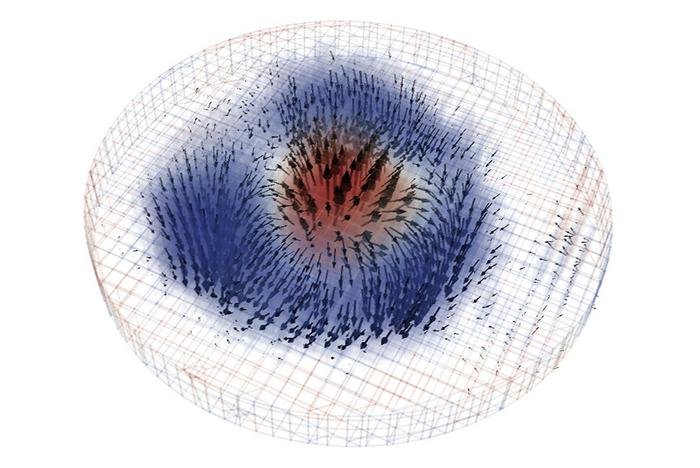
A difficult-to-describe nano-object called a magnetic skyrmion could one day lead to new microelectronic devices that can do much more – for example, store huge amounts of data – while consuming much less power. But in order to ever reliably use skyrmions in computing devices, including quantum computers, researchers need to understand them even better. Peter Fischer, a lead researcher at the Department of Energy’s Lawrence Berkeley National Laboratory (Berkeley Lab), led a project to create 3D X-ray images of skyrmions that can characterize or measure the spin orientation throughout the entire object. "Our results provide the foundation for nanometer technology for spintronic devices," said Fischer. The work was recently published in Science Advances. Magnetic skyrmions can be thought of as spinning magnetic vortices, explains David Raftrey, a student researcher in Fischer’s team who was the lead author of this study. In the center, the magnetic spin points up,… 

Discovery could change the landscape of autoimmune therapy, according to study

Myasthenia gravis (MG) is a chronic autoimmune disease in which antibodies block communication between nerves and muscles, leading to skeletal muscle weakness. It can cause double vision, difficulty swallowing, and occasional severe breathing problems, among other symptoms. Many autoimmune diseases like MG, as well as a number of other human diseases, result from the inability to regulate the activity of IgG antibodies – these diseases are collectively referred to as IgG-mediated pathologies. In a paper published this month in Cell, researchers at Emory University have discovered a family of enzymes that reduce IgG-mediated pathologies in diseases like MG. The findings, conducted in mouse models, show that a particular enzyme (an endoglycosidase called CU43) was particularly effective in treating diseases caused by overactive antibodies. The newly discovered enzyme was used to treat a range of different IgG-mediated pathologies in mice and proved… 

Aujeszkysche Krankheit: Kein Impfstoff für Hunde und Katzen

Die Aujeszkysche Krankheit (AK) stellt eine ernsthafte Bedrohung für Hunde und Katzen dar und kommt in Wildschweinpopulationen vor. Diese Viruserkrankung, die primär Schweine befällt, verläuft bei Hunden und Katzen immer tödlich[1][2]. Der Erreger, das Suide Herpesvirus 1, auch als Pseudorabiesvirus bekannt, ist in Deutschland vor allem in Wildschweinpopulationen verbreitet[7]. Die Übertragung auf Hunde und Katzen […] Aujeszkysche Krankheit: Kein Impfstoff für Hunde und Katzen

Mpox Klade I erstmals in Deutschland nachgewiesen

Die neue und mutmaßlich gefährlichere Affenpocken-Variante „Klade I“, wegen der die Weltgesundheitsorganisation eine Notlage ausgerufen hat, ist erstmals in Deutschland nachgewiesen worden. Die Infektion durch die neue Klade Ib sei am Freitag gemeldet worden, teilte das Robert-Koch-Institut am Dienstag mit. Die betroffene Person soll sich demnach im Ausland infiziert haben. Das RKI geht aktuell weiterhin […] Neue Affenpocken-Variante erstmals in Deutschland nachgewiesen

First Targeted Treatment for Grade 2 IDH-Mutant Glioma

Servier Canada announced the approval and commercial availability of VORANIGO™ (vorasidenib tablets), the first targeted therapy for the treatment of Grade 2 isocitrate dehydrogenase (IDH)-mutant glioma in adults and pediatric patients aged 12 years and older, following surgery. VORANIGO™ offers glioma patients the convenience of a once-daily oral treatment, providing them with an opportunity to actively manage their disease. Canada is the second country after the United States to receive regulatory authorization for VORANIGO™. Gliomas are the second-most common type of cancer in Canadians under 40 years old and the second-most common cause of cancer-related deaths in this group.1 These slow-growing brain tumours spread within the brain leading to disruptions in neurological function, seizures, and cognitive impairment. Diffuse gliomas with IDH mutations represent the most common malignant primary brain tumours diagnosed in adults younger than 50 years of age. They… 

Künstliche „Nase“ erschnüffelt verdorbenes Obst und Fleisch

Although the sense of smell has always played an important role in fighting diseases like plague and tuberculosis, the human nose is generally not sensitive enough to be used as a reliable diagnostic tool. A new artificial "nose" that mimics our sense of smell, however, could now make it possible to detect undiagnosed diseases, dangerous gases, and food beginning to spoil. Researchers say their sensor distinguishes the various gases it was tested on with 96.7 percent accuracy. This result is not only on par with the performance of the best electronic noses currently available, but in some areas even surpasses them. To understand this, here's how the antenna nose works: The antenna sends radio signals of various frequencies into the environment. It then analyzes how they are reflected back. The behavior of the signals changes depending on...