Skip to content

Novartis records multi-million dollar loss on recent acquisition

The Swiss pharmaceutical company Novartis has to make a painful write-down of $800 million on a recently completed acquisition[1]. The acquisition in question was only finalized in August of this year, making the situation particularly noteworthy[2]. This development underscores the inherent risks in the pharmaceutical industry, where even carefully vetted investments can prove to be loss-making[2]. Experts point out that such setbacks are not uncommon, especially when acquiring startups without market-ready products[2]. The pharmaceutical industry is known for regularly operating with billions of dollars, with occasional losses in the millions considered part of the business risk[2]. Despite thorough due diligence, new therapies can fail even in late stages of development, leading to significant financial losses[2]. Sources:[1] ubernahme-flop-kostet-novartis-hunderte-millionen-766075 https://www.handelszeitung.ch/unternehmen/ubernahme-flop-kostet-novartis-hunderte-millionen-766075[2] Warum Novartis 800 Millionen Dollar auf eine Akquisition abschreiben muss, die erst im August abgeschlossen wurde https://www.handelszeitung.ch/unternehmen/ubernahme-flop-kostet-novartis-hunderte-millionen-766075

Copper causes kidney cancer

A new study led by researchers at the University of Cincinnati Cancer Center details how copper accumulation promotes the growth and progression of clear cell renal cell carcinoma (ccRCC) – the most common type of kidney cancer. The findings were published on October 31 in Cancer Discovery, a journal of the American Association for Cancer Research. Study findings Copper is a vital trace element needed for energy production in the body and allows humans to live in an oxygen-rich atmosphere. Maria Czyzyk-Krzeska, MD, PhD, of the Cancer Center, the study’s lead author, said that increased copper accumulation is associated with poorer outcomes for patients with ccRCC. Using a multidisciplinary approach, Czyzyk-Krzeska and her colleagues found that ccRCC cells accumulate more copper as they progress from stage 1 to metastatic disease. The team found that high copper levels help cancer cells produce more of a… 

MS after mRNA vaccine: LabNews starting unique database

LabNews is looking for patients who have developed multiple sclerosis within three years after vaccination with a Covid-19 mRNA vaccine. Those affected can contact us via the contact details on our website. Please note that we need to verify both the identities and the authenticity of the patient files before we can publish your case.

Glioblastoma cells visible to attacking immune cells

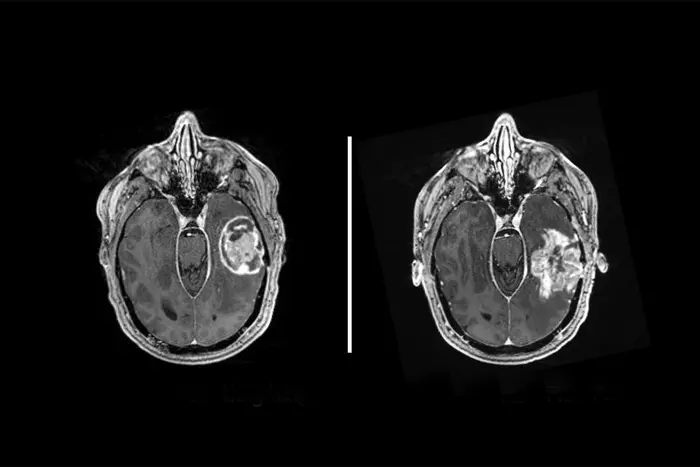
Even with the most advanced therapies, patients with glioblastomas – an aggressive brain tumor – typically survive less than two years after diagnosis. Attempts to treat this cancer with the latest immunotherapies have so far been unsuccessful, likely because glioblastoma cells have few or no natural targets for the immune system. In a cell-based study, scientists at Washington University School of Medicine in St. Louis have caused glioblastoma cells to present targets for the immune system, potentially making them visible to immune cells and susceptible to immunotherapies. The strategy involves a combination of two drugs, both already approved by the FDA to treat different types of cancer. The study is published online in the journal Nature Genetics. https://www.nature.com/articles/s41588-024-01880-x

COVID-19 restrictions changed global spread of flu viruses

Although travel restrictions and social measures during the COVID-19 pandemic led to a dramatic global decline in seasonal flu cases, certain flu strains in specific regions ensured that the virus continued to circulate and evolve, according to a new study. This was the case, for example, in tropical areas with fewer travel restrictions, including South and Southeast Asia. The spread of seasonal flu is closely linked to social behavior, particularly air travel, and the periodic evolution of new virus strains that evade immunity from previous infections or vaccinations. In 2020, non-pharmaceutical interventions (NPIs) introduced to combat COVID-19—such as lockdown policies, mandated social distancing, mask-wearing, and travel bans—had a dramatic impact on the transmission and evolution of the flu virus. Due to these interventions, cases of seasonal flu caused by A-subtypes H1N1 and H3N2, as well as Influenza B subtypes Victoria and Yamagata, declined sharply worldwide. Here… 

Liver clock can control weight reduction

People who work the night shift or at unusual hours and eat at irregular times are more prone to weight gain and diabetes, likely because their eating habits do not align with daylight and typical meal times. But is it possible to ward off the negative effects of eating at these “unusual” times, even though it is biologically undesirable? A new study from the Perelman School of Medicine at the University of Pennsylvania says “yes” and sheds light on how the body knows when to eat. The study, published today in Science, explains how researchers discovered a link between the liver’s internal clock and the feeding centers in the brain. The team’s research showed that the liver sends signals to the brain via the vagus nerve, informing the brain whether it is eating at a time that aligns with the body’s circadian rhythm. These signals… 

Ryvu Therapeutics Reports 2024 Q3 Financial Results

In Q1-Q3 2024, Ryvu recognized total operating revenues (including grants) of USD 18.6 million, compared to USD 11.9 million in Q1-Q3 2023. Ryvu reports an acceleration in patient enrollment for its RVU120 Phase II clinical studies, attributed in part to a significant increase in the number of activated clinical sites. As of October 31, a total of 66 sites have been activated in the most advanced RIVER-81 and RIVER-52 studies, and this number is expected to grow further by the end of the year. The Investor Event focusing on the progress and data update of RVU120 Phase II studies is scheduled for December 12 at 10:00 AM CET. As of November 4, 2024, Ryvu’s cash position was USD 58.1 million. Together with other already secured funding sources, this cash position provides a runway through Q1 2026.

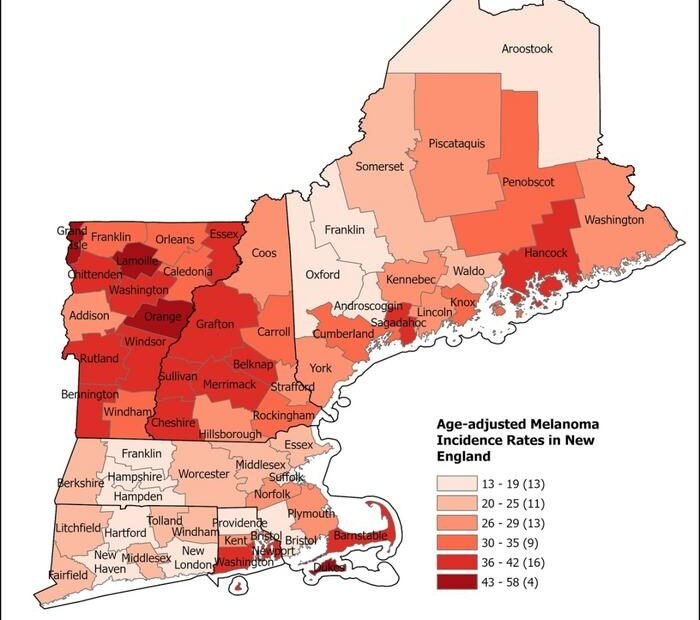
Die geografische Verteilung der Melanom-Inzidenzraten auf Bezirksebene (2014-2018) in der Region Neuengland in den Vereinigten Staaten. Credits: Elsevier

Tanning beds: Use leads to regionally higher melanoma rates

Das Melanom macht nur 1 Prozent der Hautkrebserkrankungen in den Vereinigten Staaten aus, ist aber die häufigste Todesursache bei Hautkrebs. Die Forscher untersuchten den möglichen Zusammenhang zwischen der Verfügbarkeit und Nutzung von Solarien und den steigenden Melanomraten in Neuengland. Sie fanden zwingende Beweise für einen Zusammenhang zwischen der Nutzung von Sonnenbänken und einem erhöhten Melanomrisiko. Ihre räumliche epidemiologische Studie, die in der von Elsevier herausgegebenen Fachzeitschrift Journal of Investigative Dermatology veröffentlicht wurde, liefert wichtige Erkenntnisse für Strategien im Bereich der öffentlichen Gesundheit und zur Verringerung der Melanominzidenz. Die Inzidenz von Melanomen in den USA hat in den letzten zwei Jahrzehnten zugenommen. Die Melanominzidenz steigt bei Frauen weiterhin um etwa 1 Prozent pro Jahr, während sie sich bei Männern stabilisiert hat. Viele Faktoren tragen zur Melanominzidenz in einer Region bei; der vermeidbarste Risikofaktor ist die ultraviolette (UV-)Strahlung sowohl aus natürlichen Quellen wie der Sonneneinstrahlung als… 

Kyocera: Innovation und Strategie im Fokus der DKOU 2024

KYOCERA Fineceramics Medical GmbH (KFMG) hat auf der DKOU 2024, die vom 22. bis 25. Oktober in Berlin stattfand, seine innovative Keramiklösung BIOCERAM AZUL® für Hüftendoprothesen vorgestellt. Ein besonderes Highlight war das Lunch-Symposium am 23. Oktober, bei dem Branchenvertreter, Chirurgen und Materialwissenschaftler tiefe Einblicke in die Material- und klinischen Eigenschaften von BIOCERAM AZUL® erhielten. BIOCERAM AZUL® – Ein innovatives Material für Hüftprothesen Bereits in Japan erfolgreich eingeführt, konnte Kyocera mit BIOCERAM AZUL® nun auch auf der DKOU in Europa überzeugen. Das Material zeichnet sich durch hohe Bruchzähigkeit und hervorragende Biokompatibilität aus und bietet eine zukunftsweisende Lösung im Bereich der Hüftendoprothetik. Beim Lunch-Symposium führten Dr. Fabian Preuß, Prof. Michael Morlock, Dr. Taro Umezu und Prof. Stelter durch die Materialvorteile und klinischen Ergebnisse von BIOCERAM AZUL®. Die Veranstaltung wurde von Prof. Dieter Wirtz moderiert und gab einen umfassenden Ausblick auf die Zukunft der medizinischen Keramiktechnologie. Langzeitstrategie… 

Jena und Albany gründen Forschungszentrum für Photonik und KI

  • News

Mit der Eröffnung des „Center for Biophotonic Technology and Artificial Intelligence“ (CeBAI) im Oktober 2024 an der University at Albany haben das Jenaer Leibniz-Institut für Photonische Technologien (Leibniz-IPHT) und die University at Albany, State University of New York, den Startschuss für eine transatlantische Forschungskooperation gegeben. Das neue Zentrum vereint photonische Technologien und Künstliche Intelligenz (KI), um innovative Lösungen für die Medizin und Forensik zu entwickeln und diese schneller zur Marktreife zu bringen. Das CeBAI ist an der University at Albany angesiedelt und konzentriert sich auf die Entwicklung neuer Diagnoseverfahren und forensischer Anwendungen. „Das Leibniz-IPHT ist weltweit führend in der Entwicklung optischer Gesundheitstechnologien“, erklärt Prof. Igor Lednev, Distinguished Professor an der University at Albany. „Am CeBAI wollen wir unser Wissen bündeln, um gemeinsam neue technologische Lösungen zu entwickeln, die in diesen Bereichen dringend benötigt werden.“ Forschung im Dienst der Anwendung „Die…