Jena (LabNews Media LLC) – The decline in mitochondrial function with age is primarily triggered by a deficiency in the membrane lipid phosphatidylcholine. An international research team led by Dr. Maria Ermolaeva from the Leibniz Institute on Aging Research – Fritz Lipmann Institute (FLI) in Jena has demonstrated this. The study, published on April 18, 2026, in "Nature Communications," also shows that this process is at least partially reversible.
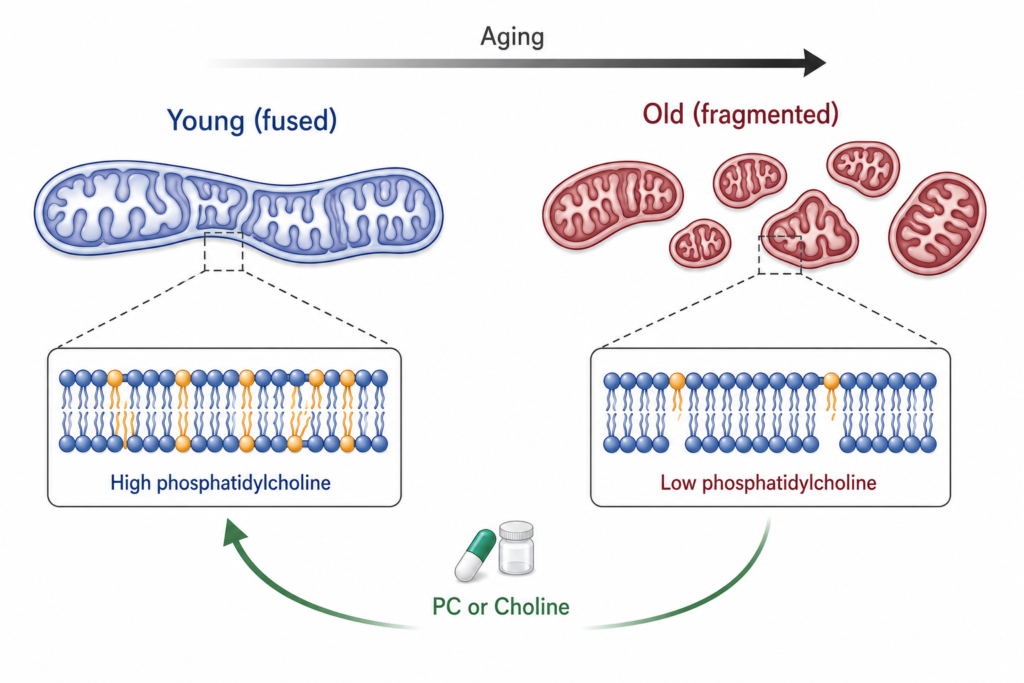
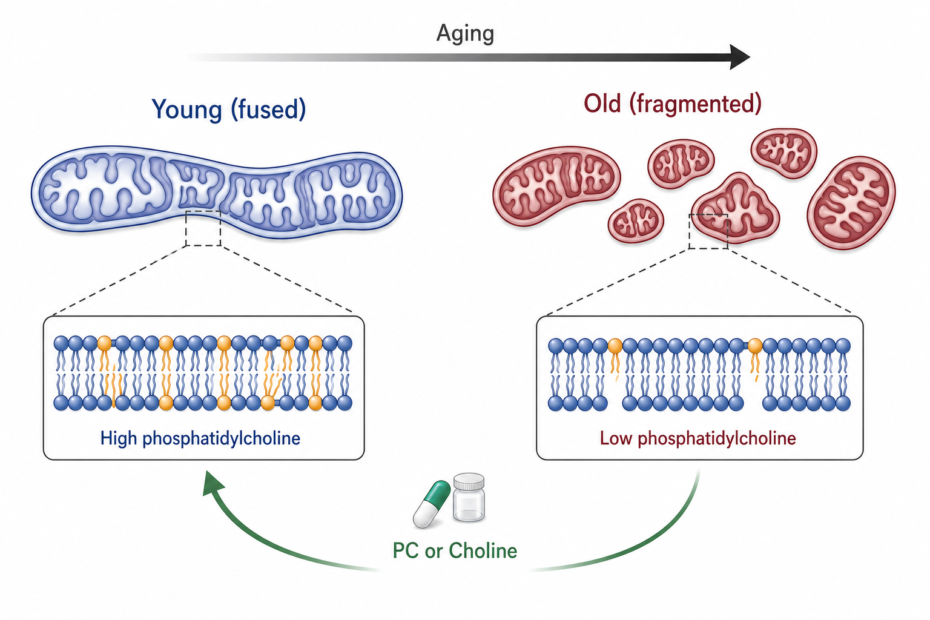
The scientists were able to show that the production of phosphatidylcholine decreases with age. This lipid is crucial for the flexibility and fusion of mitochondria – the cell's powerhouses, which provide energy and connect into networks to distribute energy and repair damage. Without sufficient phosphatidylcholine, mitochondria fragment, lose their metabolic plasticity, and can no longer efficiently distribute energy.
In experiments with aging roundworms (Caenorhabditis elegans), the administration of phosphatidylcholine or its precursor choline restored mitochondrial structure and function within just two days. The mechanism was also confirmed in human cell cultures and by analyzing large metabolomic datasets. Particularly striking was a strong relative decrease in phosphatidylcholine levels in women around menopause – a period when many report increased fatigue.
The results challenge the previous assumption that primarily genetic damage in mitochondrial DNA drives aging. Instead, changes in the lipid metabolism of the mitochondrial membrane are coming to the forefront. The researchers speak of a "malleable," meaning influenceable, phase of aging.
"We were surprised ourselves how strongly this molecule influences the structure, networking, and function of mitochondria," quotes lead author Dr. Tetiana Poliezhaieva. Principal investigator Dr. Maria Ermolaeva adds: "You can imagine the entire system like a finely branched power grid that becomes increasingly damaged with age."
The findings open new perspectives for interventions in the aging process. Targeted administration of phosphatidylcholine or choline could help mitigate mitochondrial dysfunction and associated age-related diseases such as diabetes or states of exhaustion in the future. However, the researchers emphasize that further studies are necessary to transfer these approaches to humans.
The work was carried out in close international cooperation and was funded by the FLI and other partners. It is part of the systematic research into the molecular basis of aging at the Leibniz Institute in Jena.