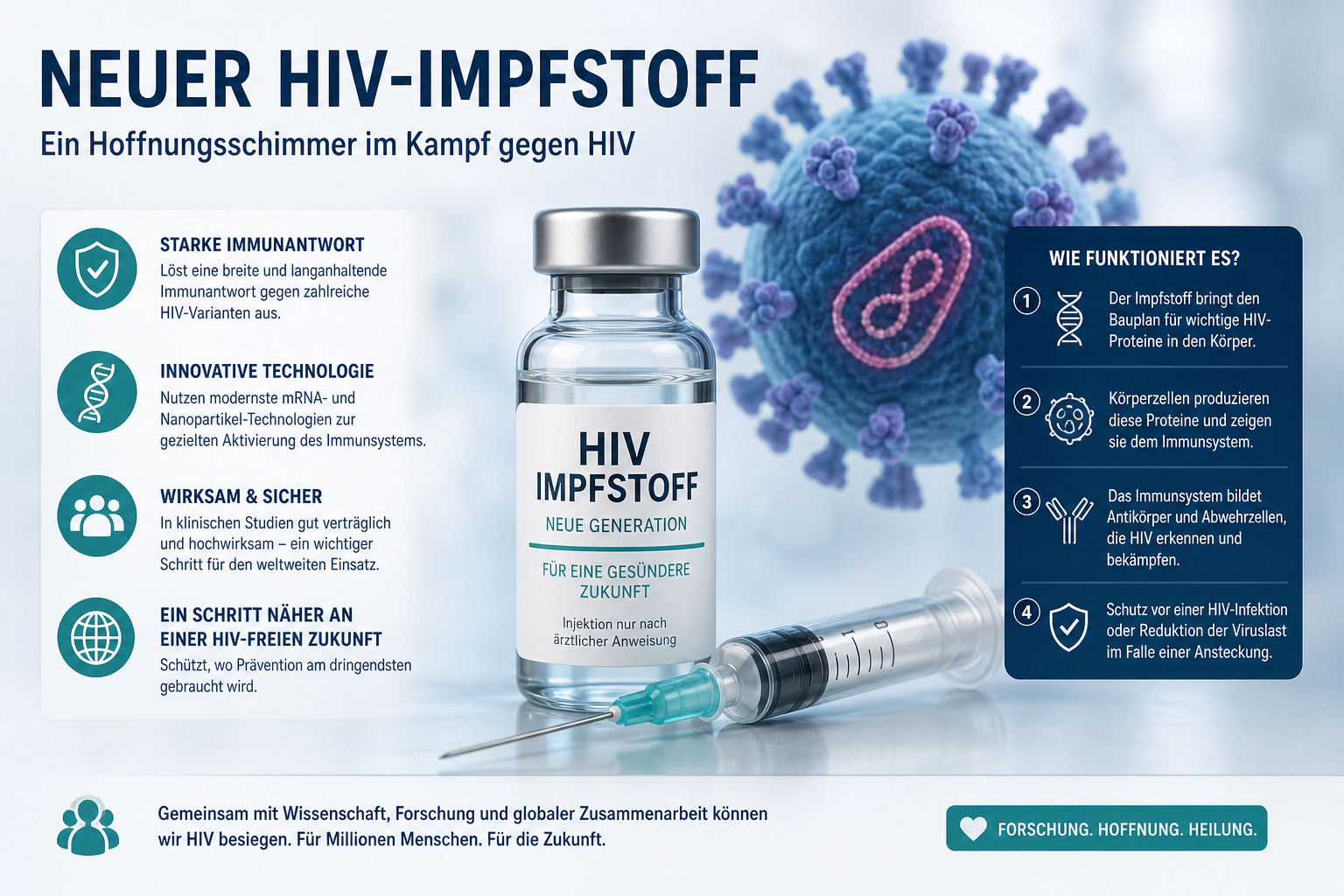
A newly developed HIV vaccine has elicited the strongest immune response with broadly neutralizing antibodies ever observed in primates to date. The vaccine aims to train the immune system to overcome the virus's diverse defense mechanisms. The results were published in the journal Nature.
Background
HIV possesses several mechanisms to evade the immune system. Inducing so-called broadly neutralizing antibodies (bnAbs), which can recognize and neutralize many different HIV variants, is particularly difficult. Previous vaccine candidates have only been able to elicit these antibodies in very small numbers, if at all.
Important findings
In a preclinical study in primates, the new vaccine triggered an unusually strong production of broadly neutralizing antibodies. The researchers describe the observed immune response as the best HIV-defending antibody response ever measured in primates. The development is based on a 14-year collaboration between the La Jolla Institute for Immunology and Scripps Research.
Technical Approach
The vaccine was designed to gradually prepare the immune system for the generation of bnAbs. Through targeted antigen presentation, the immune system is intended to be induced to activate rare B cell precursors necessary for the production of broadly neutralizing antibodies.
Significance for HIV Prevention
The results are considered an important advance toward an effective HIV vaccine for humans. If the findings are confirmed in further studies, the approach could contribute to preventing HIV infections and the development of AIDS in the long term.
Outlook
The researchers are planning further preclinical and clinical studies. The goal is to further develop the vaccine so that it also elicits a comparably strong and lasting immune response in humans. The study was funded by, among others, the National Institute of Allergy and Infectious Diseases (NIAID) and the Bill & Melinda Gates Foundation.
FAQ
What is special about the new vaccine?
In primates, it elicits the strongest production of broadly neutralizing antibodies against HIV ever observed.
Why are broadly neutralizing antibodies important?
They can recognize and neutralize many different HIV variants and are considered key to effective protection.
How long was the vaccine developed?
The development is based on a 14-year research collaboration.
What do the results mean for humans?
They are considered a promising step, but still need to be confirmed in further studies, including clinical trials in humans.
Where was the study published?
In the journal Nature (DOI: 10.1038/s41586-026-10837-5).