Skip to content

Life-threatening risks from weight-loss injections – an overview

The so-called "weight loss injections" based on GLP-1 receptor agonists (e.g., semaglutide, liraglutide, tirzepatide; trade names such as Ozempic, Wegovy, Mounjaro) have become established in obesity and diabetes therapy – but serious, sometimes life-threatening side effects are increasingly being reported. Gastrointestinal catastrophes Among the most serious complications are acute inflammation of the pancreas (pancreatitis), intestinal obstruction (ileus), and gastric paresis (gastroparesis). In addition to nausea, vomiting, and diarrhea, individual patients can rapidly develop life-threatening conditions. Current studies show that the risk of pancreatitis under GLP-1 agonists can be up to 9 times higher compared to other weight loss preparations. A few deaths attributed to multiple organ failure after pancreatitis have already been documented[1][2][3][4]. Mechanical intestinal obstruction also occurred with clinically noticeable frequency: Ileus can develop due to the slowed gastrointestinal passage under the medication, with the risk of rupture (perforation) and circulatory shock[2][3]. The result is emergencies requiring immediate inpatient treatment and surgical...


Lifestyle changes drastically reduce heart risk in women with gestational diabetes

A new study from the National University of Singapore (NUS) and the Harvard T.H. Chan School of Public Health, published on August 5, 2025, in the Journal of the American Heart Association, shows that women with a history of gestational diabetes (GDM) can reduce their risk of cardiovascular disease by up to 86% through healthy lifestyle habits. The research, which followed over 4,300 women from the Nurses’ Health Study II for almost 28 years, underscores the importance of sustainable lifestyle changes. Gestational diabetes, a common complication with elevated blood sugar during pregnancy, doubles the risk of later cardiovascular disease. The study examined women without pre-existing heart disease or diabetes and found that consistent adherence to five lifestyle factors – healthy weight, not smoking, regular exercise, high-quality diet, and moderate alcohol consumption – significantly reduces the risk of heart attacks or strokes. Women who consistently followed all five factors experienced during...

Lactic acid as a key to strengthening cancer immunotherapy

A groundbreaking study, published on June 9, 2025, in the journal Frontiers of Medicine, reveals that lactic acid (lactate) is far more than a metabolic byproduct: it plays a central role in tumor-immune communication and influences the effectiveness of cancer therapies. Researchers trace the historical development of lactate – from its discovery in 1780 to the realization in 2019 that it modifies histones – and highlight its diverse functions in the tumor microenvironment (TME). Lactate, produced by high glycolytic flux in tumors, is excreted along with protons via monocarboxylate transporter 4 (MCT4), acidifying the extracellular environment. This acidic pH degrades the extracellular matrix, hinders drug uptake, and neutralizes chemotherapeutics. Simultaneously, cancer cells use lactate as an energy source, promote DNA repair mechanisms, and, through signaling pathways like GPR81, enhance PD-L1 expression, weakening immune defense. The study shows that lactate affects various immune cells… 

New insights into lung infections in cystic fibrosis

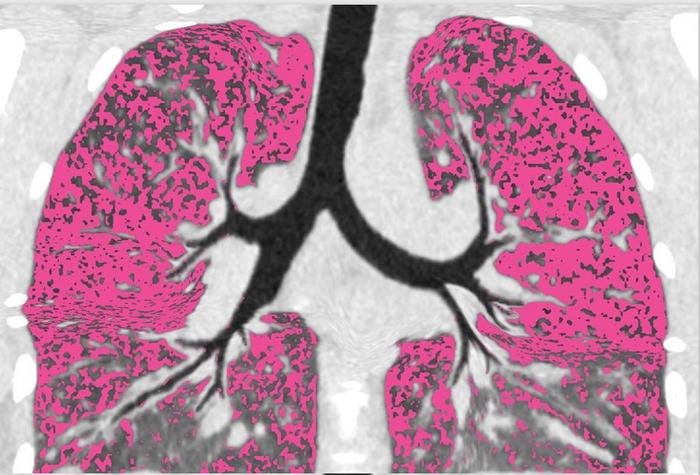
A recent study by the University of Washington and the University of Iowa, published on August 5, 2025, in the journal Cell Host & Microbe, sheds light on why infections persist in cystic fibrosis patients despite new medications. Researchers examined samples from different lung regions of patients before and after treatment with so-called CFTR modulators, which address the genetic cause of the disease and significantly improve the quality of life for many affected individuals. Cystic fibrosis leads to thick mucus that traps bacteria in the lungs, causing long-term damage. Although modulators effectively treat the cause of the disease, infections persist in most patients. To investigate the reasons, scientists used bronchoscopes to collect samples from lung regions with varying degrees of damage. One year after starting treatment, the same areas were re-examined to analyze changes in infection and inflammation. The results contradicted the common assumption that severely damaged lung areas are the main cause of persistent…

Cancer incidence in survivors of Hiroshima and Nagasaki to this day

  • News

Hiroshima and Nagasaki, August 1945: The dropping of the atomic bombs "Little Boy" and "Fat Man" by the USA marked not only the end of World War II but also the beginning of one of the most tragic chapters in medical history. Over 200,000 people died immediately or in the following months from the direct consequences of the explosions – blast waves, heat, and acute radiation sickness. However, the invisible threat, ionizing radiation, would only fully unfold in the decades that followed. Today, 80 years later, long-term studies on the survivors – the so-called Hibakusha – offer invaluable insights into the carcinogenic effects of low to moderate radiation doses. Based on data from the Radiation Effects Research Foundation (RERF), which has continued the work of the Atomic Bomb Casualty Commission (ABCC) since 1975, a clear picture emerges: radiation exposure has led to a significant increase in cancer cases, which continues to… 

Alarming PFAS Contamination in Nursing Homes

  • News

PFAS (per- and polyfluoroalkyl substances), popularly known as "forever chemicals," are a growing, concerning burden even in nursing and retirement homes. The aging population is particularly at risk, as older individuals are often more sensitive to pollutants due to weakened immune systems and reduced detoxification capabilities. PFAS – Causes and Occurrence in Nursing Homes PFAS are used in a variety of everyday and care products: carpets, stain-resistant textiles, packaging, cleaning agents, personal care products, and kitchenware introduce these chemicals into the indoor environments of nursing and retirement homes. Residents spend over 95% of their time indoors – and are thus particularly heavily exposed to indoor exposure[1][2]. Measurement Findings from Care Facilities A recent study from the USA provides the first well-founded insights into the real PFAS burden of seniors in nursing homes[1][2]. By measuring 19 PFAS compounds in blood, household dust, and via personal measuring devices (armbands), it was shown: Remarkable: In the facilities studied, PFOS levels in dust were approximately… 

Global Development of Cancer Cases in Adolescents Since 2021: Medical-Statistical Situation Report

The number of cancer cases in adolescents and children worldwide has continued to rise since 2021. Approximately 400,000 children and adolescents aged 0 to 19 are newly diagnosed with cancer each year. This trend continues an increase observed for decades, confirmed by international expert registries, such as the WHO and IARC databases, as well as national cancer registries. For example, in the period from 1990 to 2021, global case numbers of acute lymphoblastic leukemia (ALL) increased by 59% to nearly 169,000 cases annually. Prevalence rates climbed in the same period from 17.1 to 25.7 per 100,000 children and adolescents. A similar increase is seen in neuroblastoma (an increase of about 30% to around 5,560 cases in 2021)[1]. Causes for the increase The registered growth has several causes: Regional differences and global disparities Regional differences are enormous. In high-income countries like the USA and in large parts… 

Toxic well water affects pets first

Dogs drink water wherever they find it—from a puddle, a pond, or a toilet. But the water in their bowls almost always comes from the same tap their owners use. If this water is contaminated, both dogs and people can suffer. The risk is particularly high for the 15 million American households that rely on private wells, according to a new study by Virginia Tech published in the journal PLOS Water. Sixty-four percent of drinking water samples from wells across the country contained elevated levels of at least one potentially toxic heavy metal, such as lead, iron, sulfur, or arsenic. Whatever is in the water is likely in your dog, too. This was the conclusion reached by the transdisciplinary trio of faculty members who worked on the study: "Dogs have always been harbingers of heavy metal contamination in previous drinking water crises," said Edwards,...

Vitamin A derivative offers hope for severe male infertility

A breakthrough in the treatment of male infertility is emerging: A study by the Turek Clinic in collaboration with the University of Washington, published in the Journal of Assisted Reproduction and Genetics, shows that isotretinoin, a vitamin A derivative known as the acne medication Accutane®, can stimulate sperm production in men with severe infertility. Although its use for this purpose is not approved by the U.S. Food and Drug Administration (FDA), the results offer new hope for men who have had few options for having biological children due to azoospermia (no sperm in ejaculate) or cryptozoospermia (extremely low sperm counts). The study involved 30 men treated with isotretinoin for six months. An astonishing 37 percent of participants produced motile sperm in sufficient quantities for in vitro fertilization (IVF), making invasive procedures such as testicular sperm extraction unnecessary. Furthermore, successful embryo creations, pregnancies, and births were documented. The results suggest that isotretinoin,… 

FDA Warns of Problems with Boston Scientific Defibrillator Cables

  • News

The U.S. Food and Drug Administration (FDA) has issued an early warning about certain defibrillation cables from the manufacturer Boston Scientific, which pose potentially serious risks. Several models of the ENDOTAK RELIANCE, RELIANCE 4-SITE, and RELIANCE 4-FRONT series with ePTFE-coated coils implanted between 2002 and 2021 are affected. These cables can impair the effectiveness of defibrillation shocks due to calcification of the shock coils or necessitate early replacement. As of July 24, 2025, Boston Scientific reported 386 serious injuries and 16 deaths related to this problem. The most common damage is the early replacement of the cables, while the most serious risk is death or the need for cardiac resuscitation due to an ineffective shock caused by high impedance. The FDA classifies the problem as potentially high-risk and has published it as part of its communication pilot project to improve the recall program for medical devices. Boston Scientific has urged healthcare providers to routinely...