Skip to content

One in five packaged foods and beverages in the U.S. contains synthetic dyes

Up to 19% of packaged foods and beverages from leading U.S. food manufacturers contain synthetic dyes. This is according to a new study that examined the contents of 39,763 products from American grocery stores. The findings of the study in the Journal of the Academy of Nutrition and Dietetics ( JAND ), published by Elsevier, demonstrate the widespread prevalence of synthetic dyes in U.S. foods and beverages, particularly those marketed to children. They can provide a basis for legislative or regulatory action by policymakers. Food dyes are a class of additives used in packaged foods and beverages to enhance the visual appeal of products or to compensate for natural color variations. They can be of natural origin or chemically synthesized. Research over the past 40+ years has raised questions about the safety of a subcategory of food dyes used in the U.S.: synthetic food dyes. Synthetic dyes were most common in sports drinks,… 
Thin-film research enters a new era with innovative AI approach

The Paul Drude Institute for Solid State Electronics (PDI) in Berlin has announced a collaboration with the scientific technology company Bizmuth MBE Ltd. to integrate intelligent automation into the manufacturing of semiconductor materials. The six-month partnership, running from June to December 2025, is one of the first initiatives in Europe to apply large language models (LLMs) and multimodal AI to the autonomous control of molecular beam epitaxy (MBE). MBE is an established process for fabricating custom-designed, atomically precise material layers and is widely used in semiconductor and quantum technology research. The process takes place in an ultra-high vacuum environment, where beams of atoms or molecules are applied to a heated surface, building up material structures with atomic precision. Although MBE has been a central element of materials research since the 1960s, the method still relies heavily on manual control. Operators adjust growth conditions based on experience and real-time observations.… 

US-China trade rivalry drives innovation, but tariffs threaten momentum

A study by IESE Business School shows that trade rivalry between the US and China has fueled the innovation capacity of American electronics and device manufacturers, but tariffs could slow this dynamic. The research analyzed patent applications from US companies between 2001 and 2010, when Chinese imports in this sector increased sharply. Companies facing intense competition from China achieved a higher level of innovation than those with less competitive pressure. They developed new technological products and entered new business areas, leading to a 16 percent growth in their business segments and a 12 percent increase in new technologies. The researchers emphasize that competition from Chinese imports spurred US companies to differentiate themselves through diversification and new patents. However, trade tensions and protectionist measures like tariffs could jeopardize this innovation boost, as they reduce the incentive for technological advancement and market differentiation. The study challenges the notion that trade competition...

Regular sex alleviates menopausal symptoms in women

A new study of over 900 women aged 40 to 79 shows that regular sexual activity can reduce menopausal genitourinary symptoms such as pain, dryness, and irritation caused by genitourinary syndrome of menopause (GSM). The cross-sectional study, published on June 25, 2025, in the journal Menopause, found that the proportion of regularly sexually active women decreases with age, as do sexual desire, arousal, and lubrication according to the Female Sexual Function Index. However, orgasm and satisfaction remain stable. Women with regular sexual activity had a lower prevalence of GSM symptoms, which are triggered by estrogen deficiency and can impair quality of life. Only 2.9 percent of participants used hormone therapy, although according to Dr. Monica Christmas of the Menopause Society, local, low-dose estrogen therapy effectively and safely alleviates such symptoms. The study emphasizes the need to address GSM...

NCT Dresden starts Phase 2 study for mRNA vaccine against pancreatic cancer

  • News

The National Center for Tumor Diseases (NCT/UCC) Dresden is offering patients with pancreatic cancer an innovative treatment with the individualized mRNA cancer vaccine Autogene Cevumeran as part of the international Phase 2 study IMCODE003 (NCT05968326). The vaccine, developed by BioNTech and Genentech, targets tumor-specific neoantigens to activate the immune system against remaining tumor cells. Pancreatic cancer is considered one of the deadliest cancers, with a relapse rate of almost 80 percent after surgery and a five-year survival rate of only 25 to 33 percent despite chemotherapy. A Phase 1 study showed a strong T-cell immune response in half of the treated patients, which was associated with a lower risk of relapse. The current study, which began in October 2023, compares the efficacy and safety of Autogene Cevumeran in combination with the PD-L1 inhibitor Atezolizumab and chemotherapy (mFOLFIRINOX) with chemotherapy alone in patients without prior chemo or radiation therapy and without metastases. Participation is only possible directly after...

TU Berlin's small satellite QUICK³ tests quantum communication in space

On June 23, 2025, the small satellite QUICK³ successfully launched into Earth orbit from the Vandenberg Space Force Base in California. The mission, with central involvement from the Technical University of Berlin, is testing technologies for eavesdrop-proof quantum communication and conducting a quantum physics experiment in space. The 3U CubeSat, about the size of a shoebox and weighing four kilograms, serves as a technology demonstrator for future quantum satellite systems. Onboard is a quantum light source that generates photons from a two-dimensional material to enable secure data transmission. Quantum communication physically prevents any undetected data access. TU Berlin developed an electronics module for controlling the experiments, storing and transmitting measurement data, as well as a robust mechanical structure that can withstand the rocket launch. Systems engineer Philipp Werner emphasized the challenge of coordinating interfaces between scientific partners and the satellite bus, with TU Berlin playing a connecting role. Project manager Julian Bartholomäus highlighted the use of existing technologies from the TUBIN mission, which allowed for flexible adjustments. The mission...

Munich University of Applied Sciences establishes new campus for Health and Technology

Munich University of Applied Sciences (HM) is expanding its range of courses with the Munich Campus for Health and Engineering (MUC.HEALTH). The new interdisciplinary faculty bundles interdisciplinary degree programs in the areas of health, nursing, management, and technology in order to respond to increasing nursing needs, growing demands on healthcare management, and the academization of healthcare professions. Starting in the winter semester of 2025/26, MUC.HEALTH will launch with three existing degree programs: Bachelor of Applied Nursing Science (including professional qualification as a registered nurse), Master of Advanced Nursing Practice, and Master of Mental Health. Applications can be submitted until July 15, 2025, via the HM website. Further degree programs in the fields of Health and Engineering (e.g., Medical Technology, Robotics, Ergonomics) and Public and Digital Health (e.g., Healthcare Management, Data Science) are currently under development. These are being created in collaboration with professors from faculties such as Social Sciences, Computer Science, Business Administration, and Engineering to create a holistic, future-oriented educational offering. The interim dean of MUC.HEALTH is Prof. Dr. Andreas Fraunhofer from the Faculty of...

New processing robot revolutionizes manufacturing: Precision and flexibility for industry

  • News

At automatica, the leading trade fair for automation and robotics from June 24 to 27, 2025, in Munich, the Fraunhofer Institute for Manufacturing Technology and Applied Materials Research IFAM, Stade, will present a groundbreaking milling kinematics together with autonox Robotics GmbH and Siemens AG. This enables high-precision, resource-efficient processing of materials such as fiber composites, aluminum, and hardened steels with a manufacturing tolerance of up to 0.1 millimeters. The technology will be presented in Hall A4, Booth A4-329, and Hall B6, Booth B6-303. The newly developed "Machine Tool Robot" (MTR) combines intelligent control strategies, innovative drive technologies, and an optimized mechanical structure. This significantly improves path accuracy, even at high feed rates and complex movements, by compensating for dynamic errors and damping vibrations. Particularly noteworthy is the disturbance suppression, which ensures constant precision even at high process forces. This increases material removal rates and productivity, making the MTR the bridge between industrial robots and machine tools. A...

Caffeine can slow down cell aging

  • News

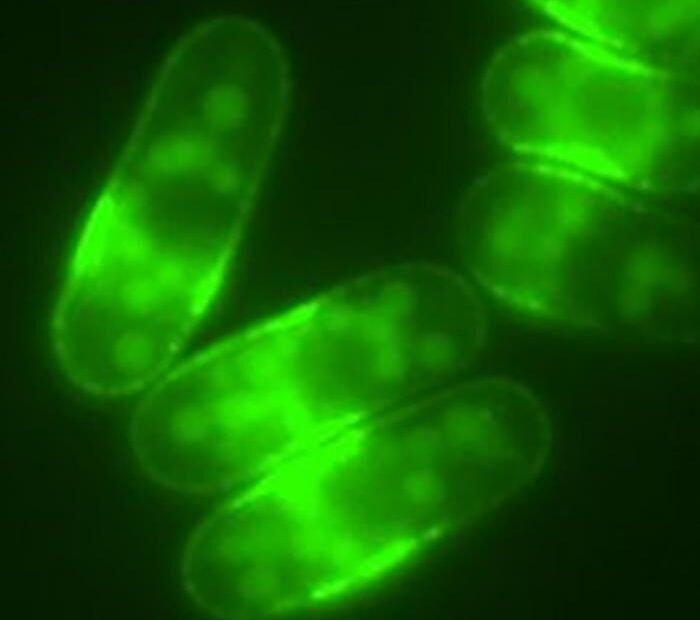
A new study from the Laboratory for Cellular Aging and Senescence ( www.rallislab.org ) at the Centre for Molecular Cell Biology at Queen Mary University of London shows that caffeine – the world’s most popular psychoactive substance – does more than just keep you awake. The study, published in the journal Microbial Cell, reveals how caffeine could slow down the aging process at the cellular level.   Caffeine has long been associated with potential health benefits, including a reduced risk of age-related diseases. However, how it works in our cells and its precise connections to nutrient- and stress-responsive gene and protein networks have remained a mystery. In a new study by scientists investigating fission yeast – a single-celled organism surprisingly similar to human cells – researchers have discovered that caffeine influences aging by tapping into an ancient cellular energy system. A few years ago, the same research team discovered that caffeine enhances the…

Trump's strategy to end the conflict was characterized by a combination of military precision, diplomatic pressure, and public communication, supported by the use of AI systems. His approach can be considered revolutionary as it combined traditional military doctrines with modern technological capabilities and unconventional rhetoric.

Insider Report: The Use of Artificial Intelligence Under U.S. President Trump to End the Iran-Israel Conflict

In June 2025, the conflict between Israel and Iran escalated into a dangerous military confrontation that threatened stability in the Middle East. U.S. President Donald Trump intervened in this conflict by employing a combination of precise military operations and advanced Artificial Intelligence (AI) systems to achieve de-escalation. This report analyzes how Trump ended the war through the use of AI-powered B-2 stealth bomber attacks on Iranian nuclear facilities and the subsequent response to Iranian retaliatory strikes against U.S. bases in Qatar. It examines the role of military AI systems and Trump's strategic approach, which can be considered revolutionary. The report draws on published news sources, military analyses, and peer-reviewed studies on the role of AI in modern warfare to provide an informed account. The Conflict Background The conflict between Israel and Iran intensified starting June 13, 2025, when Israel launched airstrikes…