Skip to content

Baxter closes dialysis machine factory due to Helene

Due to severe flooding caused by Hurricane Helene , Baxter has closed a facility in North Carolina, the company announced Sunday. A company spokesperson said Monday that there were no injuries at the facility and Baxter is working to confirm the well-being of the more than 2,500 people employed there. "We are assessing the extent of the damage and working to implement a plan to bring the facility back online as quickly as possible." So far, Baxter is the only medical device company to report impacts from the hurricane, JP Morgan analyst Robbie Marcus said in a research note Monday. https://www.baxter.com/baxter-newsroom/baxter-provides-update-north-cove-nc-facility-and-hurricane-helene-relief-plans
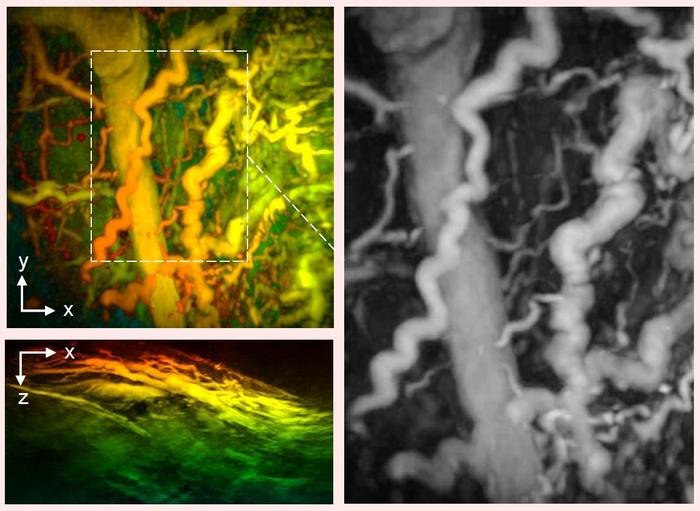

World first: Handheld scanner detects cancer

A new handheld scanner developed by UCL researchers can produce highly detailed 3D photoacoustic images in just seconds, enabling its use in a clinical setting for the first time and allowing for earlier disease diagnosis. In the study, published in Nature Biomedical Engineering, the team shows that its technology can provide clinicians with real-time photoacoustic tomography (PAT) scans, giving them accurate and detailed images of blood vessels to aid patient care. Photoacoustic tomography uses laser-generated ultrasound waves to visualize subtle changes (an early sign of disease) in veins and arteries less than a millimeter in size in areas of human tissue up to 15mm deep. However, existing PAT technology has been too slow to produce 3D images of sufficient quality for use by clinicians. During a PAT scan, patients must remain completely still. This means that… 

Non-invasive tool for predicting stroke risk

A team of researchers from the Keck School of Medicine of USC and the California Institute of Technology (Caltech) has developed a new method for affordably and non-invasively measuring a person’s stroke risk, similar to a cardiac stress test. If the device proves itself in further testing, it could revolutionize stroke treatment and make early detection of elevated risk a standard part of medical check-ups around the world. In a proof-of-concept study of the new device, partially funded by the National Institutes of Health, researchers recruited 50 participants who underwent a “stress test” for the brain, holding their breath while wearing the device. The team found that the SCOS device could distinguish between people at high risk for stroke and those at low risk, based on changes in blood flow and blood volume during the stress test. The findings were just published in the journal Biomedical… 

Skin barrier protein also protects against inflammation

Researchers at University of California San Diego School of Medicine have discovered a new mechanism underlying inflammatory skin diseases such as psoriasis and seborrheic dermatitis. They found that a protein important for forming the skin’s protective barrier (ZNF750) also plays a role in controlling inflammation in skin cells. This sheds light on why some people are more susceptible to inflammatory skin diseases than others. The study paves the way for more effective and personalized therapies for these debilitating conditions, while also providing broader insights into the molecular biology of skin cells. The study, published on September 30 in Immunity, was led by George Sen, Ph.D., professor in the departments of Dermatology and Cellular and Molecular Medicine and head of the Division of Epithelial Biology at UC San Diego School of Medicine. Original paper

Headset can measure blood flow and assess stroke risk

When doctors want to know more about a patient's risk of cardiovascular disease, they can order a cardiac stress test. However, when it comes to stroke risk, there is no comparable scalable and cost-effective test of brain function that could help doctors advise patients about their potential risk. A questionnaire asking patients about contributing risk factors is currently the best tool for assessing this risk. Now, a team of engineers and scientists from Caltech and the Keck School of Medicine of USC has developed a headset-based device that can noninvasively assess a patient's stroke risk by monitoring changes in blood flow and volume as the subject holds their breath. The device features a laser-based system and has shown promising results in distinguishing between individuals at low and high risk of stroke. "With this device, we have for the first… 

Three-year data from the Gore ASSURED Clinical Study

W. L. Gore & Associates (Gore) announced the release of three-year data from the Gore ASSURED Clinical Study (ASSURED Study) in the September 2024 online issue of JACC: Cardiovascular Interventions, evaluating the long-term safety and efficacy of treating ostium secundum ASDs with the GORE® CARDIOFORM ASD Occluder. The ASSURED Study data demonstrated long-term safety and efficacy of the GORE CARDIOFORM ASD Occluder at 6, 12 and 36 months, with 100 percent closure success* rate among patients evaluated at 36 months (n = 357).


For a strong and forward-looking Quebec life sciences industry

The Minister of Economy, Innovation and Energy, Minister responsible for Regional Economic Development and Minister responsible for the Metropolis and the Montreal region, Ms. Christine Fréchette, and the MNA for Anjou–Louis-Riel, parliamentary assistant to the Minister responsible for the Metropolis and the Montreal region and parliamentary assistant to the Minister of Employment, Ms. Karine Boivin Roy, are announcing an investment of US$2.5 million in the company MY01. This will support the commercialization of a continuous pressure monitor to aid in the diagnosis of compartment syndrome. The device designed by MY01 measures pressure in a patient's muscle compartments in real time and uses wireless communication to transmit data to a mobile application. Compartment syndrome occurs when pressure within a muscle compartment increases excessively.… 

Federal Council approves NIS2 recommendations without debate

The Bundesrat recently adopted 20 recommendations for the implementation of the EU Directive NIS2 (Network and Information Security) without discussion[1]. The recommendations, developed by various committees, aim to improve cybersecurity in Germany but do not bring about groundbreaking changes[1]. Important Changes and Measures Support from the BSI The Federal Office for Information Security (BSI) will be legally obliged in the future to provide support services for police authorities and the Office for the Protection of the Constitution[1]. Digitalized Reporting Procedure: A media-break-free digitalized reporting procedure will be introduced for the exchange of cybersecurity information, which requires a high security standard[1]. Data Protection and Reporting Obligations: The BSI must inform data protection authorities about possible violations of the protection of personal data as soon as they occur, not just when there are obvious consequences[1]. Training and Reduction of Bureaucracy: Management must not only be trained themselves but also promote training for all employees. In addition, the administrative burden for affected institutions should be reduced[1]. Critical Infrastructures (KRITIS) Review of Thresholds: It is being examined whether, in addition to... 

Medical Research Act: AOK criticizes secret prices

  • News

Secret prices are the completely wrong signal in view of a 105 percent increase in net costs for patented medicines. Carola Reimann, Chairwoman of the Federal Association of AOK, warned on Friday, on the occasion of the Bundesrat's decision on the Medical Research Act (MFG), against price increases for medicines and called for new steering instruments. "We are already seeing double-digit growth rates in medicine spending this year. But instead of initiating expenditure containment with effective regulations, the Medical Research Act is now introducing secret prices for new medicines in Germany, which will further fuel expenditure dynamics. The recently weakened so-called guardrails for reimbursement negotiations will also lead to a significant increase in spending, especially for new medicines." A current analysis by the Scientific Institute of the AOK shows that medicines have been one of the biggest cost drivers in statutory health insurance (GKV) in the past ten years. While GKV spending increased by almost 58 percent between 2013 and 2023, spending on medicines increased by more than... 

Health insurance funds plan centralized appointment scheduling

The Professional Association for Orthopedics and Trauma Surgery (BVOU) e.V. firmly rejects the current proposal by the umbrella organization of statutory health insurance funds (GKV-Spitzenverband) to introduce a centralized appointment scheduling system. This proposal, which is intended to oblige doctors to report 25 to 75% of their appointments to a central portal, would further exacerbate the waiting times for specialist appointments. Instead, the association points to the primary and specialist care contract system in Baden-Württemberg, where this problem has already been solved for statutory health insurance patients. In contrast, the proposal for a centralized system, as now presented by the GKV-SV, would lead to uncontrolled utilization of specialist capacities. What is urgently needed, however, is better management through the prior assessment of urgency by general practitioner colleagues or the specialist practice team. Disadvantage for vulnerable patients in appointment scheduling is a threat The association also points to the high no-show and doctor-hopping rates for digitally booked appointments, which are estimated to be between 20 and 30%. To…