Skip to content

WHO and TikTok cooperate

(WHO) and TikTok have announced a one-year collaboration aimed at providing people with reliable, science-based health information. This reflects WHO's commitment to leveraging multiple digital communication platforms to reach people globally and promote health literacy and healthy behaviors and actions in an increasingly digitalized world. Social media can be important sources of information that influence health-related behaviors and decisions. One in four young adults actively seeks news content on social media platforms, including TikTok. We also know that people are increasingly exposed to misinformation and disinformation on these digital channels. The new collaboration between WHO and TikTok aims to help address these challenges by promoting evidence-based content and fostering positive health dialogues.

Brazil eliminates lymphatic filariasis

The World Health Organization (WHO) congratulates Brazil on eliminating lymphatic filariasis as a public health problem. “Eradicating a disease is a tremendous achievement that requires relentless commitment,” said Dr. Tedros Adhanom Ghebreyesus, WHO Director-General. “I congratulate Brazil on its efforts to free its population from the scourge of this painful, disfiguring, disabling, and stigmatizing disease. This is another example of the incredible progress we have made in the fight against neglected tropical diseases and gives hope to many other countries still battling lymphatic filariasis that they too can eradicate this disease.” Lymphatic filariasis, commonly known as elephantiasis, is a debilitating parasitic disease transmitted by mosquitoes. For centuries, this disease has affected millions of people worldwide, causing pain, chronic, severe swelling, disability, and social stigma. Effective investments at the country level In recent decades, Brazil has…

How the quality of articles on labnews.ai is ensured

  • News

The quality of the articles on labnews.ai/ is ensured through various measures: Independence labnews.ai/ is an independent online magazine that is not tied to specific companies or institutions[1]. This allows for objective reporting and critical analysis, free from external influences or commercial interests. Expert Authors The quality of the content is guaranteed through collaboration with experts and specialist authors[1]. This ensures that the published articles are written by individuals with in-depth expertise and experience in their respective fields. Strict Criteria for Specific Subject Areas For sensitive topics such as Covid-19 reporting, particularly strict criteria apply[2]: – Articles must have been published in a peer-reviewed journal– Authors must not have any conflicts of interest– The content must be publicly accessible Use of Official Sources For certain topics, labnews.ai/ relies on official statistics from various state and federal agencies[2]. This ensures that the data presented comes from trustworthy and authorized sources. Transparency regarding…

European University Alliance Met in Fulda

One year after the start of the current funding period, over 100 members of the European University Alliance E³UDRES² gathered for their annual meeting in Fulda. Hochschule Fulda, a full member of the alliance since 2023, hosted this important meeting for the first time. The focus of the two-day event was the exchange on achieved interim goals and the planning of upcoming milestones in teaching, [...] European University Alliance Met in Fulda

NMR-Guided Optimization of Lipid Nanoparticles for Improved siRNA Delivery

  • News

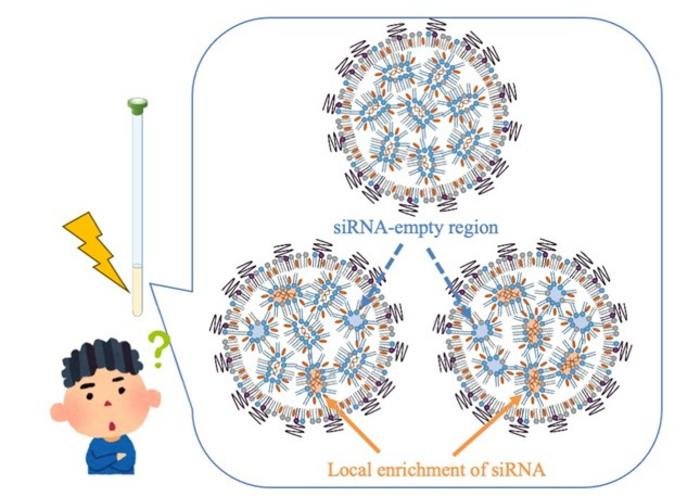
Small interfering RNA molecules (siRNA) hold enormous potential for treating diseases by silencing specific genes. Encapsulated in lipid nanoparticles (LNPs), siRNA can be efficiently delivered to target cells. However, the effectiveness of these therapies depends on the internal structure of LNPs, which can significantly affect their ability to deliver siRNA. Conventional methods often fail to provide the detailed molecular insights needed to fine-tune LNP design for optimal therapeutic efficacy. A study published on August 2, 2024, in the Journal of Controlled Release, led by Assistant Professor Keisuke Ueda from the Graduate School of Pharmaceutical Sciences at Chiba University, introduces a novel approach to enhancing siRNA-loaded LNPs. By employing NMR-based characterization at the molecular level, the research investigates how different siRNA mixing methods affect the uniformity and molecular state of siRNA within…

No evidence-based blood test against cancer in Germany

  • News

Currently, there are no evidence-based blood tests recommended in Germany as general cancer screening for the general population. Established cancer early detection programs are based on other examination methods. Nevertheless, there are some blood tests that can be useful in specific situations: Established cancer early detection programs In Germany, four evidence-based early detection programs have been established: Breast cancer screening is considered particularly effective. Since its introduction in 2005, advanced tumor stages have decreased, and a significant reduction in breast cancer mortality is expected[1]. Blood tests in specific situations Although no blood tests are recommended for general cancer screening, the following tests may be useful in certain cases: PSA test The PSA test (Prostate-Specific Antigen) can be used for the early detection of prostate cancer. However, it is controversially discussed and is not part of the statutory early detection program. Men aged 45 and over can use it as an individual health service[1]. CA 125 test This test measures cancer antigen 125 and can be used in early detection… 

Atomic War Facts: Gamma Radiation as a Silent Killer

The use of nuclear weapons is repeatedly discussed in the media. But what would be the effects of a nuclear strike regarding the initial radioactive radiation? Gamma radiation plays a special role here – because its effects on living beings are devastating. Due to its high penetration power and energy, gamma radiation has significant, long-lasting effects on the human body: Biological effect Gamma radiation is a high-energy form of ionizing radiation that can penetrate deep into the body[2]. When penetrating tissue, it can: Health consequences The effects depend on the radiation dose: Acute effects (at high doses) Long-term consequences Protective measures Since gamma radiation is very penetrating, thick shielding made of lead or concrete is necessary to block it effectively[3]. Strict radiation protection measures are applied in the medical and industrial fields to minimize exposure. In summary, gamma radiation is potentially very harmful to… 

Survival Tip: Protection from Alpha Radiation and Radioactive Fallout

Alpha radiation and radioactive fallout pose serious health risks in the event of nuclear accidents or attacks. A thorough understanding of the dangers and appropriate protective measures is crucial for disaster preparedness and personal safety. Characteristics of Alpha Radiation Alpha radiation consists of doubly positively charged helium nuclei and has the following characteristics: Protective Measures Against Alpha Radiation Radioactive Fallout Radioactive fallout refers to the deposition of radioactive particles after a nuclear explosion or reactor accident. It represents a more complex threat, as it can encompass various types of radiation. Protective Measures Against Radioactive Fallout Long-Term Measures The intensity of fallout radiation decreases over time. After 24 hours, radioactive dust has already lost 80 percent of its energy3. Nevertheless, depending on the severity of the incident, long-term protective measures such as evacuations or decontaminations may be necessary. Conclusion Effective protection against alpha radiation and radioactive fallout requires a combination of knowledge, preparation, and appropriate behavior. Following the "3 A's rule" of radiation protection… 

Sapience Therapeutics Enrolls First Patient in Phase 2 Study of ST316

  • News

Sapience Therapeutics, Inc., a clinical-stage biotechnology company focused on the discovery and development of peptide therapeutics for the treatment of oncogenic and immunologic dysregulations that drive cancer, today announced that the first patient has been enrolled in its Phase 2 dose expansion study evaluating ST316, the company’s first-in-class antagonist of β-catenin. ST316 is designed to selectively turn off the Wnt/β-catenin signaling pathway in tumor cells but not in normal cells, enabling anti-cancer activity without the toxicity associated with broad inhibition of this pathway. The Wnt/β-catenin signaling pathway is one of the most active signaling pathways in various cancers and is responsible for more than 80% of colorectal cancers (CRC), the first indication being investigated in the ST316 Phase 2 expansion. More than 1 million people in the United States are living with colon cancer, and an additional 150,000 cases are expected to be diagnosed this year alone.

Myrtelle: Study Results for Gene Therapy for Canavan Disease

  • News

Myrtelle Inc. today announced the results of a clinical study showing a significant change in biomarkers in patients treated with the company’s gene therapy for Canavan disease (CD), rAAV-Oligo001-ASPA. Analysis of cerebrospinal fluid (CSF) from seven patients, observed for up to 24 months post-treatment, revealed that each patient experienced a greater than 80% decrease in N-acetylaspartate (NAA) from baseline. Observation of these patients via magnetic resonance imaging (MRI) also showed an increase in white matter and myelin volume over the same time intervals. The company’s open-label, Phase 1/2 First-in-Human (FIH) clinical study is being conducted at Dayton Children’s Hospital (Dayton, Ohio) and includes baseline and post-treatment evaluations at 1, 3, 6, and 12 months in the first year after surgery, and then every 12 months for 5 years. Myrtelle’s FIH study utilizes the company’s proprietary rAAV vector,…