To better understand cell movement and find new ways to transport medicine through the body, scientists at Johns Hopkins Medicine have constructed a minimal synthetic cell that follows external chemical stimuli and exhibits a defining biological principle called "symmetry breaking."
The findings were published on June 12 in Science Advances.
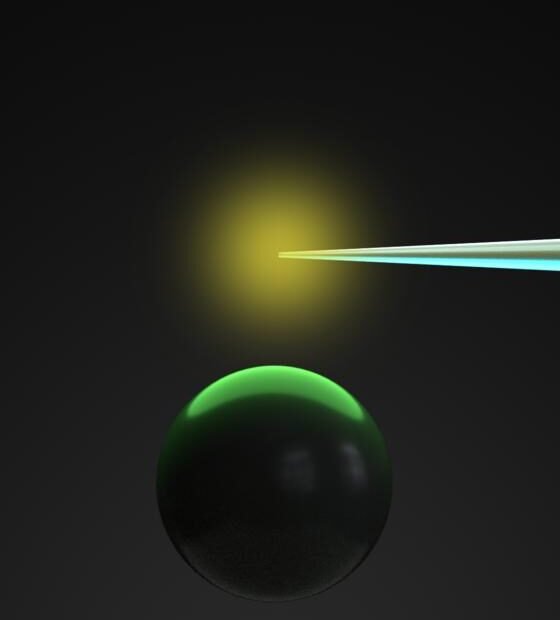
For this study, scientists created a giant vesicle with a bilayer membrane — a simple, simplified synthetic cell, or protocell, made of phospholipids, purified proteins, salts, and ATP, which supplies energy. Because of its spherical shape, the protocell is also called "the bubble." In their experiments, scientists were able to equip the protocell with a chemical sensing ability that causes the cell to break its symmetry and change from a nearly perfect sphere into an uneven shape. The system was specifically designed to mimic the first step of an immune response and can signal neutrophils to attack germs based on proteins they sense in their environment, the researchers say.

Credits
Inoue Lab at Johns Hopkins Medical Institute founded by Shiva Razavi and Turhan Pathan