Art has never been neutral. It only pretends to be when the times are quiet enough to allow the illusion. In calmer decades, the market preferred the decorative, the abstract, the safely personal. Then history returns with its old appetite for blood and power, and suddenly the question resurfaces with force: must art take a side? Must it name the forces that shape our lives, or may it remain a private aesthetic exercise?
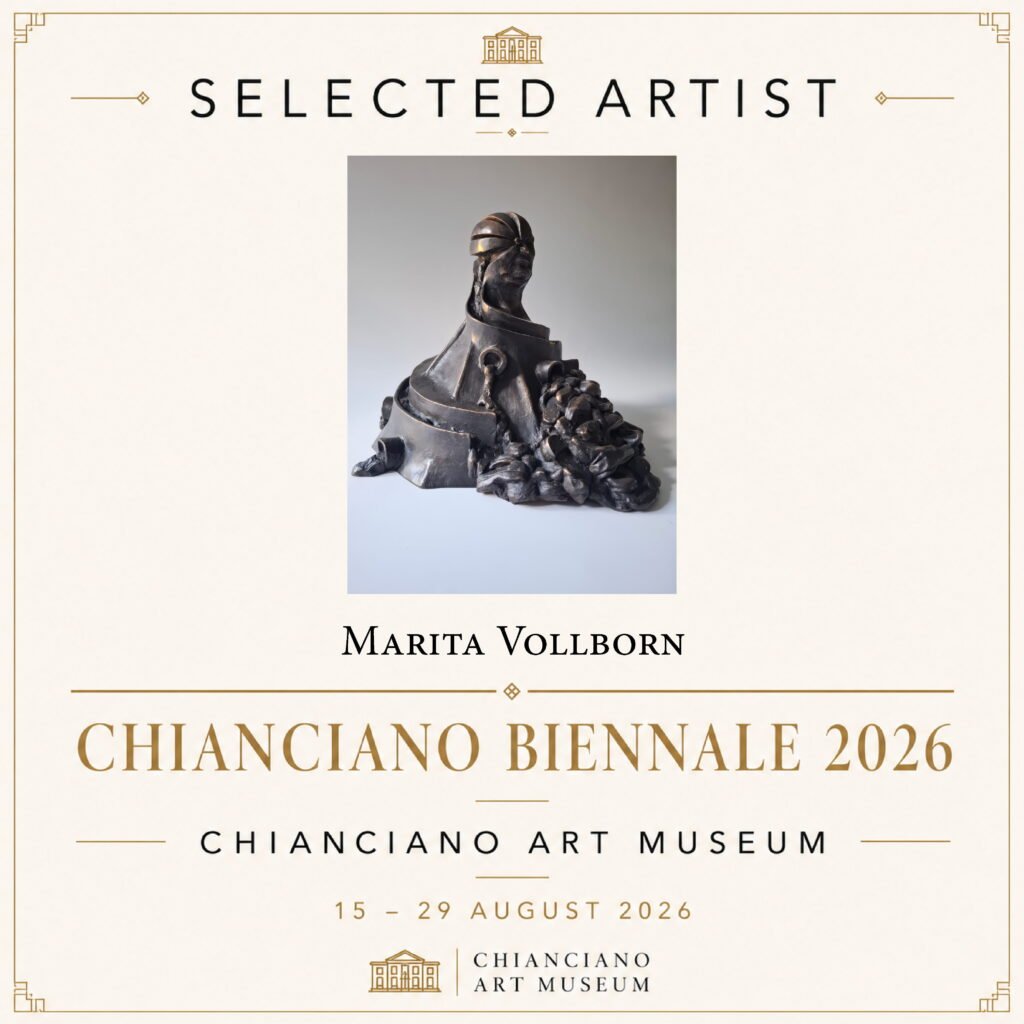
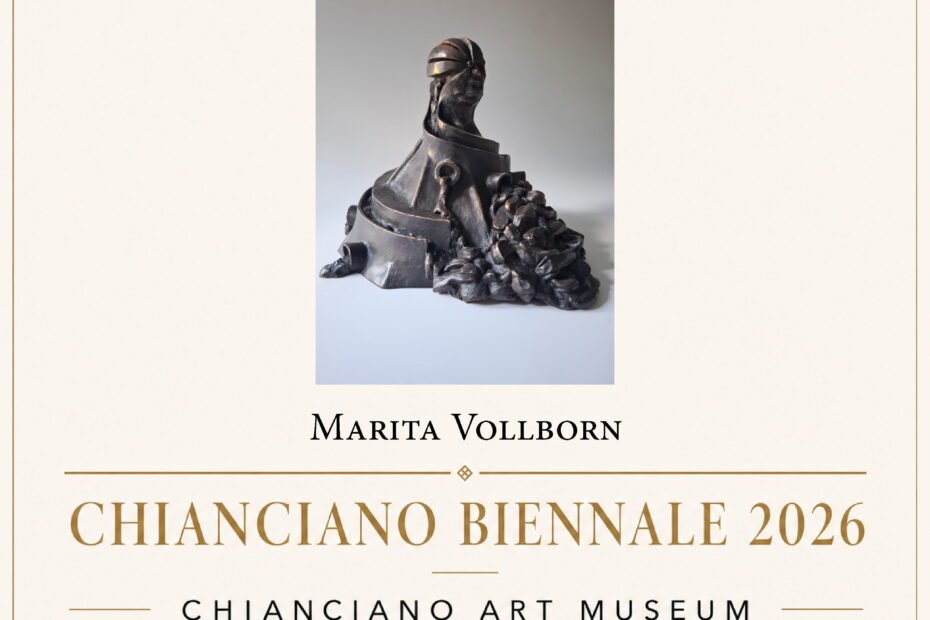
Marita Vollborn’s bronze sculpture ARES offers a clear, uncompromising answer. Created in 2015 and now cast in a limited edition, the work stands roughly 34 by 29 by 30 centimetres. It depicts the Greek god of war not as a heroic ideal but as a raw, menacing, almost bestial presence — the embodiment of unrestrained violence, militarism and the greed that feeds on conflict. Vollborn, born in 1965 in Erfurt in the former GDR, grew up under a regime that censored thought and art. That biography is not incidental. Her long career as an investigative journalist — exposing corruption in science, food, health and politics — and her sculptural project Sinn und Scherben (Sense and Shards), comprising some fifty expressive figurative works, have always circled the fractures of human ambivalence: power and guilt, strength and fragility. ARES is the most explicit political statement in that body of work.
In 2026 the sculpture travels to the ninth Chianciano Biennale in Tuscany (15–29 August), where Vollborn has been named a Selected Artist. The Biennale, held at the Chianciano Art Museum and in galleries across the medieval town, gathers roughly three hundred international artists. It is an open, competitive platform rather than a heavily curated manifesto exhibition. Into this relatively open field ARES arrives with its unmistakable charge. The artist herself has been direct: the piece confronts “militarism, profiteering from conflict, and the raw exercise of power.” She has also made a pointed decision about geography. She will not currently exhibit ARES in the United States, citing concerns over the erosion of checks and balances under the second Trump administration, while explicitly respecting the democratic outcome of the American election. The work, she insists, is not anti-American; it is anti-militarism and anti-greed wherever they appear.
This is art that refuses the comfortable distance of pure form. It does not whisper. It names. In an era of renewed great-power rivalry, ongoing wars, and the open discussion of territorial ambitions (including, in Vollborn’s own comments, the Greenland example), a sculpture titled after the god of war cannot be read as neutral. The decision to withhold it from one of the world’s major art markets for explicitly political reasons further sharpens the point. Art here is not merely reflecting the times; it is taking a position within them.
Yet the larger question remains: is art “again” political, or was the period of relative quiet the anomaly? History suggests the latter. From Goya’s Disasters of War to Picasso’s Guernica, from the suppressed artists of the GDR to the dissident practices of the late twentieth century, the most lasting works have rarely been those that pretended power did not exist. What changes is the climate of reception. When institutions and markets prefer the unthreatening, political work is sidelined or aestheticised into harmlessness. When the ground shifts, the same work suddenly looks prophetic.
Vollborn’s ARES at Chianciano is one such moment. A mid-career German sculptor, shaped by dictatorship and journalism, places a small bronze god of war in a Tuscan museum and simultaneously draws a line about where she will and will not show it. The gesture is modest in scale and radical in implication. Art does not become political only when it waves a flag. It becomes political when it refuses to look away from the mechanisms of violence and when the artist accepts the consequences of that refusal. In 2026, with ARES on public view in Italy and deliberately absent from the United States, that refusal is once again visible.