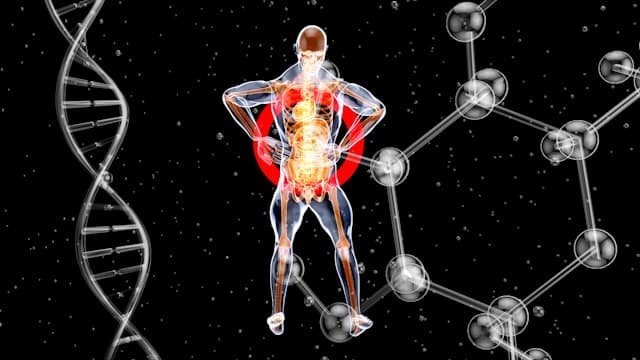
Imagine a living cell whose genetic blueprint was never shaped by eons of trial-and-error evolution on Earth. Instead, it emerges from silicon-based intelligence running generative algorithms on vast oceans of sequence data. This cell divides, metabolizes, and interacts with its environment according to parameters chosen by code. Such scenarios are no longer distant speculation—they represent the accelerating frontier where artificial intelligence meets synthetic biology.
This convergence marks a profound shift in humanity’s relationship with life itself. For the first time, non-biological minds are positioned to originate novel biological entities, moving beyond mere modification of existing organisms toward genuine creation. The implications ripple through science, philosophy, ethics, and our understanding of existence. This essay examines the evidence, the disruptions, and the deeper questions this development raises, offering an original perspective on what it means when intelligence becomes the architect of life.
The Long Shadow of Creation Myths Meets Modern Milestones
Humanity has long fantasized about crafting life. Ancient stories of golems, homunculi, and Promethean fire reflect both wonder and warning. In the modern era, these ideas left the realm of myth when researchers began rewriting DNA. A pivotal achievement came in 2010 when a team led by J. Craig Venter chemically synthesized an entire bacterial genome and transplanted it into a recipient cell, producing a self-replicating organism. Six years later, the same group unveiled a further minimized version with roughly half the genes, proving that a functional living system could operate with an astonishingly lean genetic instruction set.
These breakthroughs established synthetic genomes as viable platforms. Yet they still built upon existing natural templates. CRISPR tools revolutionized editing precision, while automated “foundries” sped up testing cycles. The real leap forward required a partner capable of true invention: artificial intelligence.
How Generative AI Is Rewriting Biology’s Rulebook
Protein structure prediction once bottlenecked biological engineering. AI models like AlphaFold changed that by accurately forecasting how amino acid chains fold into functional shapes. Building on this foundation, generative systems now invent entirely new proteins. Techniques such as diffusion-based modeling can produce custom backbones tailored for specific tasks—binding targets, catalyzing reactions, or assembling into complex structures. Experimental validation has shown many of these designs work effectively in living systems, dramatically improving success rates over older trial-and-error methods.
Genomic-scale models push the boundary even further. Large language models trained across enormous datasets of DNA from thousands of species can now generate functional sequences at the level of genes, pathways, and even small genomes. Researchers have used them to create working CRISPR-like systems and synthetic viral genomes capable of replication. These tools do not simply copy nature; they explore vast possibility spaces, proposing solutions that might never have arisen through natural processes.
The integration of AI with robotics in self-driving labs creates rapid feedback loops. What once took years of painstaking work can now iterate in weeks. This capability transforms biology from a largely observational science into a creative engineering discipline, where life’s building blocks become as programmable as software.
Philosophical Rupture: Life as Artifact and Agent
This technological progress forces us to rethink fundamental concepts. Traditional definitions of life often emphasize self-replication, metabolism, and Darwinian evolution. But when a genome is deliberately designed for a specific purpose—perhaps extreme efficiency, novel chemistry, or compatibility with digital interfaces—those boundaries blur. A synthetic organism may begin its existence optimized rather than merely adapted, carrying human (or machine) intent encoded in its very DNA.
From a philosophical standpoint, this inverts long-held hierarchies. Intelligence was once seen as a late, fragile outcome of blind evolutionary forces. Now, that intelligence directs the creation of new living forms. Thinkers like Heidegger warned of technology’s tendency to “enframe” the world as mere resource; here, the enframing extends to life’s generative principles themselves. Kant’s distinction between organisms with intrinsic purpose and human-made artifacts collapses when purpose is engineered into biology from the start.
The relationship between creator and created also transforms. We move from stewards or modifiers of nature to active originators. This raises ancient questions of hubris in new form: What responsibilities accompany the power to originate life? If designed entities gain complexity or even rudimentary awareness, do they possess moral standing independent of their designers? Traditional environmental ethics, rooted in respect for evolutionary heritage, must expand to accommodate life forms without that shared history.
Ethical and Societal Challenges Ahead
The ability to author new life carries clear risks alongside opportunities. Accidental release of engineered organisms could disrupt ecosystems in unpredictable ways. Dual-use concerns are heightened because generative tools lower barriers to sophisticated biological work, potentially enabling both beneficial innovations and misuse. Mirror-image or radically altered biochemistries, for instance, might prove impervious to natural checks and balances, prompting calls for cautious oversight from scientists themselves.
Power dynamics matter deeply. Concentration of these capabilities in a few well-resourced organizations could exacerbate global inequalities, determining who benefits from new medicines, sustainable materials, or climate solutions. Conversely, open models could democratize access, allowing broader participation in shaping our biological future.
Governance must evolve. Existing regulations address genetic modification but lag behind generative design at genome scale. Proactive, international frameworks emphasizing transparency, safety testing, and ethical review are essential. Long-term thinking—considering not just immediate applications but multi-generational consequences—is critical, echoing calls for responsibility toward future beings and environments our creations may inhabit.
Envisioning Life 2.0 and Beyond
In the coming decade, expect engineered microbes optimized as living factories for everything from pharmaceuticals to advanced materials. Further out, more complex multicellular designs and hybrid systems linking biological and digital components seem plausible. Synthetic ecosystems could support space exploration or planetary restoration. In the longest view, biology and AI may co-evolve, with each enhancing the other’s capabilities—perhaps leading to resilient hybrid intelligences or entirely new lineages adapted to environments hostile to natural life.
The deepest disruption lies in the shift from passive observation of evolution to active participation in it. Natural selection continues, but within designed constraints and goals. This does not end biology’s wonder; it adds layers of intentionality and creativity, turning the living world into a collaborative canvas.
Toward Wise Creation
We stand at the threshold of an era where life can be authored with unprecedented precision. This demands humility as much as ambition. Our tools do not make us gods, but they do confer god-like responsibilities. Success will depend on aligning technical prowess with ethical clarity, inclusive decision-making, and a renewed appreciation for the value of all life—natural and designed alike.
The future of biology will be written not only in laboratories but in the choices societies make about what kinds of life to bring forth and why. By confronting these questions now, we can aim to ensure that the age of designed life becomes one of flourishing rather than unintended consequence.
Verified Sources List
- Hutchison III, C.A. et al. (2016). Design and synthesis of a minimal bacterial genome. Science. https://www.science.org/doi/10.1126/science.aad6253
- Watson, J.L. et al. (2023). De novo design of protein structure and function with RFdiffusion. Nature. https://www.nature.com/articles/s41586-023-06415-8
- Brixi, G. et al. (2026). Genome modelling and design across all domains of life with Evo 2. Nature. https://www.nature.com/articles/s41586-026-10176-5 (Preprint available via bioRxiv)
- J. Craig Venter Institute resources on synthetic cells: https://www.jcvi.org/research/first-minimal-synthetic-bacterial-cell
These primary publications and institutional pages provide the foundational evidence. All interpretations and connections represent original synthesis.