A lake is not a slogan. That ought to be the first principle of any politics that still pretends to inhabit the world rather than decorate it. On 27 August 2026 Donald Trump signed an executive order directing the United States government to call Lake Ontario “Lake America.” The gesture belongs to the same series as the 2025 rechristening of the Gulf of Mexico. It does not move water. It does not rewrite the Wendat word that European mapmakers were already using in the 1660s. It does not compel Canada, New York, shipping charts, or the International Hydrographic Organization. It changes the file in the Geographic Names Information System and the vocabulary of federal contracts. That is all the law will carry. Everything else is theatre.
Theatre, however, is not nothing. Naming is one of the oldest technologies of rule. To name a place is to announce who may speak it without apology. Empires have always understood this; so have revolutions. What is distinctive here is the disproportion between the instrument and the claim. The president can instruct his own departments. He cannot instruct a shared Pleistocene basin, a border that predates his office by two centuries, or a name that is older than both the Declaration of Independence and Confederation. The order therefore performs a sovereignty it does not possess. It treats the map as a deed.
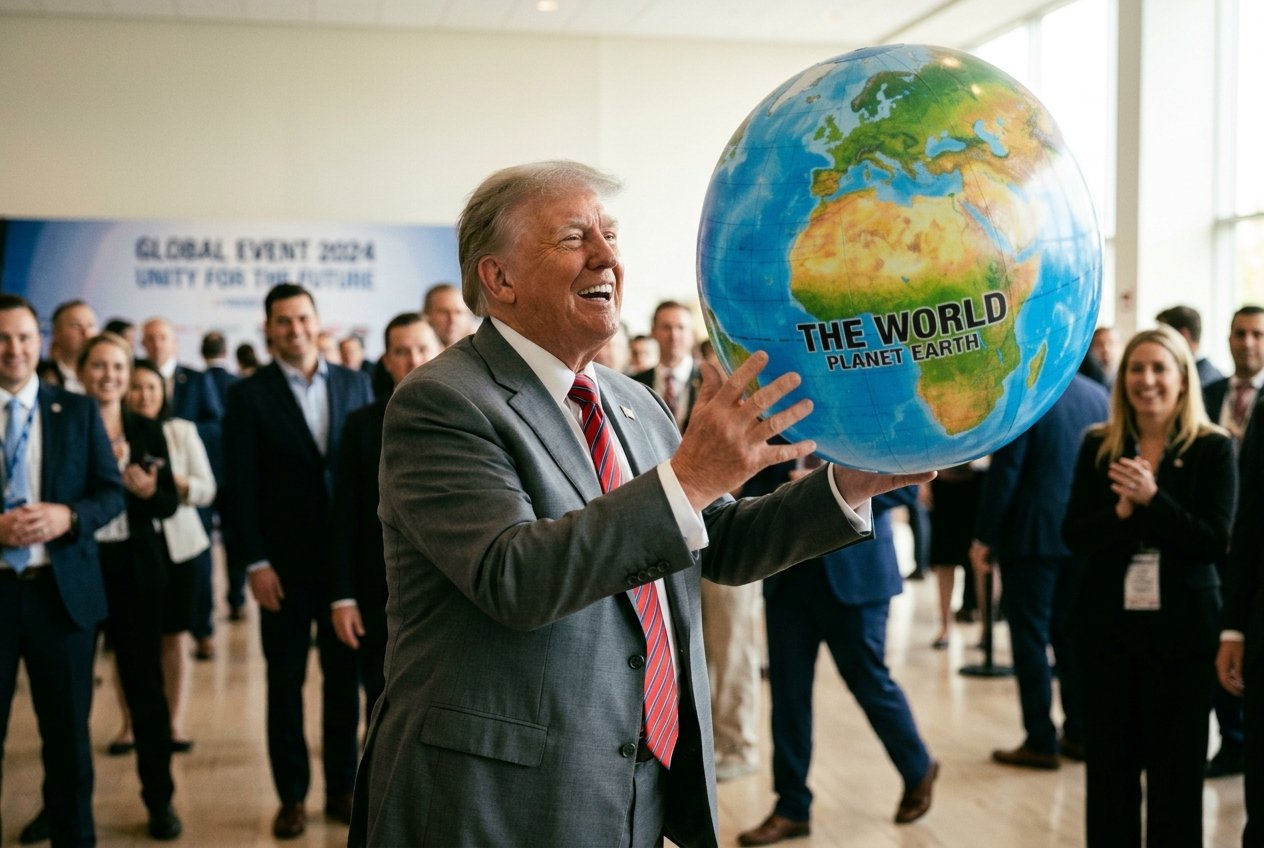
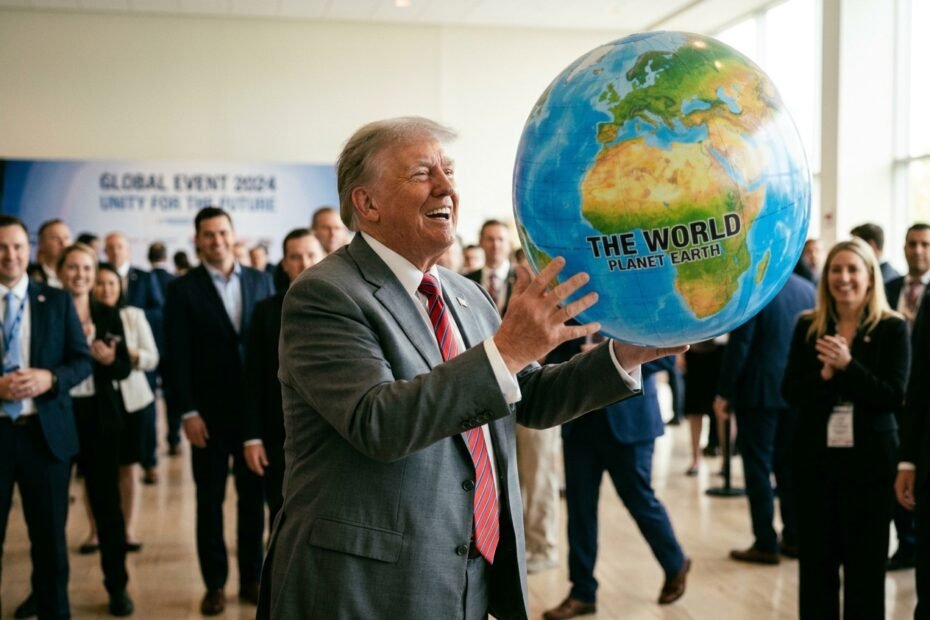
The accompanying rhetoric makes the ambition explicit. Flanked by boards that already printed “Lake America” in red and promised to make the Great Lakes “even greater,” Trump remarked that the country now had a gulf and a lake and might next require an ocean. The joke is the policy. Grandeur here is not a clinical accident but a method: the conversion of residual administrative power into an image of total authorship. The deepest trenches and the larger share of volume, the text of the order insists, lie on the American side; the United States is the “greatest protector” of the lakes. Even if the bathymetry were decisive—which, in international hydrology, it is not—the argument would still confuse custody with baptism. One may police a shoreline without owning the noun.
Critics reach quickly for megalomania and loss of reality. The terms are imprecise and, used as diagnosis, unserious. What the record shows is more interesting and more ordinary: a politics of branding that has mistaken the nation for a property portfolio. The same hand that restored “Mount McKinley” and invented “Gulf of America” now writes “Lake America” across a body of water whose surface is, by the better estimates, nearly half Canadian. The act is not a hallucination. It is a wager that symbolic occupation will be remembered as strength and that the memory of the wager will outlast the diplomatic cost. In a trade war already priced in tens of billions, the name is cheap ammunition. It is also a confession that leverage has begun to look like pantomime.
There is an American tradition in this, and it is not only Trump’s. The republic has long overwritten Indigenous and colonial toponyms in the name of a newer destiny. The difference is scale and timing. To rename Denali was to reopen a domestic argument about honor. To rename a binational lake in the middle of a rupture with the neighbor who shares it is to treat geography as a press conference. Mark Carney’s reply—that naming reality still means Lake Ontario, then, now, and always—was less a patriotic flourish than a reminder of the one fact the order cannot annex: words that have already been spoken for four hundred years do not become untrue because a cabinet secretary updates a database.
The reality that matters is therefore double. There is the physical lake, indifferent to letterhead. And there is the political reality in which a great power, unable to dictate terms of trade, dictates terms of speech to itself and calls the echo a victory. That is not madness. It is a theory of power reduced to the last thing a president can still sign. The water continues to drain toward the St. Lawrence. The maps that sailors use will keep the older name. What remains, for the rest of us, is the spectacle of a state rehearsing omnipotence on a caption.